


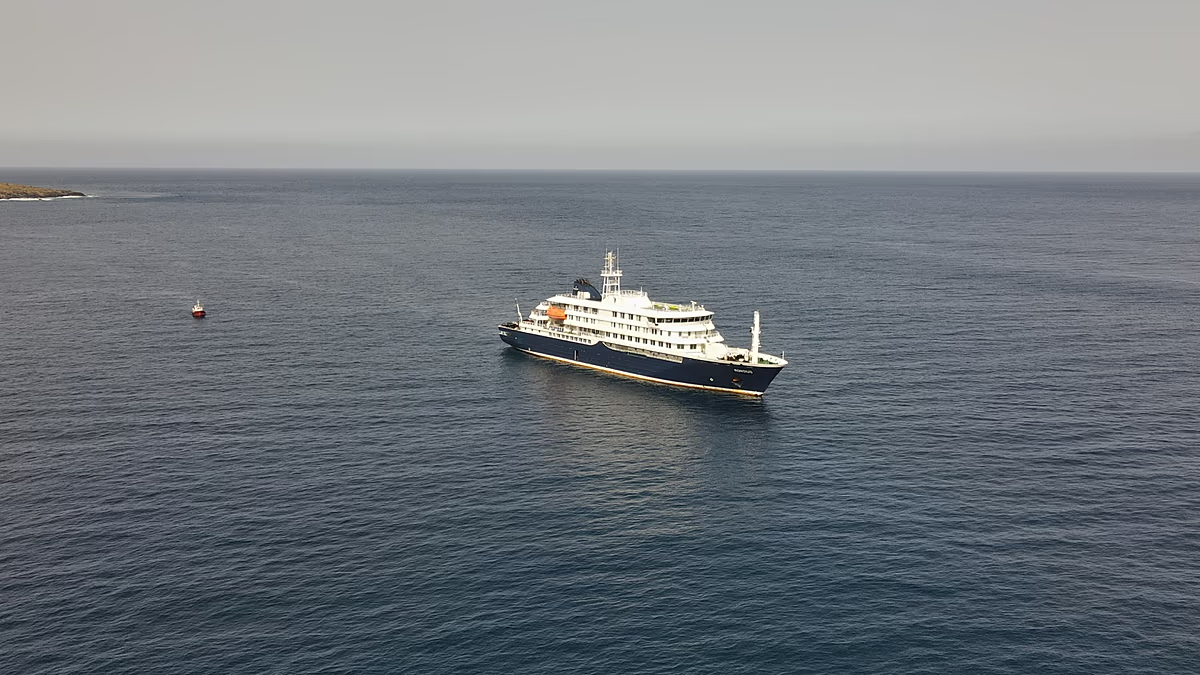
In a swift and compassionate response to an unfolding international health crisis, the Spanish government has agreed to provide critical medical aid. The focus of this humanitarian operation is the luxury cruise ship MV Hondius, which is grappling with a serious outbreak of hantavirus. Specifically, Spain will accept and care for the ship’s own doctor, who has fallen gravely ill with the virus. Following a formal request from the Dutch government, this physician will be urgently transported on the same day via a specialized medical plane to the Canary Islands for advanced treatment. This decision underscores a commitment to frontline medical workers, recognizing that even those tasked with caring for others are vulnerable in such outbreaks and deserve the highest level of support.
This coordinated effort stems from a broader international appeal. The World Health Organisation (WHO), working in close coordination with the European Union, formally requested that Spain receive the vessel itself, invoking both international law and the principle of humanitarian spirit. The Hondius, which began its journey in Argentina, is currently stationed near Cape Verde after cases emerged during its Atlantic crossing. The Spanish Ministry of Health clarified that Cape Verde lacks the necessary infrastructure to manage a complex operation of this scale, making the Canary Islands—the closest point with sufficient medical resources—the logical and lifesaving port of call. Parallel to the doctor’s evacuation, European health authorities are onboard assessing which other passengers require urgent evacuation in Cape Verde versus those who can safely continue to the Spanish archipelago.
The situation onboard is serious and evolving. According to the WHO, there are 147 passengers and crew on the ship. To date, the outbreak has been linked to seven cases: two laboratory-confirmed and five suspected. The toll is sobering, including three deaths, one patient in critical condition (the ship’s doctor), and three individuals with milder symptoms. The initial symptoms, appearing between late April, included fever and gastrointestinal distress. Alarmingly, in some cases these rapidly progressed to severe pneumonia, acute respiratory failure, and shock, highlighting the aggressive nature of this particular viral strain. This pattern necessitates a meticulous and cautious response for all individuals on the vessel.
For the remaining passengers and crew, a carefully structured protocol has been developed by the WHO and the European Centre for Disease Prevention and Control (ECDC). Upon the ship’s estimated arrival in the Canary Islands in three to four days, everyone will be examined and managed under this common plan. The protocol mandates specific, isolated health and transport circuits designed to absolutely “avoid all contact with the local population and guarantee the safety of health personnel at all times.” This containment strategy is crucial to prevent any potential secondary spread within the community. The Spanish government has pledged transparent updates on this protocol’s implementation and has also outlined plans for the eventual repatriation of all individuals, including several Spanish nationals, following complete medical and epidemiological evaluations.
The urgency of tracking and containing hantavirus is further emphasized by a separate, tragic incident being monitored by the WHO. Authorities are tracing more than 80 passengers following a confirmed case on a commercial flight to Johannesburg. A 69-year-old Dutch woman on that flight, who had been previously evacuated from St. Helena after developing symptoms, subsequently died in hospital from hantavirus. Her infection was confirmed days after her death, revealing how the virus can cross borders via routine travel and underscoring the global interconnectedness of public health threats. This parallel case amplifies the importance of the rigorous protocols being enacted for the Hondius.
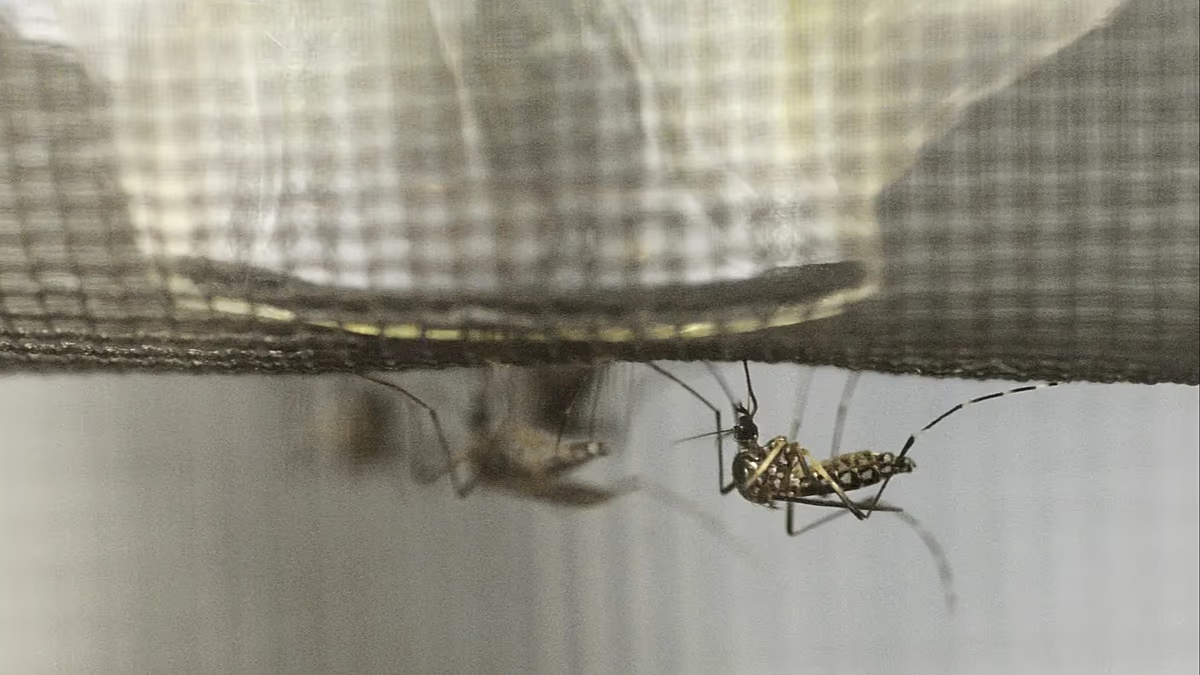
Understanding the virus itself is key to appreciating the measures taken. Hantavirus is a group of viruses primarily carried by rodents. Transmission to humans occurs mainly through inhalation of airborne particles from dried rodent droppings, urine, or saliva—often when these materials are disturbed during activities like cleaning. Direct contact with infected animals can also pose a risk. Infection can lead to Hantavirus Pulmonary Syndrome, which begins with flu-like symptoms but can escalate rapidly to life-threatening respiratory distress and shock, requiring emergency care. The incubation period can be several weeks. Crucially, there is no specific cure, and human-to-human transmission is exceedingly rare, typically requiring prolonged, close contact. This knowledge informs the response: while the risk to the local community from the evacuated passengers is deemed very low with proper isolation, the risk to the individuals infected onboard is high, justifying this large-scale, international humanitarian and medical operation.