


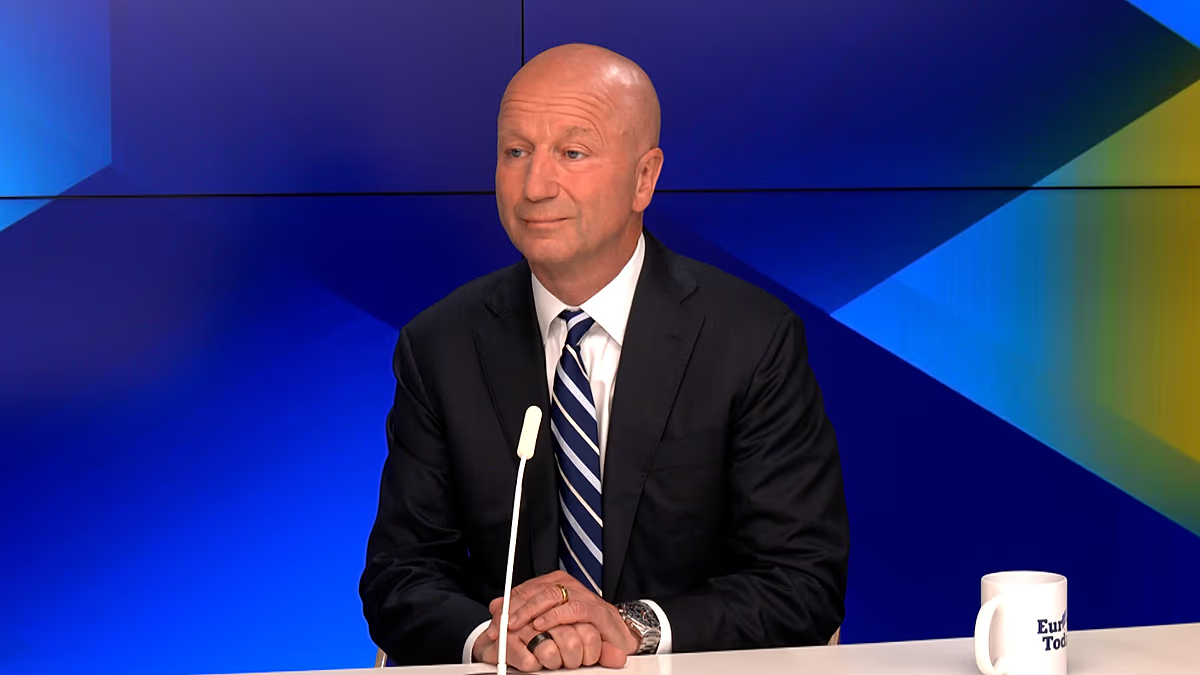
The European economy continues to face significant headwinds from persistently high energy prices, a situation exacerbated by ongoing geopolitical tensions in the Middle East. According to Helge Berger, Deputy Director of the International Monetary Fund’s (IMF) European Department, the collective response from EU national governments has been largely insufficient and, in many cases, counterproductive. In an interview with Euronews, Berger criticized the widespread tendency of capitals to implement broad, untargeted measures—such as across-the-board tax cuts on energy—which artificially suppress prices. While politically appealing, this approach fails to address the core issue and creates new economic distortions. By dampening the crucial “price signal,” these policies inadvertently discourage households and businesses from reducing consumption or investing in energy efficiency and alternatives, thereby prolonging Europe’s vulnerability to volatile international markets.
The IMF’s analysis reveals a stark misallocation of resources stemming from these untargeted interventions. During the 2022 energy crisis triggered by Russia’s invasion of Ukraine, approximately 70% of the total cost of government support measures was deemed either non-targeted, price-distorting, or both. This pattern risks repeating itself. For instance, the IMF estimates that in the current context, a full 33% of untargeted electricity subsidies could end up benefiting the wealthiest 20% of the population, compared to only 11% reaching the poorest 20%. The disparity is even more pronounced for transport fuel subsidies, which could see 34% flowing to the richest households versus a mere 9% to the poorest. This inefficient use of precious fiscal space not only fails to protect those most in need but also places an unnecessary burden on public finances, limiting governments’ ability to invest in long-term solutions.
In light of this, Berger and the IMF are issuing a clear call for a strategic pivot toward rigorously targeted support. The primary objective, they argue, must be to shield vulnerable households and small businesses who are genuinely at risk of being pushed into energy poverty or insolvency by the high costs. This could involve direct income transfers, means-tested vouchers, or support for essential energy consumption levels, all designed to maintain purchasing power without interfering with market prices for energy itself. Such precision ensures that the financial aid reaches its intended recipients while preserving the incentive for all consumers to conserve energy. Berger emphasized that any policy must be carefully calibrated to avoid doing “more damage than good,” acknowledging that while EU states have proposed a “mix of good and bad policies,” the urgency of the situation demands a more consistent and effective approach.
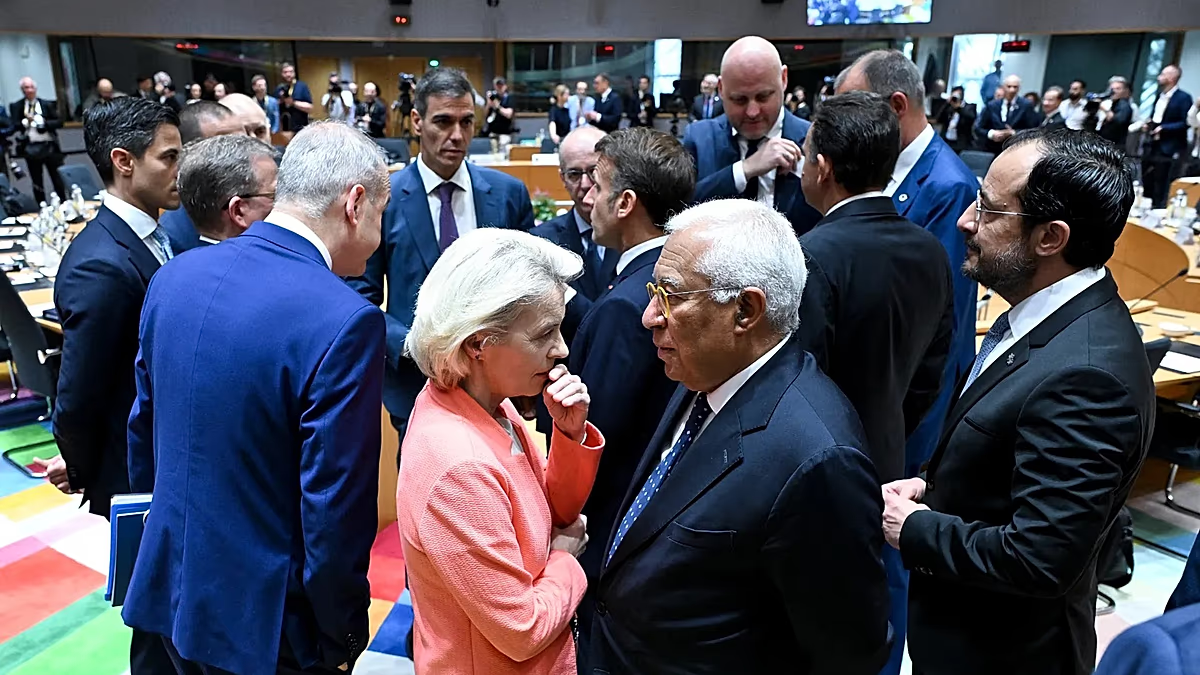
Eurogroup President Kyriakos Pierrakakis echoed the need for prudent and focused action, following a meeting of eurozone finance ministers where the IMF presented its assessment. He noted that initial hopes for a rapid de-escalation in the Middle East have faded, confronting Europe with a “difficult reality” that demands “realism and responsibility.” While acknowledging Europe’s “positive starting point,” including a robust labour market with historically low unemployment, Pierrakakis stressed that the pain is not evenly distributed. Economies that are net energy importers and those with limited fiscal space are under disproportionate strain. This divergence, he argued, obliges policymakers to act with caution, deploying “well-designed and targeted policies” to ensure stability and fairness across the union, rather than resorting to blanket measures that are both costly and inequitable.
Despite the challenges, there is a critical silver lining: Europe today is more resilient than it was during the 2022 shock. Berger highlighted that investments in energy efficiency and a strategic shift toward a cleaner energy mix have borne fruit. The increased share of renewables in Europe’s power grid has provided a buffer, meaning that any given increase in global energy prices now inflicts less economic damage than it would have several years ago. European households have seen their energy costs reduced by an average of 12% over the past five years due to these structural improvements. However, this resilience should not breed complacency. The continent’s continued dependence on imported fossil fuels, starkly exposed by the Iran conflict and threats to key shipping lanes like the Strait of Hormuz, remains a fundamental vulnerability. Progress on diversification and green transition is, therefore, not just an environmental imperative but a core economic security strategy.
The path forward requires a dual strategy: immediate, intelligent fiscal policy to protect the vulnerable, and an unwavering commitment to the long-term energy transition. Governments must resist the short-term political temptation to cap prices broadly and instead channel resources into targeted income support. Simultaneously, the preserved price signal will continue to incentivize private investment in energy savings, heat pumps, solar panels, and other alternatives, accelerating the journey toward energy independence. The current crisis is a stern test of European policymakers’ ability to learn from past mistakes. By choosing targeted aid over price manipulation, they can provide essential relief where it is needed most while steadfastly reinforcing the market mechanisms and structural investments that will ultimately shield the European economy from future shocks. The goal is clear: to ensure that today’s protective measures do not undermine tomorrow’s security and prosperity.