


The Quiet Rise of a Balkan Gem: Why Bosnia and Herzegovina Is Captivating Travelers
While many summer travelers fret over crowded hotspots and well-trodden itineraries, a quieter, deeply engaging destination has been steadily capturing the imagination of the curious. Bosnia and Herzegovina, a heart-shaped nation in the Balkans, is no longer Europe’s secret. Recent data reveals it as a place of powerful digital allure, having just been crowned the continent’s “Most Engaging Country” by Tripscout’s social media analysis. This award, driven purely by algorithm and user interaction—not editorial bias—saw the country’s official tourism profiles amass over 2.4 million likes. As Jim Brody of Tripscout notes, social media provides a unique stage for lesser-known destinations to connect intimately with potential visitors, post by meaningful post. This digital buzz coincides with a tangible, though quiet, surge in visitation, prompting the question: what is it about Bosnia that resonates so profoundly with the modern, experience-seeking traveler?
A Tapestry of History and Harmony
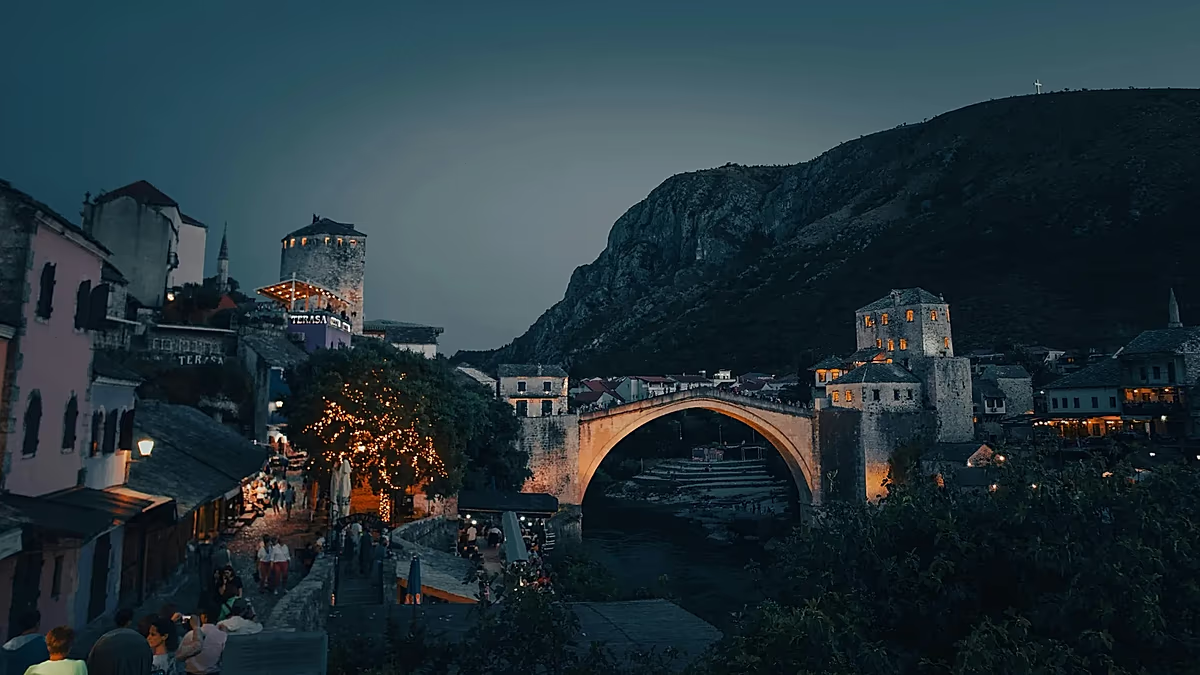
The answer lies in a landscape where history is not just observed but deeply felt. The iconic city of Mostar, a little over two hours from the capital, is home to the UNESCO-listed Stari Most (Old Bridge). This 16th-century Ottoman masterpiece, meticulously reconstructed after the 1990s conflict, is far more than a photogenic arch over the emerald Neretva River. It is a potent symbol of reconciliation and coexistence. The city’s very name, derived from “bridge keepers,” speaks to its historical role as a connector. Here, minarets, church steeples, and synagogues share the skyline, embodying a centuries-old spirit of multicultural harmony. The bridge’s restoration stands as a testament to international cooperation and the enduring shared life between Muslim, Christian, and Jewish communities, offering visitors a narrative of resilience that is both moving and inspiring.
The Pulse of Sarajevo: Where East Meets West
The capital, Sarajevo, offers a captivating microcosm of this cultural fusion. Often described as the place where “East meets West,” its streets are a living museum of Ottoman, Austro-Hungarian, and Yugoslav influences. In the Ottoman-era Baščaršija bazaar, the scent of freshly ground coffee and the sound of coppersmiths’ hammers seem to halt time, with cobblestone lanes that have changed little over centuries. Yet, Sarajevo pulses with a vibrant, contemporary energy. A dynamic gastronomy scene sees chefs crafting innovative Asian-Balkan fusions, while galleries like Manifesto provide platforms for emerging artists to explore modern themes. This seamless blend of the ancient and the avant-garde creates a city that feels both profoundly historical and excitingly alive, appealing to travelers seeking depth beyond the superficial.
Evolving Comforts: New Doors Open for Visitors
Recognizing this growing interest, Bosnia’s hospitality landscape is thoughtfully expanding to welcome international guests. Major brands like Marriott are poised to enter the market with a new property in Mostar, signaling confidence in the destination’s future. In Sarajevo, the trend leans towards boutique intimacy and flexibility, with stylish new openings like the 11-key Hotel Eleven and the studio-apartment concept of NOVA Inn. These establishments often prioritize prime, walkable locations—steps from the Old Town or the National Theatre—blending modern design with local artistic touches. This development means travelers no longer have to compromise on comfort or character, finding accommodations that serve as serene bases from which to explore the country’s rich offerings.
Practical Pathways: Navigating with Ease
For travelers from the EU and Schengen-associated countries, visiting is wonderfully straightforward, requiring only a valid ID for stays up to 90 days. Others can easily obtain a short-stay visa. Once there, navigating the country is an accessible adventure. An extensive and reliable bus network connects over 90 cities, with major hubs in Sarajevo, Mostar, and Banja Luka conveniently linked to the international airport. For a more scenic journey, the railways offer picturesque routes, such as the line to the Croatian coast. Financially, the local Convertible Mark (BAM) offers good value, and visitors can benefit from VAT refunds on significant purchases. These practicalities remove barriers, making immersion in Bosnia’s culture a smooth and stress-free endeavor.
An Invitation to Authentic Engagement
Ultimately, Bosnia and Herzegovina’s quiet rise is a testament to a global travel shift. It represents a move away from passive sightseeing toward destinations that offer authentic engagement, layered history, and emotional resonance. It is a place for the curious traveler—one who seeks to understand the narratives of resilience etched in its bridges and streets, to taste a unique culinary fusion, and to witness a society rebuilding through art and coexistence. As social media algorithms unintentionally champion its cause, the real discovery awaits on the ground. This summer, for those looking to trade FOMO for the profound reward of genuine connection, the bridges of Bosnia are waiting, not just to be crossed, but to be understood.