



The Rising Tide of Reform UK: A Political Rebellion in the Local Elections
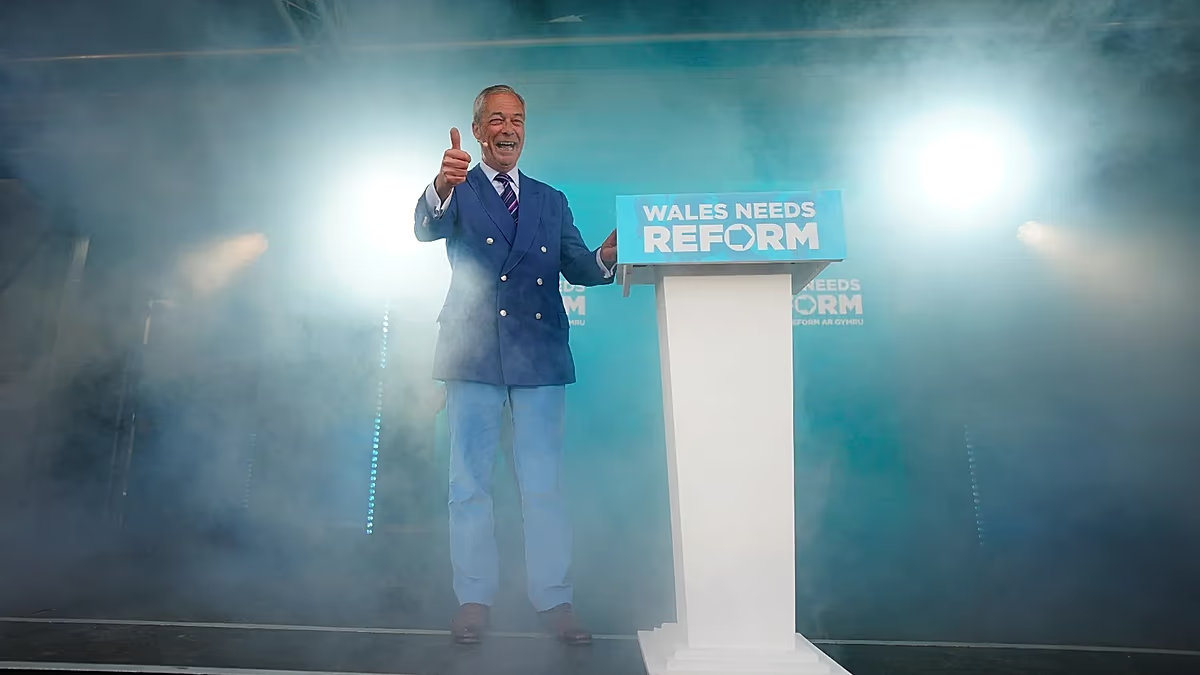
As Britain prepares for local elections on Thursday, the political landscape is undergoing a profound and turbulent shift. The story is no longer a simple contest between the traditional giants of Labour and the Conservatives. Instead, the spotlight is fixed on Reform UK, a party once considered a fringe movement, which is now poised to make historic gains. Polls suggest the party, led by the perennial insurgent Nigel Farage, could secure between 1,200 and 1,600 council seats across England. This projected surge represents a seismic event in British politics, driven by a potent cocktail of voter anger, disillusionment with the establishment, and a single, galvanizing issue: immigration. For many voters, particularly in areas like Essex, Suffolk, and the Midlands, the promise of “real change” from Reform has become a compelling alternative to parties they feel have “failed them massively.”
The Core of the Rebellion: Immigration and a Sense of Betrayal
The engine of Reform’s rise is its uncompromising stance on immigration, an issue that has simmered for years and now boils over into electoral energy. The narrative of a nation “flooded with illegal immigrants,” as expressed by former Conservative voter Robert Robinson, resonates deeply in communities feeling the strain. Towns like Braintree in Essex, where a former airbase now houses asylum seekers, have become flashpoints. Here, sentiments like those of Dan White, a canteen worker who feels newcomers “are getting a lot more than everyone else,” underscore a perception of unfairness and neglect. Reform has channeled this frustration into a clear, drastic pledge: mass deportations and a crackdown on “small boat” crossings. This message has proven powerful enough to draw defectors like Robert Jenrick, a former Tory minister, who now argues on Reform’s turquoise campaign bus that the old parties have left citizens with “immigration too high, taxes too high. Nothing seems to be working.”
The Demographics of Discontent: Who is Voting Reform?
Political experts like Tim Bale point to a clear demographic trend: Reform’s support is concentrated among older voters. This group, Bale suggests, is often “uncomfortable with a lot of the social changes of the last few decades,” including Britain’s evolution into a more multicultural and socially liberal society. For them, Reform offers a promise to restore a sense of traditional order and control. This appeal extends beyond England; the party is also expected to perform strongly in devolved parliament elections in Wales and Scotland. The simple, direct mantra—“Vote Reform, Get Starmer out”—cuts through complex political debates, offering a visceral solution to frustration. It is a classic populist appeal, built not on detailed policy but on a powerful sense of reclaiming the nation from those perceived to have mismanaged it.
The Conservative Crisis: A Battle for Survival Against the Insurgents
The rise of Reform presents an existential threat to the Conservative Party, already reeling from its historic defeat in the 2024 general election. As Farage boldly predicts the Conservatives will disappear as a national force, the party’s leader, Kemi Badenoch, is engaged in a desperate fight to stem the tide. Her message is one of renewal: “This is a New Conservative Party, new leader. I’m changing things.” She has also directly attacked Farage’s credibility, labeling him inconsistent and unorthodox. However, these efforts may be insufficient. With polls showing Reform leading at around 26%, compared to the Conservatives at 19%, the local elections could inflict a devastating blow, particularly in Badenoch’s own Essex constituency. The “lot of turquoise rising” on the map, as noted by analyst Luke Tryl, symbolizes not just a political challenge but a potential reconfiguration of the UK’s right-wing.
Controversy and Criticism: The Shadow Side of the Surge
Reform’s ascent is not without serious controversy and scrutiny. The party has attracted accusations of racism and xenophobia due to remarks by some candidates. Critics like Daniel Irlam, a 28-year-old planning to vote Green, see Reform as “a fear campaign” and “a lot of hate mongering” that distracts from substantive issues. Furthermore, questions over an undeclared multi-million pound donation from a cryptocurrency magnate and Farage’s association with figures like Donald Trump fuel doubts about the party’s transparency and integrity. Its practical governance record also raises concerns; in Kent, where Reform has controlled the council since 2025, the party has abandoned promises to cut taxes and faced criticism for trimming social spending. These elements paint a picture of a movement whose appeal is powerful but whose operational competence and ethical boundaries are fiercely debated.
A Fragile Future: What Thursday’s Results Will Really Mean
The upcoming elections will undoubtedly confirm Reform UK as a major force in British politics, but its long-term stability is less certain. A strong showing will validate its populist strategy and likely deepen the crisis within the Conservative Party. However, translating local council gains into sustained national success is a different challenge. The party’s shaky track record in administration, its reliance on a single charismatic leader, and its vulnerability to scandal could hamper its growth. For now, however, it stands as the vivid embodiment of a widespread political rebellion. It is a vessel for voters who feel unheard, for those who prioritize a stark solution to immigration above all else, and for a desire to dismantle the existing political order. Whether this tide will reshape the UK’s political coastline permanently or eventually recede will be one of the defining questions of the coming years.