


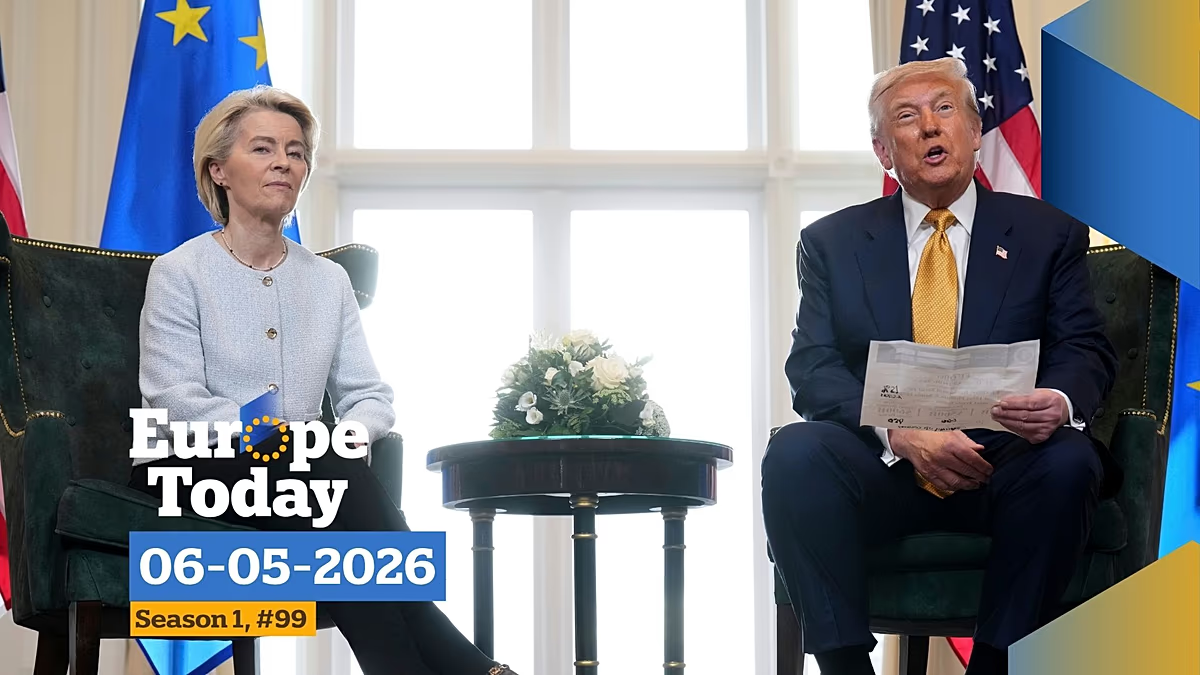
Based on the promotional content provided, the June 5, 2026 episode of Euronews’ “Europe Today” promises to be a comprehensive and timely analysis of critical political and economic developments across the continent and its relationship with the United States. Hosted by Méabh Mc Mahon and Maria Tadeo, the program aims to deliver not just headlines, but deep context and expert insight into the forces shaping Europe’s future. The following summary expands upon the listed segments to humanize the stakes and narratives behind the headlines, weaving them into a coherent picture of a continent navigating internal cohesion and external pressures.
The top story, analyzed by Stefan Grobe, focuses on a renewed economic threat from the United States: a potential escalation of tariffs on European cars to 25%. This is not merely a trade statistic; it represents a palpable tension that could impact millions of livelihoods. For workers in German automotive plants, Italian design studios, or French manufacturing hubs, such a tariff is a direct threat to their industries’ competitiveness and stability. The European Union’s potential reaction will be a test of its unity and economic resolve, weighing measures from legal challenges at the World Trade Organization to the consideration of reciprocal measures. This segment underscores how transatlantic trade policy is, in essence, a story about jobs, communities, and the delicate balance of global economic relationships.
The program then brings in authoritative voices to dissect these broader challenges. An interview with Helge Berger of the IMF’s European Department would likely explore the macroeconomic implications of such trade tensions for Europe’s growth, inflation, and fiscal stability. Following this, a conversation with Catherine Ashton, the former EU High Representative, adds a crucial geopolitical dimension. Her insights would contextualize the trade threat within the wider landscape of US-Europe relations, considering how economic disputes can spill over into diplomatic and security cooperation. Together, these interviews transform the abstract concept of “tariffs” into a multi-faceted story about Europe’s economic resilience and its strategic positioning in a world where traditional alliances are under stress.
Turning inward, the show examines political shifts within the EU itself. Andra Disconescu’s report on Romania’s new prime minister delves into the domestic challenges of governance—from managing coalition politics to addressing public demands for reform and prosperity. Simultaneously, journalist Alja Pengov Bitenc’s analysis of Slovenia’s new government offers a parallel look at how another European nation is navigating its political landscape. These stories humanize the EU by focusing on its constituent parts, reminding viewers that the Union’s overall direction is constantly being negotiated and defined in its national capitals, through local political debates, elections, and the everyday work of forming functioning administrations.
In a segment that blends diplomacy, religion, and politics, Jakub Janas provides an explainer on Marco Rubio’s visit to the Vatican. This story highlights efforts to repair strained relations, possibly touching on sensitive historical issues or contemporary moral debates between the Catholic Church and political institutions. It illustrates how Europe’s influence extends into soft power and ideological spheres, and how dialogue—even between seemingly disparate entities like a US politician and the Holy See—can be a channel for mending fences and building understanding on complex, values-driven issues.
Finally, the program’s description emphasizes its commitment to accessibility and modern engagement. By being available live on TV, online, and as a newsletter and podcast, “Europe Today” meets its audience where they are. This multi-platform approach acknowledges that the public’s need for reliable, in-depth European news does not conform to a single schedule or medium. It represents a conscious effort to make consequential political analysis a part of people’s daily routines, whether during a morning commute via podcast, a lunch break on a website, or an evening television broadcast.
In essence, this episode of “Europe Today” serves as a microcosm of Europe’s current journey. It charts the external pressure of a shifting transatlantic relationship, the internal dynamics of national political change, and the broader cultural-diplomatic engagements that define the continent’s role in the world. By summarizing and synthesizing these threads, the program provides a vital service: it turns the often overwhelming flux of daily events into a coherent narrative, helping citizens understand not just what is happening, but why it matters to their lives, their countries, and their shared European project.