



Paragraph 1
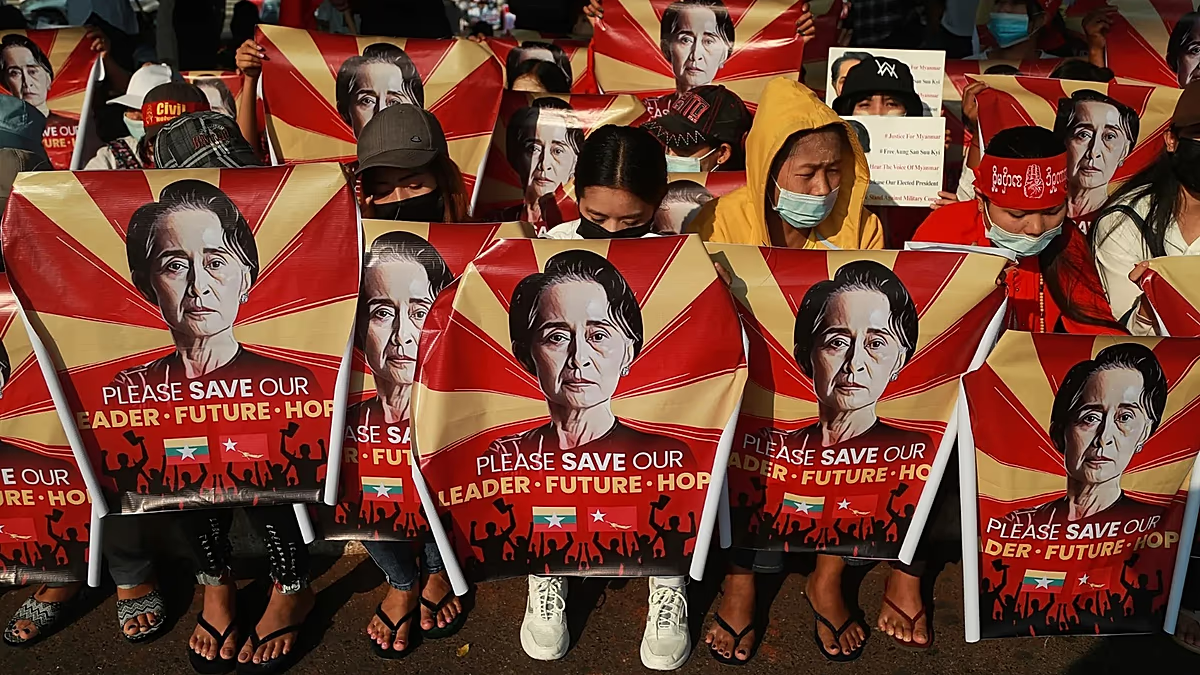
For over three years, the world has been denied a clear picture of Aung San Suu Kyi’s condition. The iconic leader of Myanmar’s democracy movement, now 80 years old, was detained following a military coup in February 2021. On a recent Thursday, the country’s junta chief, Min Aung Hlaing, announced she had been transferred from prison to house arrest. Yet, instead of providing reassurance, this move has only deepened the anxiety surrounding her fate. Her family and legal team have received no direct communication, no verified photographs, and no concrete details about her location or well-being. This lack of transparency transforms what might be portrayed as a gesture of leniency into another act of oppressive control, leaving her loved ones in a torturous state of uncertainty.
Paragraph 2
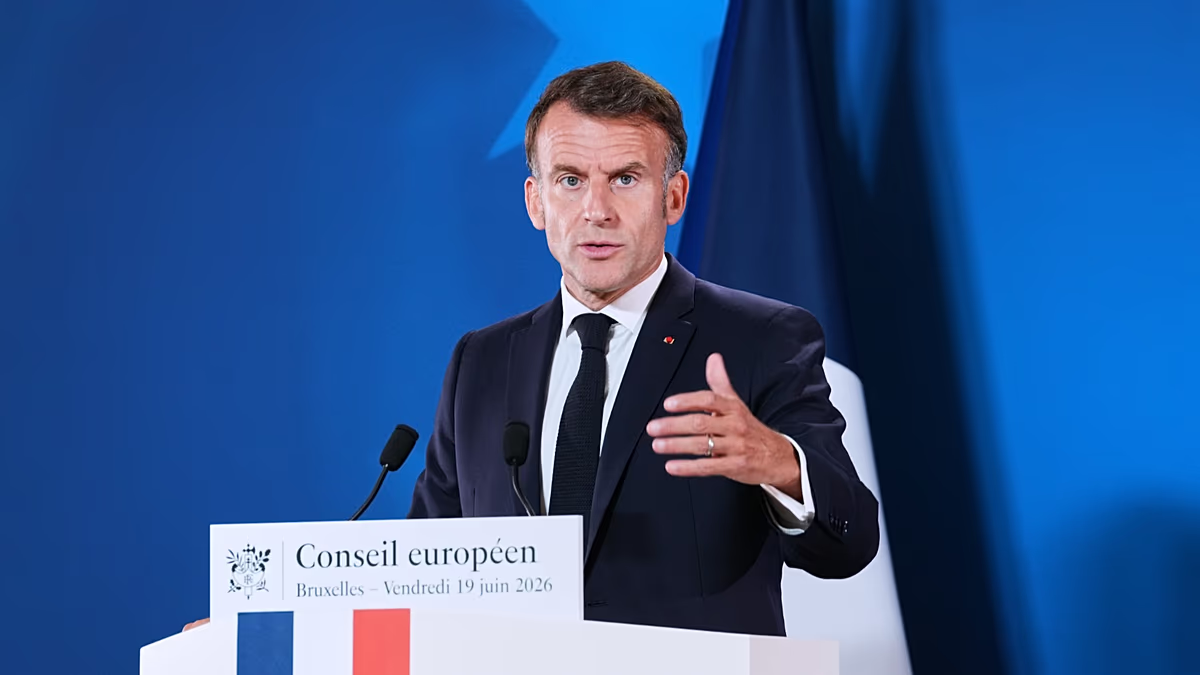
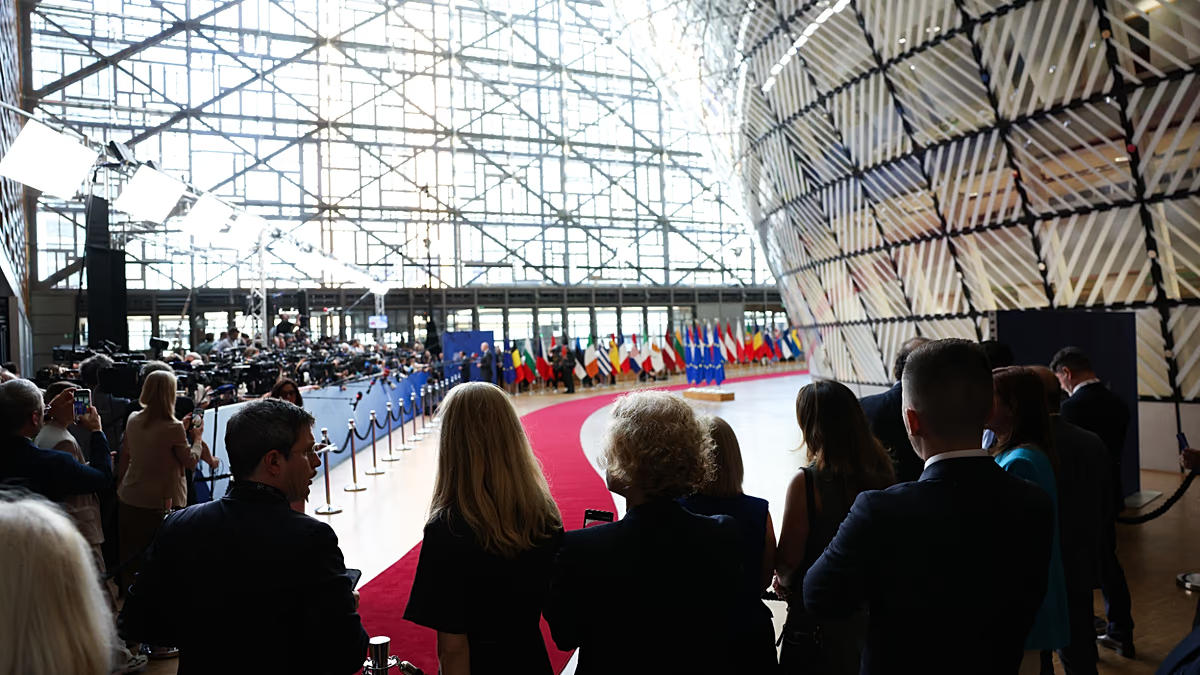
This profound uncertainty has compelled her son, Kim Aris, to make a heartfelt international appeal. In a letter handed to French Foreign Minister Jean-Noël Barrot, Aris directly implored French President Emmanuel Macron for assistance. His request was simple yet fundamental: he seeks independently verified proof that his mother is alive and that her basic rights are being respected. “I implore France to join my call,” he wrote, asking for guarantees of appropriate medical care, access to her lawyers, and contact with her family. This is not a political demand for release, but a human plea from a son who has been completely shut out from his mother’s life for years, highlighting the very personal tragedy within the larger political crisis.
Paragraph 3
Suu Kyi’s lawyers echo this deep concern, emphasizing that the junta’s actions fail to meet any acceptable standard. Lawyer François Zimeray pointed out that the regime shared an undated photo purporting to show Suu Kyi seated between two uniformed men, but its authenticity is impossible to confirm. “We don’t know if it’s real or if it’s AI,” he stated, capturing a modern dilemma of trust in an age of digital manipulation. Another lawyer, Catalina de la Sota, voiced the shared fear underlying their work: “We cannot imagine that she is no longer alive, but why is she being kept in total secrecy?” This enforced isolation violates international norms and raises grave concerns about the aging Nobel laureate’s health after years of detention.
Paragraph 4
The treatment of Aung San Suu Kyi is a focal point in a much broader and devastating national conflict. The military’s 2021 seizure of power shattered a decade of fragile democratic progress, triggering massive peaceful protests. When these demonstrations were met with brutal violence, the resistance inevitably militarized. Today, Myanmar is engulfed in a full-scale civil war. Ethnic minority armed organizations, some with decades of experience fighting the central government, have formed powerful alliances with newer People’s Defence Forces. This resistance now controls significant swathes of the country, while the military clings to major cities and its heartland. The conflict has moved far beyond the capital, redrawing the map of control through fierce combat.
Paragraph 5
The human cost of this war is staggering and is borne overwhelmingly by Myanmar’s civilians. According to the United Nations, violence against ordinary people reached unprecedented levels in 2024, resulting in the heaviest civilian death toll since the coup began as the military struggles to maintain its eroding authority. The Assistance Association for Political Prisoners, a trusted monitoring group, documents a harrowing tally: at least 6,239 people killed and over 28,444 arrested since the takeover. These numbers are considered a significant undercount, as they cannot fully account for deaths in remote conflict zones or casualties on the junta’s side. Beyond the dead and imprisoned, millions of people have been displaced from their homes, creating a vast internal humanitarian catastrophe within the nation of roughly 50 million.
Paragraph 6
In response to Kim Aris’s appeal, France has reaffirmed its diplomatic stance. Foreign Minister Barrot stated that France would continue to work for the “immediate and unconditional release” of Aung San Suu Kyi. However, the situation on the ground presents a grim reality. The junta, increasingly pressured by battlefield losses and international condemnation, appears to be using Suu Kyi’s status as both a pawn and a symbol. Placing her under house arrest may be an attempt to manage international criticism without offering real concessions or transparency. Her ongoing hidden detention, therefore, remains a powerful metaphor for the entire crisis: a nation’s fate, and the well-being of its most famous daughter, shrouded in secrecy, while its people endure unimaginable suffering in a fight for their future. The quest for verified proof of her life is more than a personal mission; it is a test of the world’s ability to uphold human dignity against systematic oppression.