

The Echo of Marching Feet: A Changed Celebration in Moscow
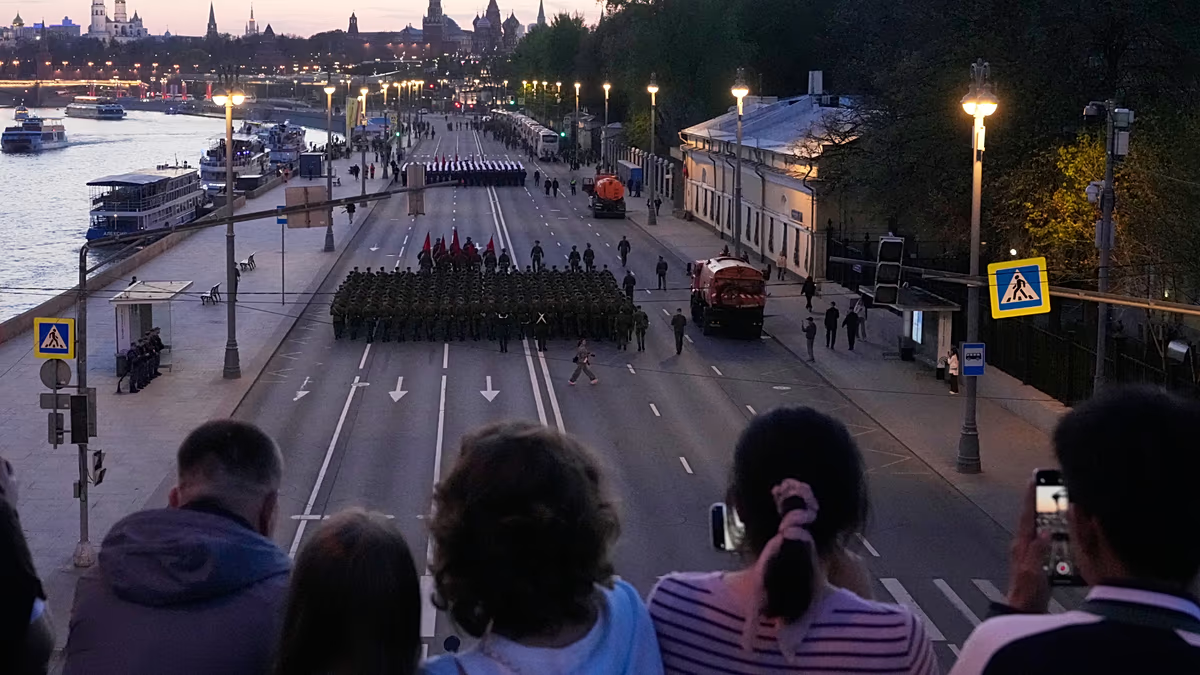
On a brisk morning in Moscow, the sound of synchronized boots striking pavement echoed across Red Square as Russian troops conducted their final rehearsals for the upcoming Victory Day parade. Scheduled for May 9th, the commemoration marks the Soviet Union’s victory over Nazi Germany in 1945, a day traditionally observed with immense patriotic fervor and a formidable display of military might. Soldiers in crisp dress uniforms moved into precise formations, their rehearsals captured in official video footage that projected an image of order and solemn preparation. This annual ritual, a deeply ingrained piece of national identity, serves as a powerful symbol of historical sacrifice and modern-day strength, drawing eyes from across Russia and the world to the heart of the capital.
However, this year’s observance will carry a distinctly different tone. In a significant departure from decades of tradition, the Russian Defense Ministry has confirmed that the 2024 Victory Day parade will proceed without the rumble of tanks, the rolling of intercontinental ballistic missile launchers, or the procession of any other heavy military equipment. For years, the grinding treads of Armata tanks and the hulking silhouettes of advanced weapons systems were the centerpiece of the event, a visceral demonstration of raw power broadcast to domestic and international audiences alike. Their absence creates a palpable void in the ceremony’s sensory impact, shifting the focus solely to the infantry columns, the waving flags, and the aerial flypast, which is still expected to continue.
This calculated scaling back is not presented as a diminishment of spirit, but rather framed by authorities as a practical adaptation to contemporary realities. The decision unfolds against a backdrop of intensified conflict, specifically increased Ukrainian drone attacks that have repeatedly targeted Moscow and other Russian regions in recent months. While the capital’s robust air defenses have intercepted many of these strikes, the persistent threat has undoubtedly altered the security calculus for a large-scale public event. Transporting, concentrating, and securing columns of valuable military hardware in the city center now presents a heightened risk, making the traditional armored parade logistically and strategically precarious.
Consequently, the 2024 parade becomes a symbolic paradox—a celebration of past military triumph consciously muted in its presentation of current military force. The government likely aims to project an image of dignified resilience and unwavering normalcy, asserting that the sacred tradition will continue undeterred even if in adapted form. The message to the domestic audience is one of steadfastness and prudent management in a time of conflict. The marching troops become the primary vessels for this message, embodying discipline and continuity, their presence meant to reassure the public of the state’s enduring strength and control, even as the tools of modern warfare remain discreetly offstage.
For observers, both within Russia and abroad, this modification speaks volumes about the ongoing war’s profound and creeping impacts on Russian society. The cancellation of the armored parade, a fixture of Putin’s Russia, is a tangible concession to the security pressures exerted by the conflict, a conflict that the Kremlin insists on calling a “special military operation.” It illustrates how a war meant to be distant has increasingly blurred the lines between front and hinterland, influencing even the most choreographed aspects of state pageantry. The altered parade serves as a metaphor for a nation attempting to uphold the imagery of power and historical destiny while navigating the complex and hazardous realities of a protracted war.
Thus, when the speeches are delivered and the troops march across the cobblestones this Victory Day, the silence where the tanks should be will be as eloquent as any patriotic fanfare. The celebration will honor the ghosts of the Great Patriotic War with solemnity, but its adjusted format will equally acknowledge the shadow of the current conflict. It is a ceremony balancing between commemorating a storied past and confronting an uncertain present, where the echo of marching feet must carry the full weight of national symbolism, uninterrupted by the familiar, formidable growl of engines.