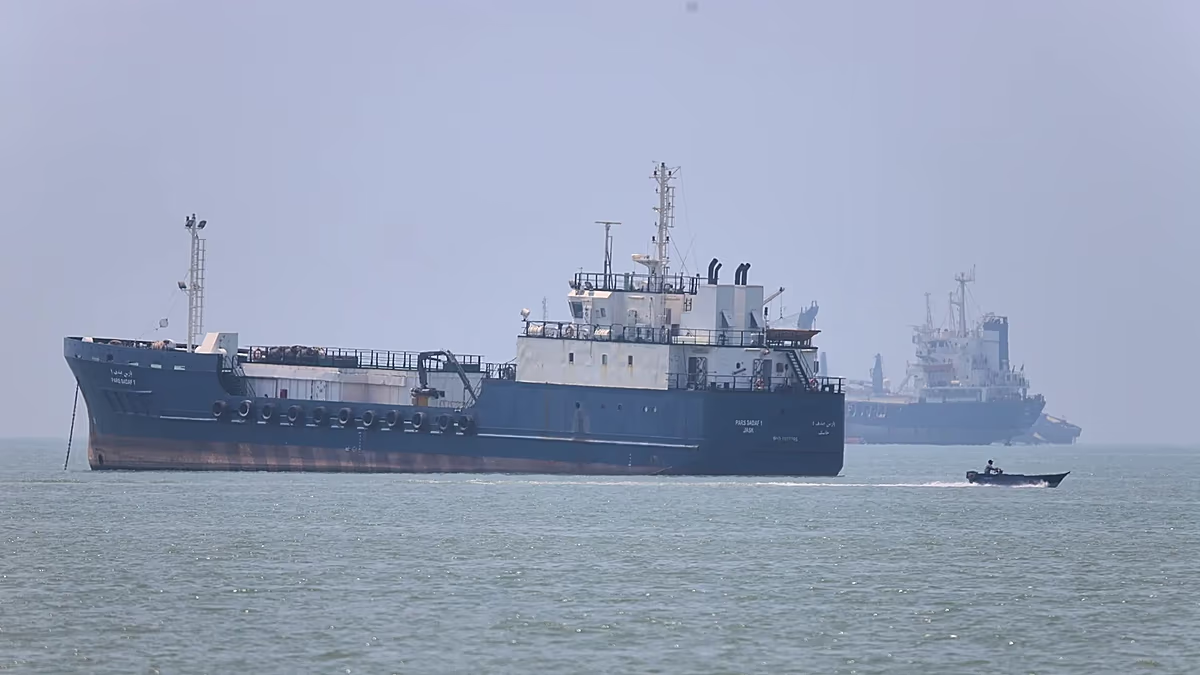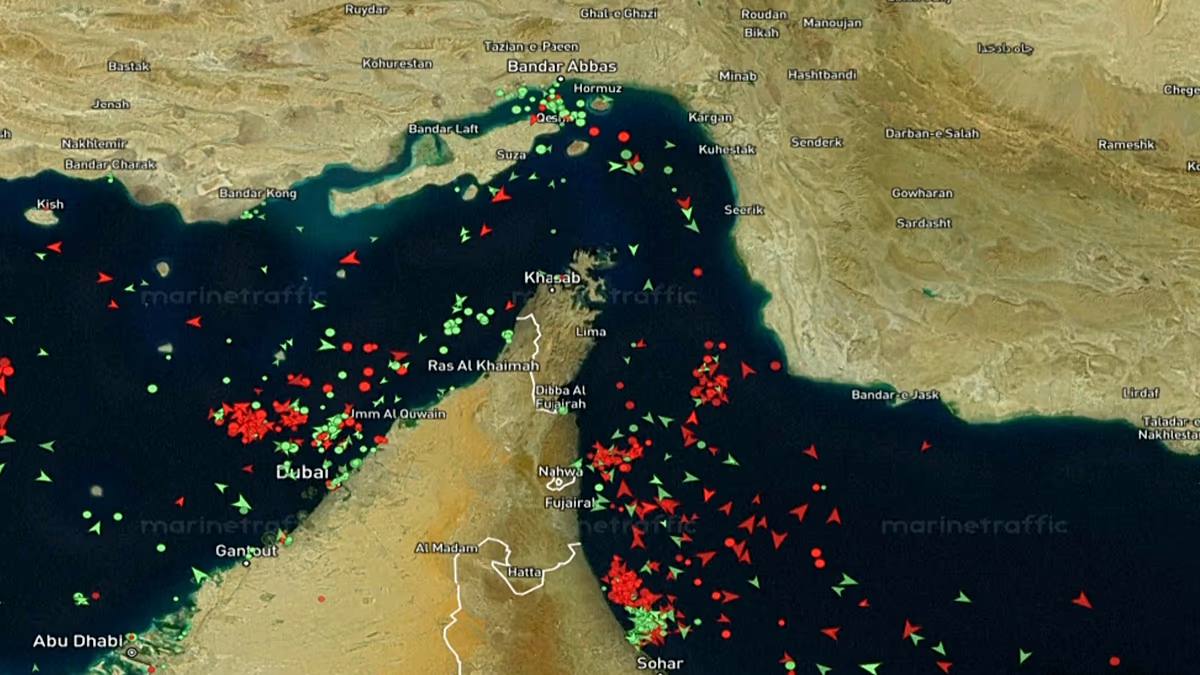



In a dramatic escalation of tensions, Iran has initiated a widespread campaign of missile and drone attacks across the Persian Gulf, directly targeting commercial vessels in the critical Strait of Hormuz and issuing stark military warnings to the United States and Europe. The Islamic Revolutionary Guard Corps (IRGC), increasingly seen as the dominant decision-making power in Tehran, announced a new plan to assert its own terms for transit through these waters. This strategy effectively seeks to extend the IRGC’s sphere of monitoring and control beyond the Strait, reaching as far as Fujairah in the United Arab Emirates—a key alternative route used for oil exports to bypass the strait. This aggressive repositioning has brought Iranian forces to the brink of direct confrontation with the U.S. Central Command (CENTCOM), setting the stage for a dangerous standoff in one of the world’s most vital maritime corridors.
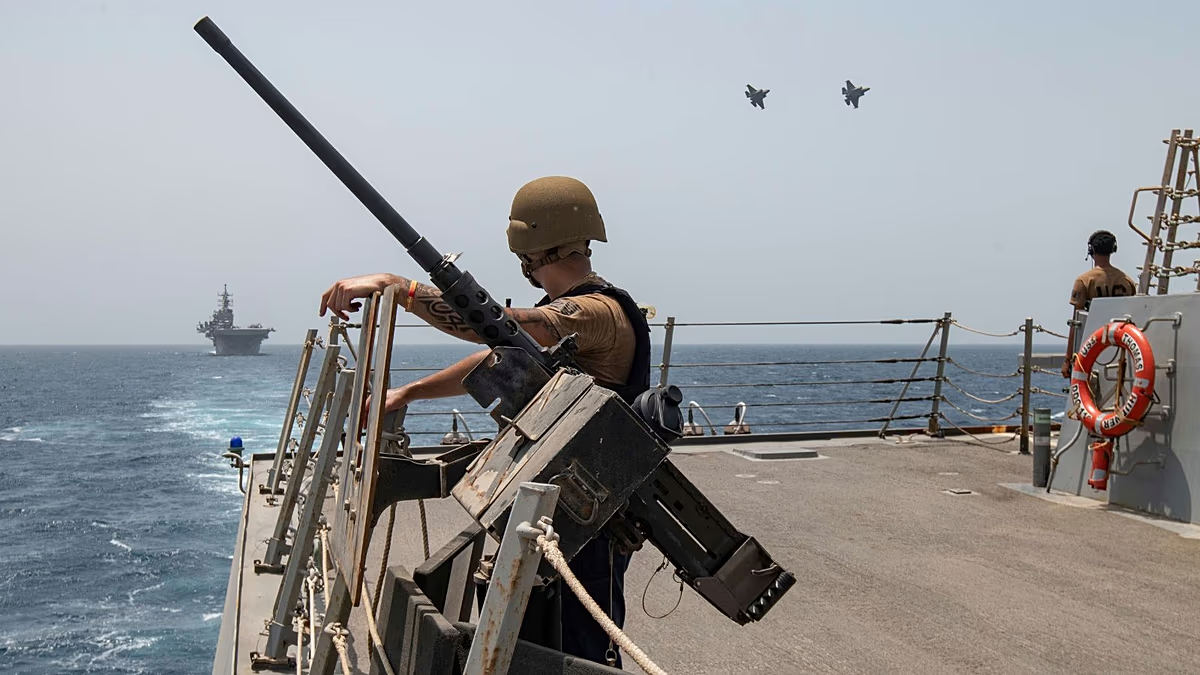
The situation escalated rapidly following the Iranian moves and the U.S. announcement of “Project Freedom,” a naval initiative described by President Donald Trump. Reports emerged of warning shots fired toward the U.S. Navy, with Trump stating that several IRGC fast attack boats had been sunk. U.S. Central Command head, Admiral Brad Cooper, confirmed that American military helicopters had engaged and sunk six Iranian small boats that were threatening civilian vessels in the strait. Admiral Cooper further outlined that the U.S. military had cleared a pathway free of Iranian mines to allow safe navigation and was establishing a protective “defensive umbrella,” involving U.S. helicopters and fighter aircraft to safeguard commercial freighters exiting the chokepoint. This direct military action underscores the high stakes and the immediate risks to global shipping and energy security.
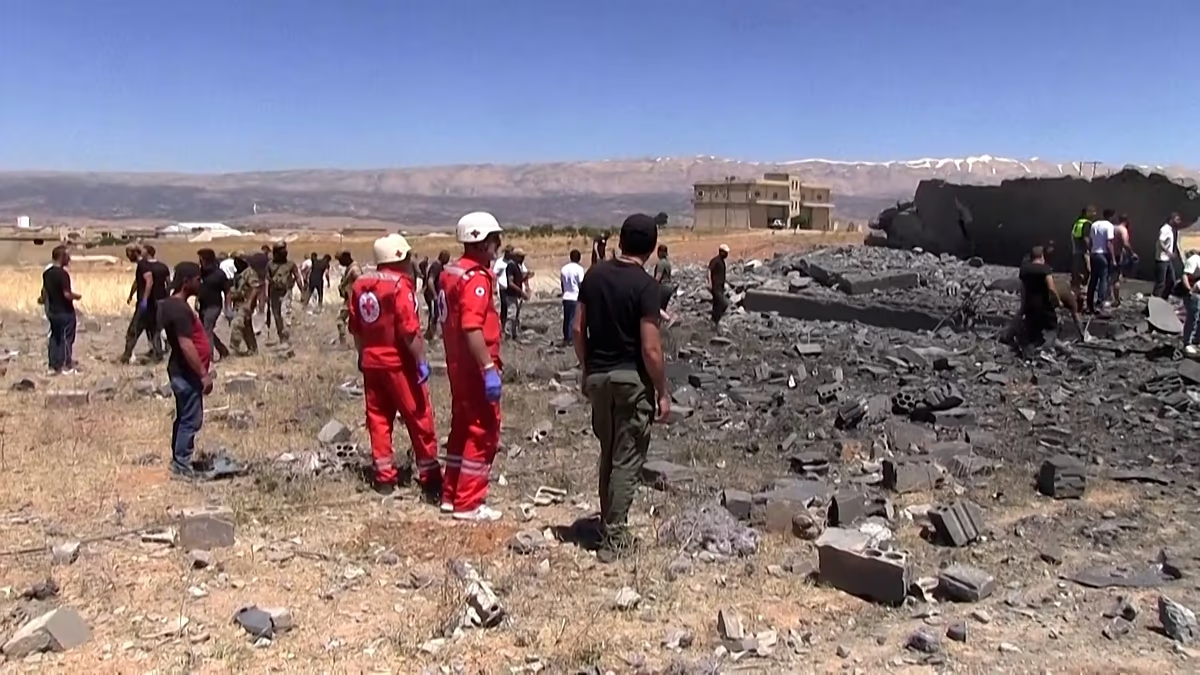
Iran’s offensive actions have drawn severe international condemnation, particularly from Gulf Cooperation Council states, following attacks on targets within the UAE. The United Arab Emirates reported intercepting a significant barrage of projectiles, including twelve ballistic missiles, three cruise missiles, and four drones launched from Iranian territory. European leaders, gathered at the European Political Community summit in Yerevan, unanimously denounced Iran’s destabilizing actions in the region and reaffirmed their solidarity and support for the UAE. An additional attack targeted a residential building housing employees in Oman, according to officials, though specific details were not provided. These cross-border strikes mark a significant expansion of the conflict, threatening broader regional stability and international diplomatic relations.
Amid the military clashes, provocative rhetoric from Iranian hardliners has further inflamed tensions. Hossein Shariatmadari, a hardline politician closely associated with the late Supreme Leader Ayatollah Ali Khamenei, published a column in the conservative Kayhan newspaper declaring that European military bases made available to the U.S. could become “legitimate and lawful targets.” He asserted that Europe is “extremely vulnerable” to potential attacks from Iran and possesses “virtually zero capacity to withstand them.” Simultaneously, Iran’s parliament speaker, Mohammad Bagher Ghalibaf, proclaimed a “new equation” in the Strait of Hormuz on social media, arguing that the security of shipping under U.S. oversight has been jeopardized and warning, “the continuation of the current situation is intolerable for the United States while Iran has not even started yet.” These statements signal a conscious strategy to leverage military pressure for political and strategic gains.
While projecting strength externally, Iran itself is not immune to internal disruptions, with reports emerging of incidents within its own borders. Iranian media reported a fire at Dayyer port in Bushehr province, where two commercial dhows were ablaze, though authorities stated the cause was unknown and under investigation. Furthermore, residents in southern Iran, particularly in Bandar Abbas and on Qeshm Island, took to social media to report hearing explosions, with local Telegram channels circulating messages from Hormozgan province about these unexplained events. These internal reports, which could not be independently verified by international media, hint at the possibility of covert operations, sabotage, or internal unrest, adding another layer of complexity to an already volatile situation.
This multifaceted crisis represents a perilous juncture for regional and global security. The direct naval engagements in the Strait of Hormuz threaten the free flow of nearly a fifth of the world’s oil supply, with immediate consequences for global energy markets. The international community, from Gulf states to European powers, finds itself compelled to respond to both overt military aggression and bellicose rhetoric that openly threatens new fronts of conflict. As the U.S. military entrenches its protective posture and Iranian leaders speak of an intolerable status quo, the risk of a miscalculation spiraling into a wider war is alarmingly high. The situation remains fluid, defined by kinetic action at sea, cross-border strikes, and a war of words that leaves little room for diplomacy, placing the stability of the entire Middle East on a knife’s edge.