


A Sudden Shattering of Peace in the Gulf
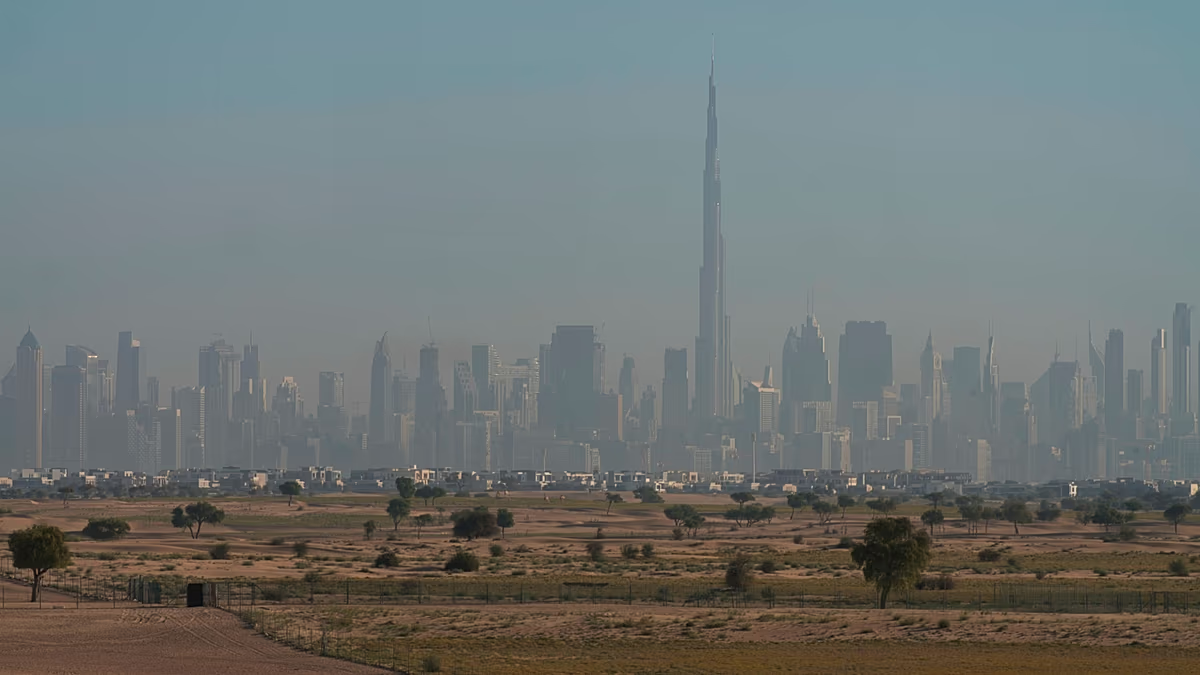
The relative calm that had settled over the Persian Gulf since the ceasefire in the broader Iran conflict was violently shattered on a Monday. Residents of Dubai, a city more accustomed to the sounds of construction and commerce, were startled by the sharp, echoing booms of missile intercepts high above their iconic skyline. For the first time since hostilities had paused, air raid sirens wailed, and a profound sense of alarm spread as people scrambled for shelter following urgent mobile phone alerts. The alerts, unprecedented for many, bluntly warned of “potential missile threats” and instructed citizens to “immediately seek a safe place in the closest secure building.” This sudden shift from uneasy peace to active defense marked a dangerous and dramatic escalation, witnessed firsthand by journalists on the ground who reported the palpable tension as a familiar urban rhythm was replaced by one of fear and uncertainty.
Official Condemnation and Attribution
In the aftermath of the interception operations, the United Arab Emirates moved swiftly to formally attribute the attack. Issuing a stern condemnation, the UAE government stated that the “treacherous Iranian terrorist attacks” had specifically targeted “civilian sites and facilities” using a combination of missiles and drones. This language was deliberately forceful, framing the act not as a military engagement but as terrorism aimed at non-combatants. The statement placed full and unambiguous responsibility on Iran, vowing that the UAE would “not compromise on protecting its security and sovereignty under any circumstances.” It reserved the nation’s “full and legitimate right to respond,” underscoring a commitment to protecting everyone within its borders—citizens, residents, and visitors alike—in accordance with international law. This formal accusation solidified a direct state-to-state confrontation, raising the diplomatic stakes significantly.
The Human Cost and Restoring a Facade of Normalcy
While the defense systems were hailed as successful, the incident was not without human cost. Authorities confirmed that three Indian nationals were injured in the strikes, a somber reminder that even intercepted attacks can have real and painful consequences for the diverse international community that calls the UAE home. Following the all-clear, a subsequent alert attempted to restore order, announcing that the situation was “now safe” and that people could resume normal activities while exercising “necessary precautions.” However, the psychological impact of such an event is less easily dismissed. The brief return to shelter later in the afternoon, prompted by another alert warning residents to “seek a safe place” and “await further instructions,” revealed a community living on edge, where the specter of a threat could re-emerge at any moment, undermining any immediate sense of security.
A Broader Campaign of Maritime Coercion
The aerial assault on the mainland was, critically, not an isolated event. Earlier that same Monday, the UAE had reported a separate and provocative incident in a crucial global chokepoint. Iranian forces were accused of firing two drones at a commercial tanker affiliated with the UAE’s state oil company, ADNOC, in the strategic Strait of Hormuz. The UAE foreign ministry condemned this as a “flagrant violation” of international law and a specific United Nations Security Council resolution. In stark terms, it labeled such actions—”targeting commercial shipping and using the Strait of Hormuz as a tool of economic coercion or blackmail”—as acts of piracy by Iran’s Revolutionary Guard Corps. This twin-pronged approach, targeting both land-based civilian infrastructure and vital maritime trade routes, painted a picture of a coordinated campaign designed to exert maximum pressure and demonstrate reach.
The Strategic and Economic Stakes
These attacks strike at the very heart of the UAE’s identity and prosperity. As a global hub for business, tourism, and energy logistics, its stability is paramount. The targeting of civilian sites in Dubai threatens the profound sense of security that has attracted millions to live, work, and invest there. Simultaneously, an attack on an ADNOC tanker in the Strait of Hormuz is a direct threat to the economic lifeblood of the region and the world. This narrow passageway is a conduit for a substantial portion of the globe’s seaborne oil, and any disruption sends shockwaves through international markets. By engaging in this dual-front harassment, Iran appears to be signaling its capacity to undermine both the physical security and the economic foundations of its neighbor, leveraging regional geography as a weapon.
A Precarious Path Forward
The events of this Monday have irrevocably altered the landscape of the post-ceasefire period. The UAE’s strong rhetoric, pledging to protect its sovereignty and holding Iran “fully responsible for these treacherous attacks and their repercussions,” sets the stage for a potentially volatile new chapter. The path forward is fraught with risk. The question now is how the UAE will choose to exercise its “legitimate right to respond,” and whether this cycle of action and reaction can be contained or if it will spiral into a broader regional conflict. The safety of millions of residents from all corners of the world, the free flow of vital energy supplies, and the fragile stability of the entire Gulf region now hang in the balance, dependent on the next moves made in both Abu Dhabi and Tehran.