




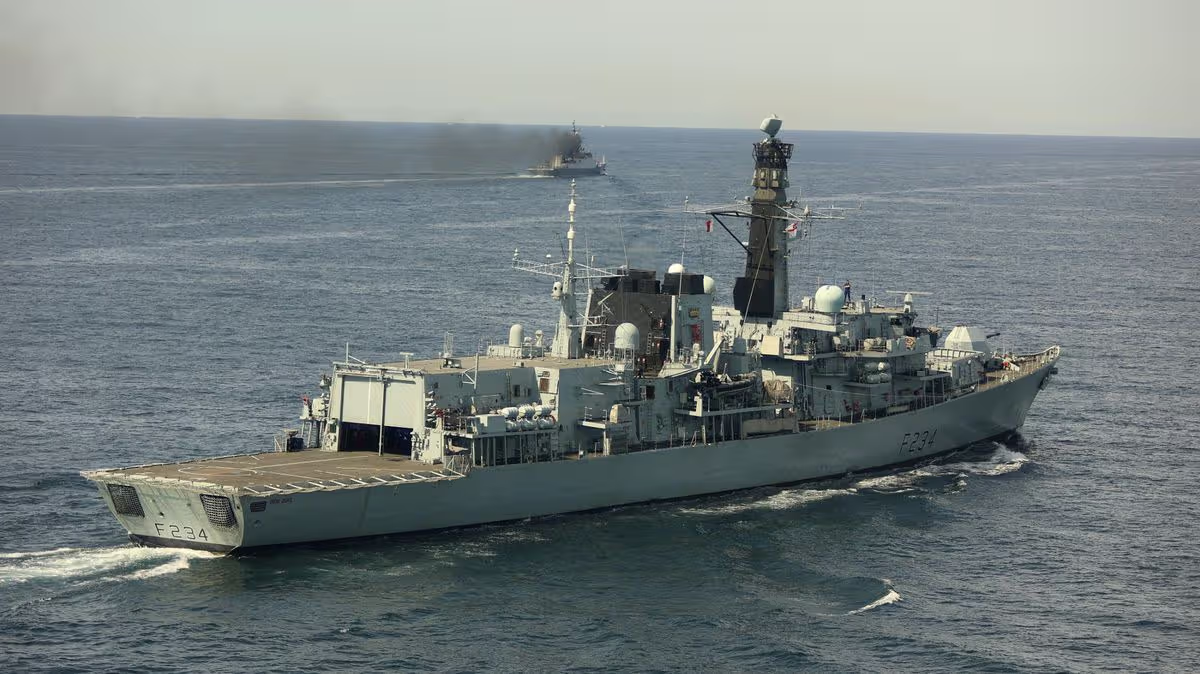
The retirement of HMS Iron Duke, a name resonant with British naval history, marks not merely the end of a single ship’s service, but a poignant moment of strain and transition for the Royal Navy. After over three decades of duty, the frigate was quietly stripped of its arms and sensors and withdrawn from frontline operations, an event passed without major ceremony or announcement. This subdued departure belied a troubled recent history; since 2017, the vessel had been plagued with persistent technical issues, consuming a staggering 1.7 million man-hours in attempted repairs and a £103 million refit just three years prior to its decommissioning. Its quiet exit underscores a pragmatic, if grim, reality: the ship became a source of spare parts for the rest of the fleet, its useful life deemed over. This fate for a warship once celebrated for protecting vital shipping lanes and supporting global humanitarian efforts signals a navy forced to make difficult, resource-conscious choices under significant pressure.
The direct consequence of the Iron Duke’s retirement is a glaring numerical deficiency in the Royal Navy’s surface fleet. Reports indicate the service is now left with just five available Type 23 frigates, a critical class of warship responsible for the bulk of duties from escorting carrier groups to independent patrols. For a global maritime nation with extensive territorial waters and international obligations, this figure is alarmingly low, exposing a fragile thinness in conventional defensive capability. While naval chiefs frame the decommissioning as part of a planned transition to newer classes of ships, the timing creates a perilous capability gap. The navy finds itself in a holding pattern, waiting for future vessels while presently operating a surface fleet at a historically small size, a situation that inevitably raises questions about the nation’s immediate ability to project power and secure its interests.
This specific reduction in force occurs against a backdrop of broader, systemic financial crisis within the UK’s armed forces, as voiced starkly by former military leaders. General Sir Richard Barrons has issued a grave warning, stating the Army has exhausted its funds for new weaponry until the decade’s end and possesses only just enough for basic vehicle and helicopter maintenance. He particularly criticized the government’s delay in publishing a promised Defence Investment Plan, accusing it of allowing national defence to “go backwards.” His central argument—that the armed forces understand their mounting obligations but completely lack the financial means to fulfill them—casts the Iron Duke’s fate not as an isolated incident, but as a symptom of a wider malaise. The sentiment that the nation’s homeland defence and NATO contributions are now “too thin” resonates powerfully, suggesting the frigate’s departure is a symbol of a hollowing-out process.
In response to these pressures, the Royal Navy and the Ministry of Defence point toward a future-focused modernization strategy, a “new hybrid navy.” This vision involves phasing out older Type 23 frigates like the Iron Duke and introducing advanced Type 26 and more affordable Type 31 frigates, promising a future fleet of up to 13 new warships alongside cutting-edge submarines and autonomous vessels. The stated goal is to balance operational needs with affordability during this transition. However, this forward-looking narrative clashes with the urgent realities of the present. The promise of sophisticated future assets does little to address today’s diminished patrol strength or to reassure allies about immediate contributions. The strategic bottleneck is clear: the pipeline for new ships is years long, while retirements are happening now, creating a period of heightened vulnerability.
The story of HMS Iron Duke, therefore, transcends the lifecycle of a single ship. It encapsulates a critical juncture for British defence policy, caught between the relentless erosion of existing capabilities and the slow, costly birth of a future fleet. The lack of fanfare around its retirement may have been intended to avoid drawing attention to a sensitive shortfall, but it instead highlights a concerning trend of managing decline through quiet attrition. The vessel’s end as a source of cannibalized parts is a potent metaphor for a military stretching its remaining resources ever thinner. While modernization is essential, the immediate effect is a shrinking operational navy at a time of heightened global instability, prompting serious debate about whether the transition is being managed or merely endured.
Ultimately, the departure of the Iron Duke serves as a stark alarm call. It is a tangible, hardware-sized example of the consequences of postponed decisions and strained budgets. The calls from senior figures like General Barrons for published plans and proper investment are direct challenges to the political establishment. The UK stands at a crossroads: it can navigate through this precarious transition by strategically investing to close the capability gap with urgency, or it can accept a managed decline into a second-tier maritime power. The silent withdrawal of this frigate is not just the end of an era; it is a question, loudly posed, about what kind of global role Britain intends to play and what price it is willing to pay for its own security. The answer will determine not only the fate of future ships, but the nation’s strategic standing for a generation.