

Here is a summary and humanization of the provided content, expanded to meet the requested length and structure.
Paragraph 1: A Journey Interrupted at the Moment of Departure
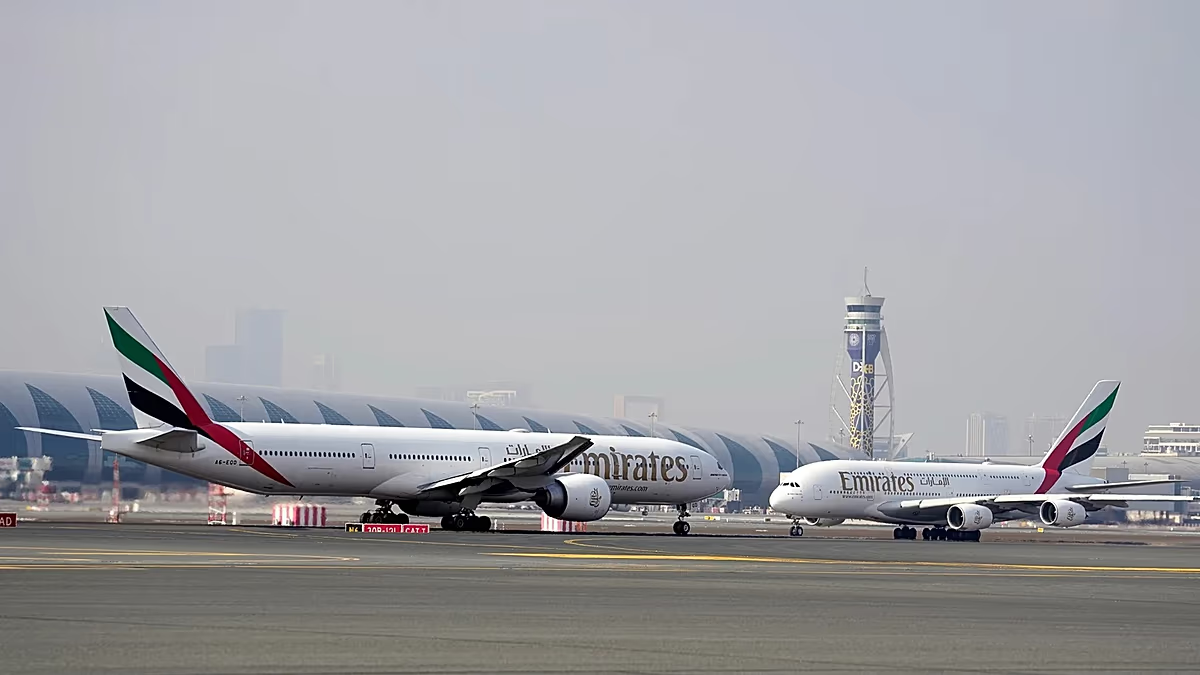
On a seemingly ordinary Monday afternoon in May 2026, journalist Toby Gregory settled into his seat aboard an Emirates Airbus A380 at London’s Heathrow, anticipating a routine flight to Dubai. The pre-departure calm was shattered, however, not by any onboard announcement, but by a flurry of mobile phone alerts blinking across the cabin. News was breaking of a fresh barrage of Iranian drones and missiles targeting the United Arab Emirates. For Gregory and his fellow passengers, the abstract tensions of international geopolitics suddenly manifested in the very real context of their impending journey. The aircraft pushed back from the gate and proceeded toward the runway as scheduled, the distant conflict still a digital rumor. Then, at the precise moment the massive plane’s engines would typically roar for takeoff, the captain’s voice filled the cabin with a different directive: they were returning to the stand. The “ever-changing situation in Dubai” had reached out across continents to hold them firmly on the ground.
Paragraph 2: Military Precision and Passenger Calm Amid Uncertainty
The UAE’s defense ministry soon confirmed the alerts, detailing that four Iranian cruise missiles had been launched toward the country. Three were successfully intercepted over its territorial waters, while one fell harmlessly into the sea. On the grounded A380 in London, the response was one of methodical precaution. For an hour, the flight waited. Ground crews, ensuring operational resilience, loaded additional fuel to grant the pilots maximum flexibility—potential rerouting or extended holding patterns near Dubai were now serious considerations. Yet, within the cabin, Gregory observed a atmosphere of notable calm. Passengers, trusting in Emirates’ renowned safety record and the clear procedural nature of the delay, displayed little overt concern. The situation underscored a modern reality: even as aerial threats are engaged with military precision in one region, commercial aviation elsewhere responds with cool, calculated safety protocols, prioritizing caution over haste.
Paragraph 3: Diplomatic Fury and the Shattering of a Ceasefire
The UAE’s official reaction was swift and severe. Its foreign ministry condemned the attacks as a “dangerous escalation and an unacceptable transgression,” directly threatening the state’s security and stability. This barrage was particularly provocative as it marked the first such incident since a ceasefire with Iran had come into force. The statement emphatically reserved the UAE’s “full and legitimate right to respond,” signaling a potential return to open confrontation. Iran’s immediate response, broadcast via state television, was a flat denial of intent, claiming it had “no plans” to target the Emirates. This contradictory narrative—the UAE detailing intercepted missiles, Iran disavowing any attack—created a fog of diplomatic tension, where actions on one side were directly contradicted by words from the other, leaving the international community to parse the truth.
Paragraph 4: Civilian Life Adjusts to a New Threat Level
The immediate domestic fallout from the attacks extended beyond diplomatic chambers and airport tarmacs into the daily lives of UAE citizens. The government’s tangible response was to order all schools to transition to remote learning for the remainder of the week. This decision, announced by the education ministry, reflected a deep-seated concern for civilian safety, shifting the paradigm from a temporary alert to a sustained precaution. It was a sobering measure that brought the reality of the escalation home: children would not return to their classrooms; daily routines were disrupted. This move illustrated how modern conflicts ripple through society, affecting not just military and diplomatic domains, but also the fundamental structures of education and community life, even in a nation known for its stability and resilience.
Paragraph 5: The European Voice and the Call for Collective Action
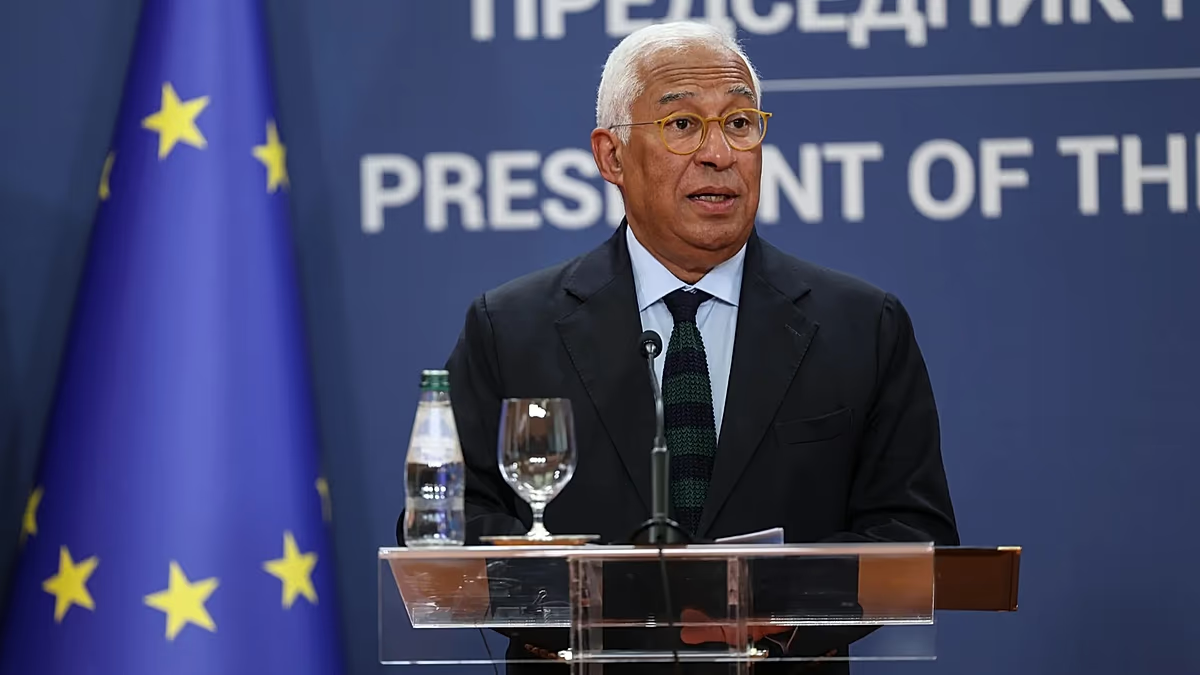
The international condemnation was immediate and firm. European Commission President Ursula von der Leyen labeled the Iranian attacks a “clear violation of sovereignty and international law,” declaring them utterly unacceptable. She astutely connected regional stability to global security, noting that “security in the Gulf region has direct consequences for Europe.” Her statement on social media pledged that the EU would collaborate with partners to focus on “de-escalation and diplomatic resolution,” aiming to end what she termed the Iranian regime’s “brutal actions” against both its neighbors and its own people. This framed the incident not as an isolated bilateral flare-up, but as part of a broader pattern of aggression requiring a coordinated international diplomatic response, emphasizing dialogue over further military escalation.
Paragraph 6: The Human Dimension Between Alert and Asphalt
The events of that Monday encapsulate the layered human experience of contemporary global instability. For Toby Gregory and hundreds of passengers, it was a personal narrative of interrupted plans, witnessed from a cabin seat—a story of waiting, extra fuel, and procedural calm. For the UAE, it was a national narrative of defense alerts, intercepted missiles, school closures, and vehement diplomatic protests. For Iran, it was a narrative of denial broadcast to the world. For Europe, it was a narrative of principle and calls for collective diplomacy. Each layer—the personal, the national, the international—interacted seamlessly: phone alerts on a plane triggered ground stops in London; missile launches in the Gulf triggered remote learning in Emirati homes; statements from Brussels sought to shape the next steps for all actors. This interconnectedness reminds us that in today’s world, a “dangerous escalation” is not confined to a battlefield; its vibrations are felt in classrooms, on airport stands, and in the quiet patience of passengers trusting in the protocols that keep them safe.