


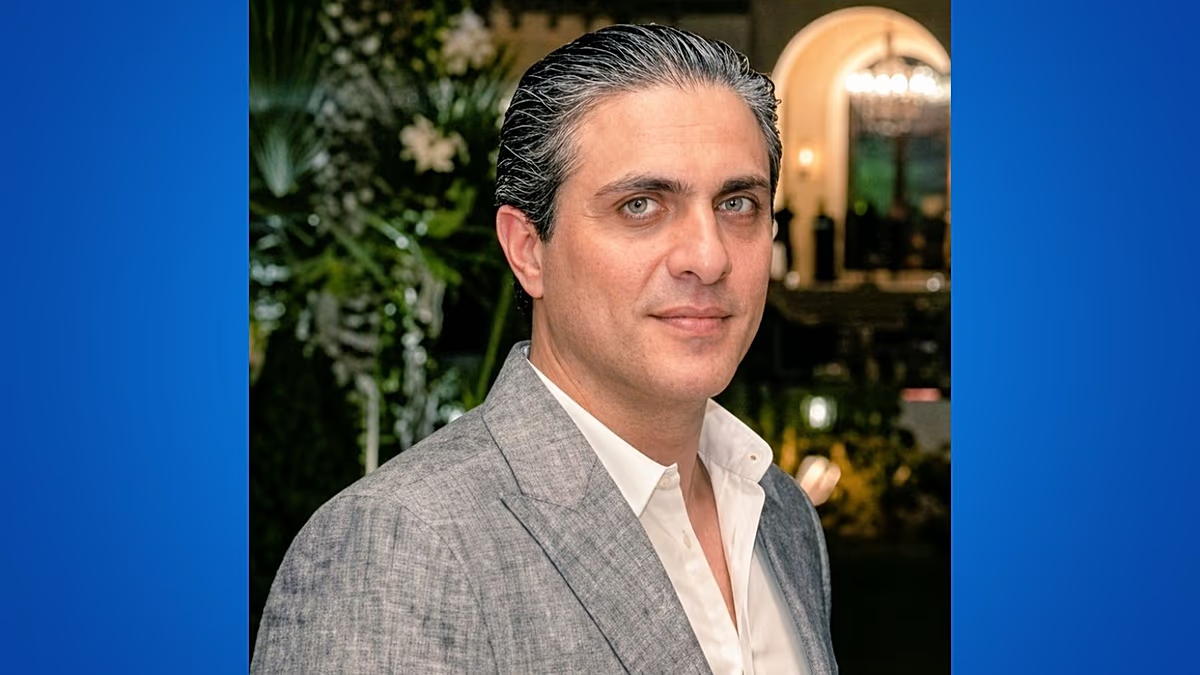
The tragic death of Hesam Alaeedin, an Iranian businessman, underscores the perilous intersection of state power, technological access, and familial loyalty in a climate of profound unrest. According to a report by the human rights organization the Abdorrahman Boroumand Foundation, Alaeedin, a 40-year-old father of two, died as a result of beatings inflicted while he was under arrest. His ordeal began when he visited security authorities to inquire about the status of his detained brother. This brother had himself been accused of using Starlink satellite internet equipment—a service providing a bypass to state-controlled networks—and was reportedly also subjected to violence by agents. These events paint a harrowing picture of a system where the simple act of seeking information about a loved one can lead to fatal consequences. The exact timeline remains obscured, but unconfirmed reports suggest Alaeedin’s body was handed to his family and buried just last Wednesday, leaving a community in mourning and a story shrouded in official silence.
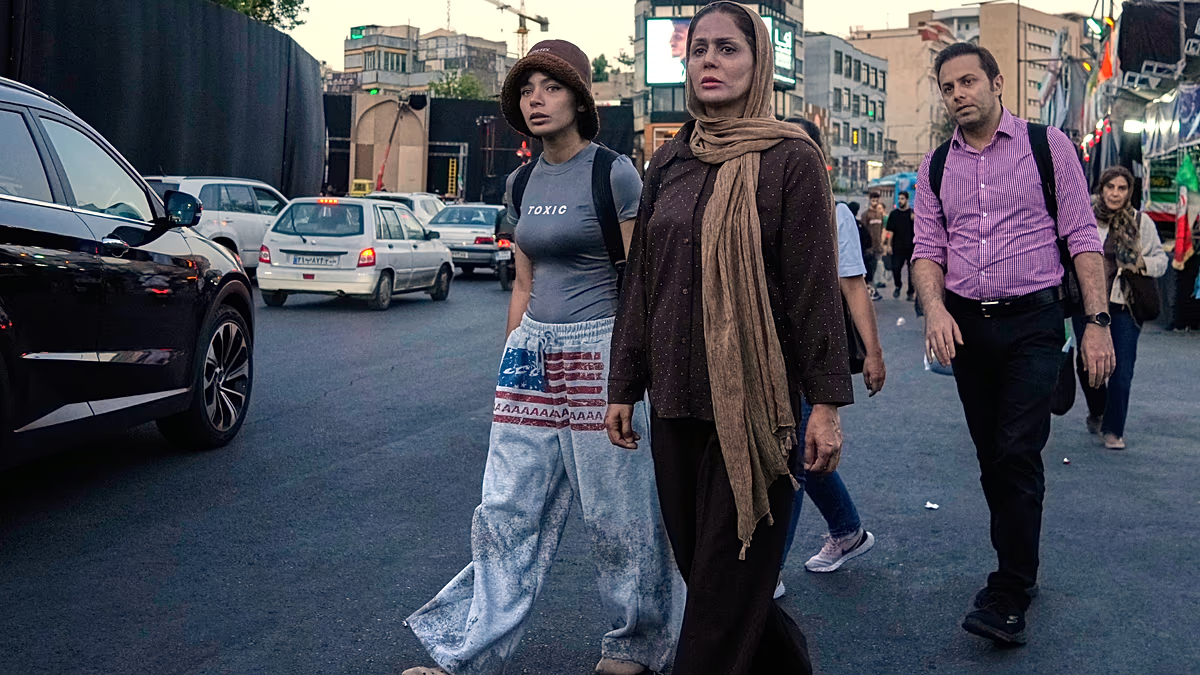
The context of this individual tragedy is deeply rooted in Iran’s ongoing socio-political and economic struggles. Hesam Alaeedin was a member of the prominent Alaeedin family, whose name is attached to a shopping centre in Tehran. This very location became a symbolic flashpoint last December, when protests over soaring prices and inflation erupted there before spreading to cities across the country. Such protests have repeatedly highlighted public frustration with economic hardship and governmental policies. The Alaeedin family’s association with this centre of dissent, however tangential, may have inadvertently placed them under a sharper spotlight from authorities wary of any symbols of gathering discontent. This backdrop transforms Alaeedin’s death from an isolated incident into a potential reflection of a broader pattern of response to perceived dissent, even when exercised through familial concern rather than overt political action.
Central to this case is the Iranian state’s intense crackdown on unauthorized internet access, specifically targeting Starlink technology. For 64 days, coinciding with a period of heightened regional tension following a military attack by the United States and Israel, Iranian authorities have enforced a severe internet shutdown, severing most of the population from the global internet. In this digital void, Starlink terminals—which connect via satellite independent of local infrastructure—have become coveted tools for bypassing state censorship. However, access is described as limited to a very small number of high-income individuals who can procure the equipment through costly and unofficial channels. The government has explicitly warned that owners and users of Starlink face legal prosecution, framing its use not just as a technical violation, but as a threat to state security and control over information flows. Alaeedin’s brother’ alleged use of Starlink thus placed him directly in the crosshairs of this draconian policy.
The reporting of this incident itself faces the formidable barriers erected by the state. Euronews Persian, along with other international media, notes the inability to independently verify the details due to the ongoing internet shutdowns and restrictions within Iran. The judiciary’s official position remains unclear, with no public statements acknowledging or explaining the events. This information vacuum is a deliberate feature of the environment, making the work of human rights groups and external journalists extraordinarily difficult. It forces reliance on unconfirmed reports and foundational investigations, while allowing the state to avoid accountability through silence. The death occurs in a shadowy space where official narratives are absent, and the only light comes from the diligent, risky work of civil society organizations operating both inside and outside the country, piecing together stories from bereaved families and scattered testimonies.
The human cost of these policies is profound and multifaceted. Hesam Alaeedin was not a political activist in the overt sense; he was a businessman and a family man who went to seek answers for his brother. His death illustrates how the state’s security apparatus can extend its violence beyond direct political targets to encompass anyone tangentially associated with a prohibited act—in this case, the pursuit of uncensored information. The psychological and social impact on his family, his two children, and the wider community is immense. Furthermore, the internet shutdown, intended to quell dissent and control narrative, has a catastrophic societal cost, isolating citizens from global knowledge, economic opportunities, and even basic communication, while creating a black market for connectivity that only the wealthy can access. This deepens inequalities and fosters a climate of fear and isolation.
Ultimately, the case of Hesam Alaeedin is a stark reminder of the realities facing many Iranians under current conditions. It is a story of a life cut short by violence allegedly administered by state agents, of a family torn apart by arrest and death, and of a society struggling under the weight of both economic protest and intense digital repression. While the precise facts await independent verification, the reported narrative aligns with documented patterns of conduct. It calls for international attention to the human rights situation in Iran, particularly regarding the treatment of detainees, the use of violence by security forces, and the severe restrictions on information that both enable such abuses and obscure them from the world. His death is not just a personal tragedy; it is a symbol of the climate of risk, control, and silence that defines daily life for countless individuals in Iran.