



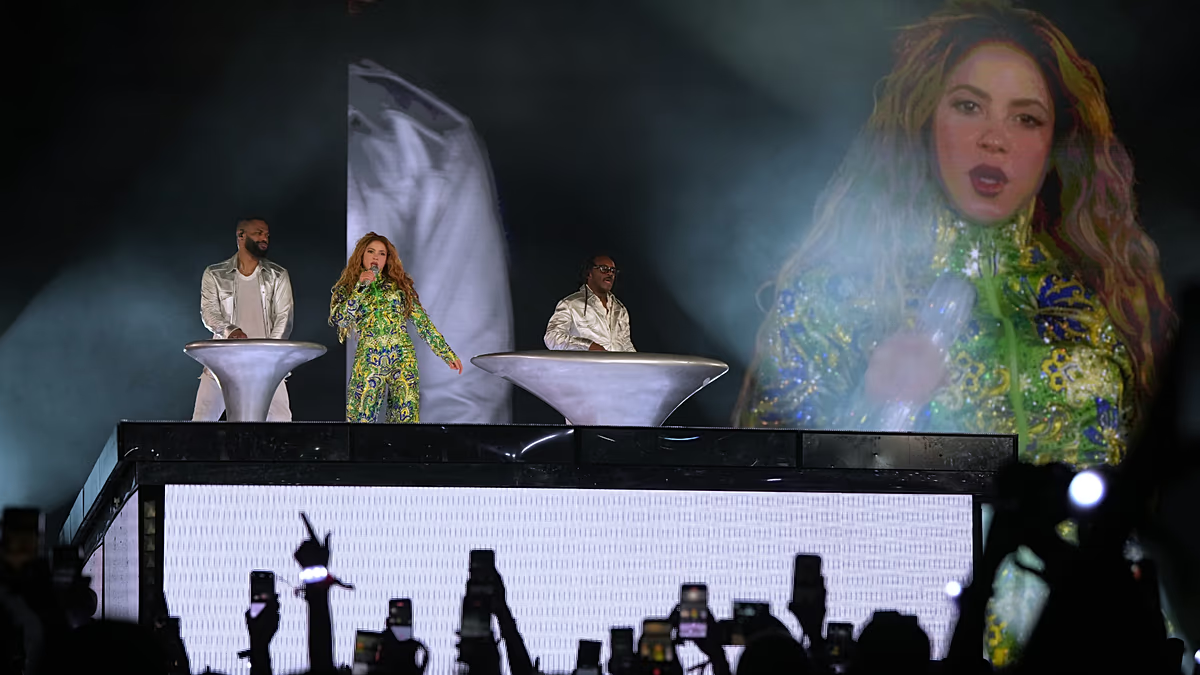
Beneath the vast, star-dusted sky of Rio de Janeiro, the sands of Copacabana Beach, so often a stage for life itself, transformed into a pulsing, open-air cathedral for pop music. On a recent Saturday night, Colombian superstar Shakira delivered a monumental free concert, a gift to her legion of Brazilian fans and a historic entry into the annals of this iconic location. Rio’s mayor estimated a staggering crowd of two million people—a swirling, joyous sea of humanity stretching as far as the eye could see along the famous crescent shoreline. This was more than a performance; it was a cultural event, a collective gathering that mirrored the scale and spirit of the legendary waterfront itself, joining the ranks of other pop titans who have commanded its sprawling stage.
As the anticipation reached a fever pitch, the night sky over the Atlantic Ocean became the first canvas for the spectacle. Around 11:00 pm, an hour past the scheduled start, a fleet of drones took flight, painting the darkness with glowing Portuguese script: “Eu te amo Brasil” – “I love you, Brazil.” This heartfelt, high-tech declaration ignited a final wave of screams and frantic applause from the multitude below, a perfect prelude to the star’s arrival. When Shakira finally emerged, the energy was less that of a conventional concert and more of a seismic reunion, a validation of the crowd’s patient, exuberant vigil under the coastal moon.
What followed was a two-hour journey through a career that has soundtracked a generation. From the opening chords, Shakira powered through a setlist of anthems that commanded instant, collective participation. The irresistible hips did not, in fact, lie during her global smash; the passionate angst of “La Tortura” echoed across the water; and the joyful bounce of “La Bicicleta” turned the beach into a carnival. Each song was a shared memory, sung back to her by a chorus of millions, their voices merging with the rhythm of the waves. This was a testament to her unique artistry—a blend of rock sincerity, pop precision, and Latin soul that has created a universal language of rhythm and emotion.
The concert, however, was more than a career retrospective. It was a powerful, resonant chapter in her personal and artistic rebirth. As part of her “Las Mujeres Ya No Lloran” (“Women No Longer Cry”) world tour, named for her 2024 album, the performance was infused with a spirit of defiant resilience. She paused mid-set to offer a spoken tribute to feminine strength, telling the crowd, “Us women, every time we fall we get up a little wiser.” This theme reached its emotional apex with the finale, the blistering “BZRP Music Sessions #53,” a track born from the ashes of her painful separation from footballer Gerard Piqué. Here, on the world’s stage, her private heartbreak was transmuted into a public roar of empowerment, turning pain into fuel and solidarity.
In this context, the event on Copacabana was not an isolated phenomenon but part of a grand tradition, solidifying the beach’s status as the preeminent global venue for pop spectacle. It followed similar, era-defining shows by Madonna earlier in 2024 and Lady Gaga the year prior, each drawing their own oceanic crowds to dance upon the sands. These concerts are modern-day pilgrimages, where the geography of the city—the mountain, the sea, the vast urban expanse—becomes part of the show. For Rio, these events are a showcase of its breathtaking capacity for celebration; for the artists, it is the ultimate challenge and reward: to connect, intimately and profoundly, with a number of people that is almost incomprehensible.
Ultimately, Shakira’s night on Copacabana was a masterful synthesis of the personal and the planetary. It wove together threads of gratitude to her fans, celebration of cultural identity, and a narrative of personal triumph. The two million souls present were not merely spectators but active participants in a ritual of release, joy, and collective strength. As the final notes faded into the humid air, mixing with the sound of the receding tide, what remained was the indelible image of an artist, once defined by a highly public personal life, now standing unequivocally in her own power. On that famous beach, she demonstrated that when music, message, and place align in perfect harmony, the result is a historic moment of pure, unbridled human connection.