


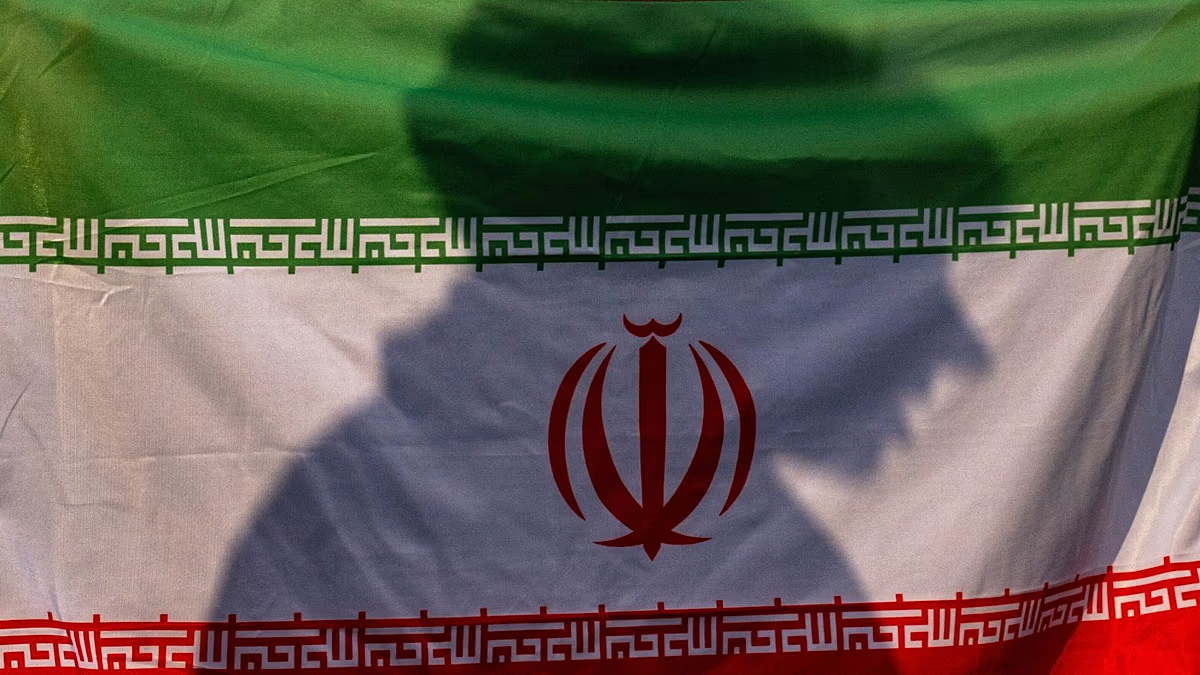
The grim machinery of state execution in Iran has accelerated once more, marked by the recent deaths of Yaqoub Karimpour and Nasser Bakarzadeh. According to Iranian judiciary statements, the two men were executed on charges of “spying for Israel,” a familiar and often broadly applied accusation in the nation’s security courts. This development is not an isolated incident but part of a pronounced and alarming surge in executions, which has continued unabated despite mounting international condemnation. The judiciary’s chief, Gholamhossein Mohseni Ejei, has explicitly dismissed such external pressure, vowing to show “no leniency” and pay no heed to the “bluster of the arrogant powers.” These statements frame the executions not merely as judicial acts, but as defiant assertions of national sovereignty in the face of perceived foreign aggression, positioning internal dissent as inseparable from external threats.
Behind the official charges lie deeply troubling human stories that reveal the brutal realities of Iran’s justice system. Yaqoub Karimpour, a 41-year-old member of the Yarsan religious minority, was arrested in June 2025. According to the Human Rights Activists News Agency (HRANA), he was denied access to a lawyer and family visits throughout his detention, and was subjected to approximately two months of security interrogation, ostensibly to extract forced confessions. Nasser Bakarzadeh, identified as a Kurdish political prisoner, was arrested in December 2023 and tried multiple times by the Revolutionary Court in Urmia. A haunting audio file, reportedly from him inside Urmia prison, captures the profound despair of those caught in this system: “Every moment I see my own death.” Their cases underscore a pattern where ethnic and religious minorities, along with political detainees, face disproportionate targeting under national security charges.
The specific allegations against the men, as presented by the judiciary, illustrate the sweeping nature of espionage accusations. Karimpour was accused of “effectively cooperating” with Israel’s Mossad during a brief conflict in June 2025 by transmitting sensitive national information. Bakarzadeh was charged with collecting details on senior political and religious figures, as well as coordinates of strategic locations like the Natanz nuclear facility, and relaying them to an Israeli intelligence officer. While these claims are presented as grave threats to national security, human rights groups often view such charges with extreme skepticism, noting they are frequently used to legitimize the suppression of dissent, activism, or simple affiliation with marginalized groups, with evidence procured through coercion and trials lacking fundamental fairness.
The executions of Karimpour and Bakarzadeh are but two data points in a much broader and more terrifying trend. As reported by the Hengaw human rights organization, at least 26 prisoners were executed in Iranian prisons in April 2026 alone. Disturbingly, at least 14 of those were political prisoners, and one was a woman. This wave of state-sanctioned killing appears to run parallel to heightened regional tensions, including military engagements involving the United States and Israel, suggesting authorities are using executions as a tool to project strength and instill fear within society. The message is clear and chilling: in times of external pressure, internal “enemies” will be met with the ultimate punishment, creating an atmosphere of pervasive intimidation.
The international response has been one of consistent yet seemingly ineffective alarm. The UN human rights office and major human rights organizations have repeatedly voiced profound concern over Iran’s execution spree, condemning it as a mechanism of political repression and a violation of the right to life and due process. However, the rhetoric from Tehran’s judiciary chief demonstrates a resolute rejection of these appeals. His framing characterizes international criticism as the propaganda of an “aggressor enemy,” thereby justifying further crackdowns as acts of national defense. This creates a closed loop where external calls for mercy are used to fuel domestic propaganda, hardening the regime’s position and further isolating detainees from global protection.
Ultimately, the fates of Yaqoub Karimpour and Nasser Bakarzadeh transcend the specific, and likely fabricated, charges against them. They represent the human cost of a strategy that conflates security with brutality, and sovereignty with impunity. Their executions—following reported torture, denied legal rights, and shrouded in judicial secrecy—epitomize a system designed to eliminate perceived threats without transparency or mercy. As the execution toll rises, each death reinforces a stark reality: within Iran’s current political landscape, the lives of minorities, dissidents, and the accused are perilously vulnerable to the state’s most lethal and uncompromising instincts, deployed both to punish individuals and to telegraph a message of ruthless control to the nation and the watching world.