



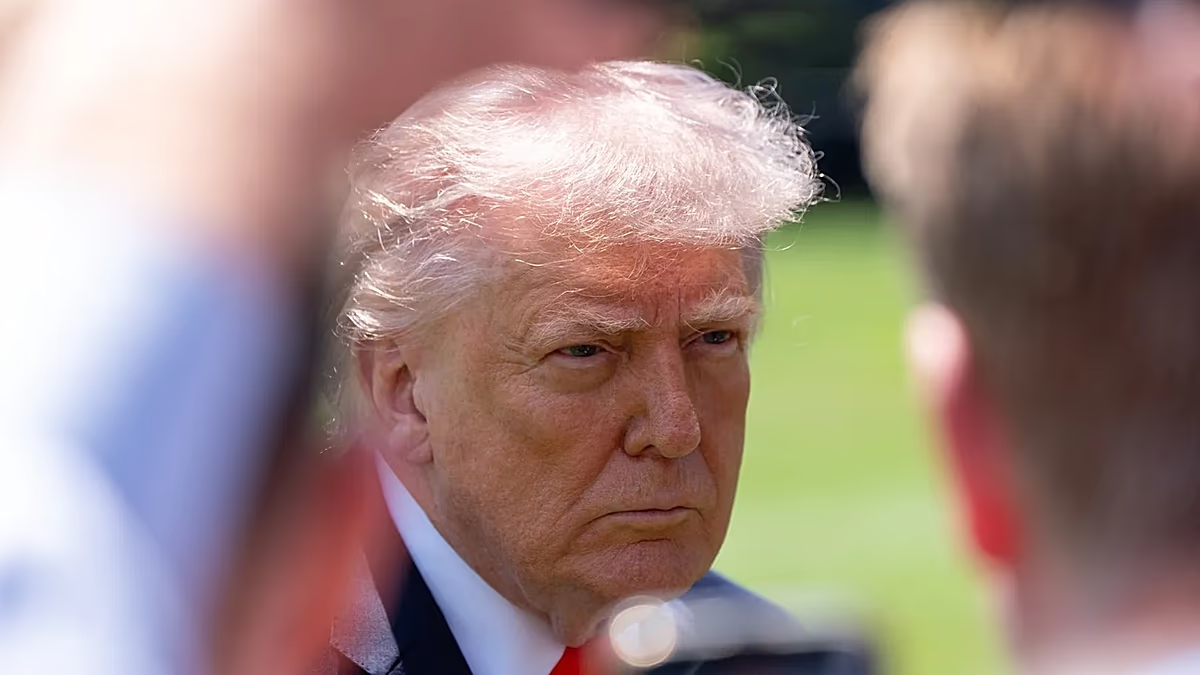
In late April, amidst a fragile ceasefire in the ongoing conflict between the United States and Iran, President Donald Trump publicly expressed dissatisfaction with a new, confidential diplomatic proposal from Tehran. The proposal, delivered via mediator Pakistan, offered a glimmer of hope for resolving a war that began with surprise U.S. and Israeli strikes in late February. However, Trump framed the situation in starkly binary terms, telling reporters that the options were either to “blast the hell out of them and finish them forever” or to “try and make a deal.” While he stated a human preference for negotiation, his blunt rhetoric underscored the profound tension between a desire for decisive military victory and the practical pursuit of a diplomatic settlement. This moment captured the core dilemma of the conflict: a military stalemate paired with a diplomatic deadlock, with the world economy suffering under the strain of Iran’s blockade of the critical Strait of Hormuz.
The details of Iran’s proposal remained scant, but reports suggested it was part of a complex, shadow-dance of offers and counteroffers. While Iranian judiciary chief Gholamhossein Mohseni Ejei asserted that the nation “has never shied away from negotiations,” he equally stressed it would “not accept imposition.” Meanwhile, the U.S., through envoy Steve Witkoff, reportedly sought to reintroduce constraints on Iran’s nuclear program into the talks, specifically demanding that Tehran not move enriched uranium from bombed sites or resume activities there. This indicated that Washington aimed to leverage the ceasefire to address pre-war concerns beyond the immediate conflict, weaving long-standing strategic anxieties into the present crisis. The mere existence of the proposal, however, sent a ripple through global markets, briefly lowering oil prices, though they remained dramatically elevated due to the prolonged closure of the Strait of Hormuz.
Beyond the direct negotiations, a parallel, constitutional drama unfolded in Washington regarding the legal legitimacy of the war itself. The White House argued that the ongoing ceasefire effectively paused the 60-day clock requiring the President to seek formal war powers authorization from Congress. Trump bolstered this view by insisting the U.S. was “in the midst of a big victory.” This legalistic debate highlighted the domestic pressures mounting on the administration: spiking inflation, no clear path to victory, and looming mid-term elections. The war was becoming a costly endeavor, both economically and politically, challenging the narrative of triumph the President sought to project.
In Iran, the human and economic costs of the conflict were becoming increasingly severe, compounding years of pre-existing international sanctions. The U.S. reinforced this pressure by imposing new sanctions on Iranian financial firms and warning that any payments to Tehran for safe passage through the Strait of Hormuz could trigger further penalties. The U.S. military claimed its counterblockade had already prevented $6 billion in Iranian oil exports, while inflation inside Iran soared past 50%. The war was not a remote abstraction but a grinding reality, squeezing the Iranian populace and economy, potentially influencing Tehran’s calculus at the negotiating table.
The international community watched anxiously, with European Union foreign policy chief Kaja Kallas engaging Iran’s foreign minister by phone to discuss reopening the Strait of Hormuz. The global stakes were immense; the prolonged blockage of this vital maritime corridor continued to strangle the flow of oil, gas, and fertilizers, exacerbating worldwide economic instability and inflation. The ceasefire, while holding, was a tense and temporary respite, not a solution. Each side remained entrenched, with the U.S. seeking to capitalize on military pressure to secure broader concessions, and Iran asserting its sovereignty while facing deepening internal crisis.
Ultimately, the moment portrayed a conflict trapped in a perilous equilibrium. Military action had proven inconclusive, leading to a suspended state of war. Diplomacy, while alive, was faltering, with proposals shrouded in secrecy and laden with historical grievances. Both nations faced escalating domestic consequences—political pressure in Washington, economic collapse in Tehran. The world, hostage to the geopolitical standoff, awaited a breakthrough. The path forward required moving beyond maximalist rhetoric and legal maneuvering to find a formula that addressed both the immediate triggers of the war and the deeper, enduring animosities fueling it. Without this, the fragile ceasefire risked collapsing into a renewed and even more devastating cycle of violence.