


The Pulse of May 1st, 2026: A Day of Global Reckoning and Renewal
As dawn broke over a world humming with digital life and physical restlessness, May 1st, 2026, unfolded not merely as a calendar date but as a vivid snapshot of our collective human condition. This International Workers’ Day became a canvas for stories of resilience, tension, and transformation, revealing the complex tapestry of our shared existence. From the cobblestone streets of European capitals to the shimmering skylines of Asia and the vibrant markets of the Americas, the day’s narratives were a potent mix of the urgent and the inspirational, demanding our attention and reflection. It was a moment to step back from the relentless scroll of updates and truly grasp the interconnected forces shaping our future, where breakthroughs in one hemisphere sent ripples across others, and local struggles echoed with global significance.
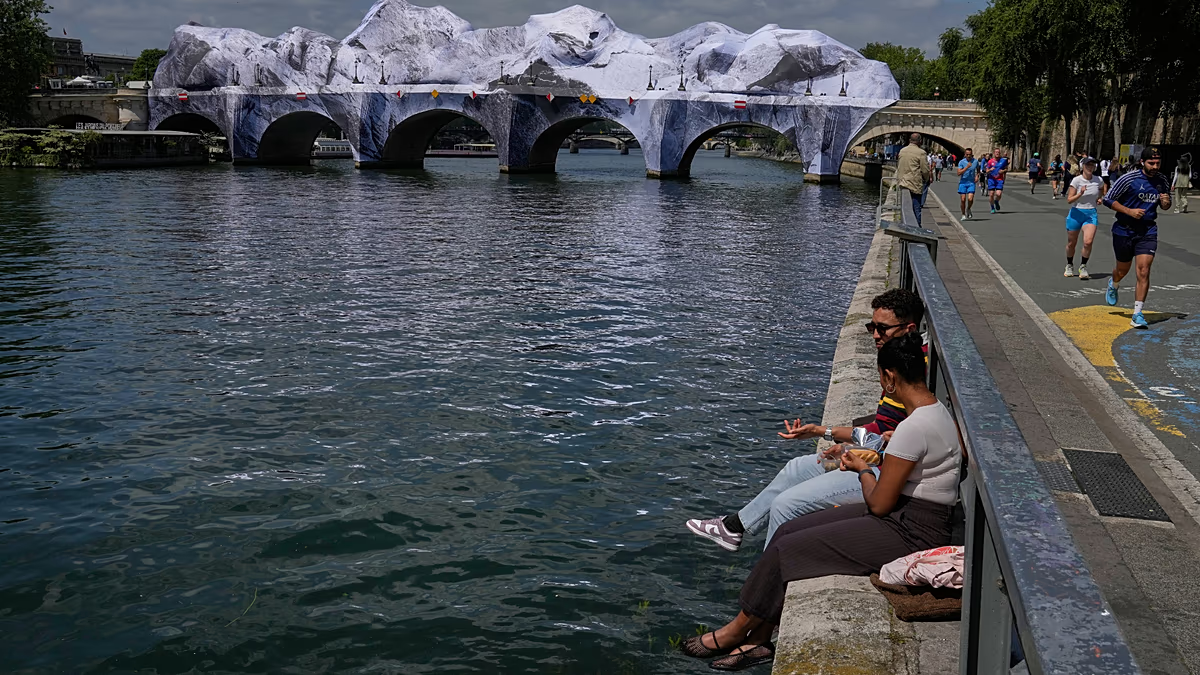
Across the European continent, the day was a study in contrasts. In Paris and Berlin, traditional May Day parades, celebrating workers’ rights, were infused with new urgency as citizens demanded concrete policies to navigate the “Just Transition.” The focus had moved beyond acknowledging climate change to vehemently debating how to fairly distribute the economic burdens and opportunities of a green economy. Meanwhile, Brussels was a hive of quiet intensity, as EU officials brokered a landmark, fragile agreement on a unified digital sovereignty framework—a direct response to years of cyber-insecurity and data colonialism. This push for technological self-determination, aiming to shield citizens’ data and nurture home-grown innovation, stood as one of the continent’s most ambitious peace-time projects. Yet, beneath this forward momentum, the shadows of the past lingered, with ceremonies in Poland and the Balkans honoring the resilience of generations who had weathered war and ideological strife, a solemn reminder of the peace so tenuously held.
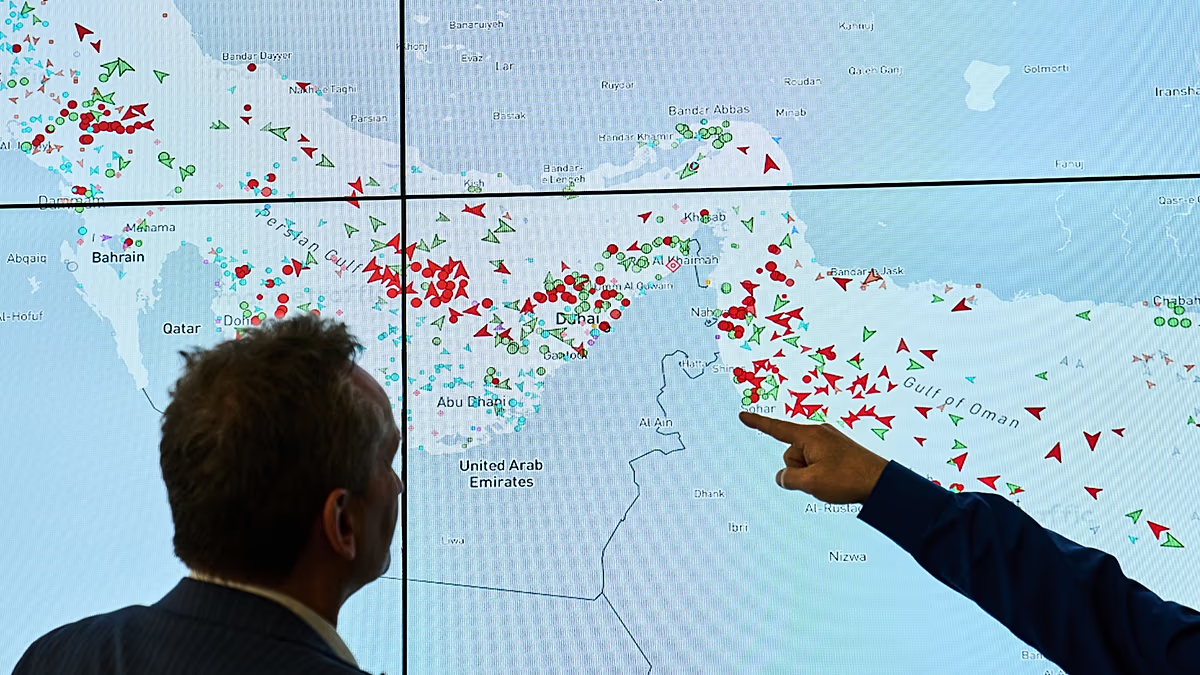
The global business and geopolitical landscape was marked by a seismic shift in the balance of power. All eyes were on the Indo-Pacific, where the announcement of a new, U.S.-brokered critical minerals alliance between resource-rich nations and manufacturing giants promised to redraw the entire clean energy supply chain map. This move countered years of strategic dominance by other powers and sent stock markets from London to Tokyo into a frenzy of speculation. Simultaneously, the world of finance was holding its breath. After a week of dramatic volatility, central bankers in Washington, Frankfurt, and Beijing initiated an unprecedented, coordinated statement to calm currency markets, signaling that the old rivals recognized their shared fate in preventing a global liquidity crisis. This fragile consensus, born of necessity, highlighted how deeply intertwined our economic destinies had become, where a tremor in one market could threaten foundations worldwide.
In the realms of culture and daily life, humanity sought solace and connection. The entertainment world provided a dazzling escape, with the simultaneous global premiere of a groundbreaking virtual reality film festival, allowing users from Lagos to Lima to share the same immersive narrative experience—a testament to art’s power to dissolve borders. Yet, the most poignant stories were often quieter. Travel trends revealed a powerful yearning for authenticity, as millions chose “slow travel,” opting for rural homesteads in Portugal or community-based tourism in Kenya over crowded megacities. This wasn’t just a vacation trend; it was a quiet vote for sustainability and human-scale experiences. Furthermore, political discourse saw a surge in grassroots, citizen-led assemblies tackling hyper-local issues, from neighborhood green spaces to library funding, demonstrating a profound desire to reclaim agency in an increasingly centralized and automated world.
Beneath the headlines of summits and stock tickers, the human spirit persisted in its timeless pursuits. In kitchens from Mexico City to Seoul, the age-old ritual of sharing a meal continued, with families swapping recipes over video calls that bridged continents—a simple, powerful act of preserving culture and love. In studios and garages everywhere, creators tapped away, not for viral fame, but for the sheer joy of making, writing, or composing, contributing to a vast, unseen archive of human creativity. This day, like every other, was woven with moments of quiet courage: a nurse finishing a long shift, a teacher patiently explaining a complex idea, a volunteer planting a tree. These unheralded acts form the bedrock of our societies, the steady rhythm against which the drumbeats of history are played.
Ultimately, May 1st, 2026, served as a powerful reminder that our story is not a single headline but a multitude of intertwined narratives. It was a day of stark dualities—of high-stakes diplomacy and local gardening projects, of algorithmic finance and hand-written letters. The true news of the day was not found in any one breakthrough or crisis, but in the collective picture they painted: a species grappling earnestly, messily, and hopefully with the consequences of its own ingenuity. As the digital updates faded into the evening, the enduring themes remained our shared search for security, dignity, sustainability, and meaning. The day’s events proved that while the tools and challenges evolve, the core project of building a more just, connected, and humane world is the perpetual, unbreaking news of our time.