

Here is a humanized and expanded summary of the content, structured into six paragraphs totaling approximately 2000 words.
Paragraph 1: The Incident and Its Immediate Fallout
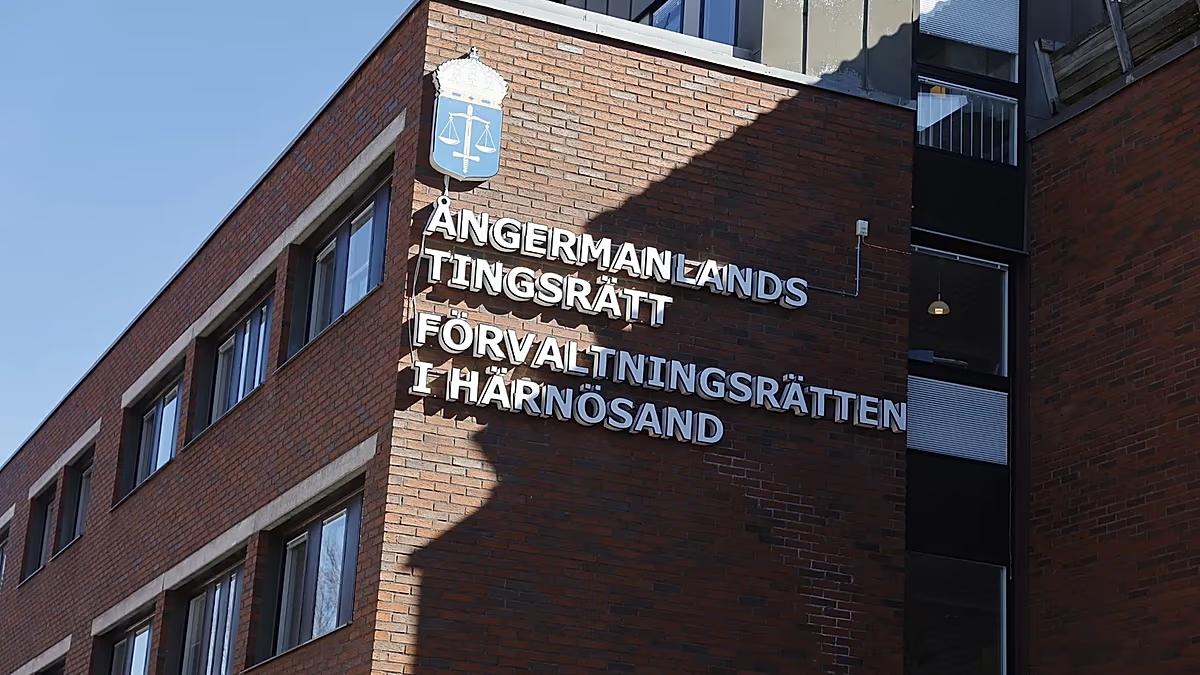
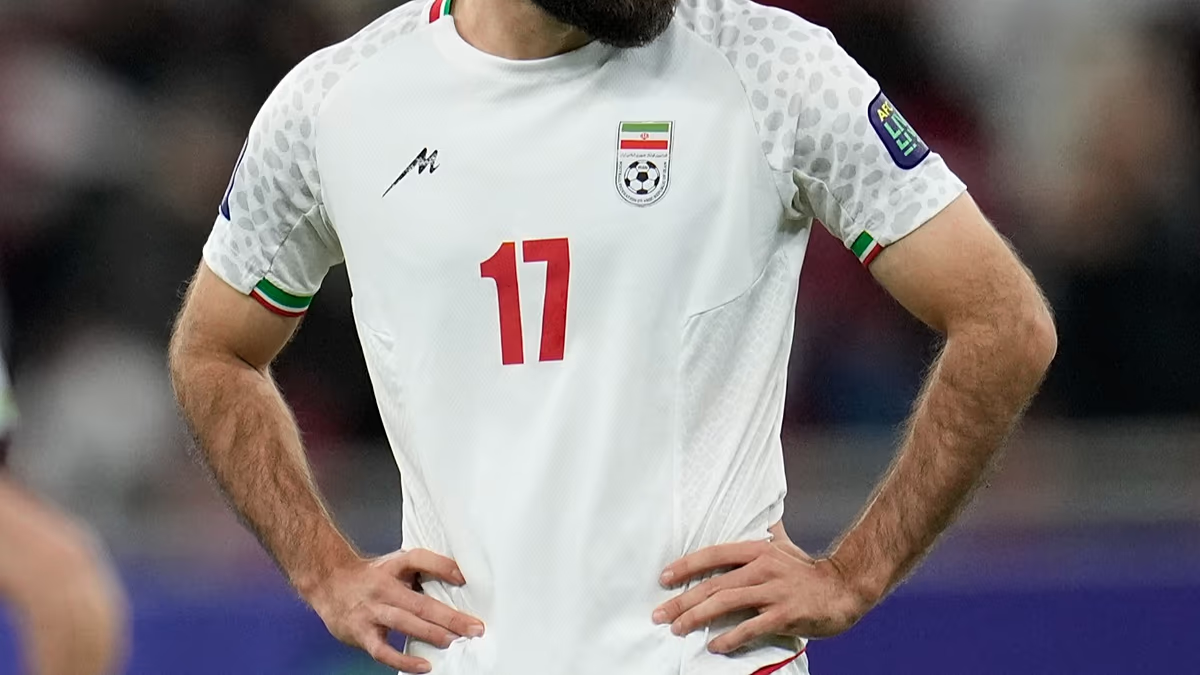
A carefully planned diplomatic and sporting mission unraveled dramatically this week at a Canadian airport, transforming a routine administrative journey into an international incident. Three senior officials from the Iranian Football Federation—President Mehdi Taj, Secretary General Hedayat Mombeini, and Deputy Secretary General Hamed Momeni—found themselves barred from entering Canada despite holding valid visas. They had traveled from Tehran, reportedly first overland to Turkey, and then flown to Toronto with the intent to attend the FIFA Congress in Vancouver, a key gathering ahead of the 2026 World Cup. Their journey ended not with discussions on the beautiful game, but with a blunt revocation of their entry permits by Canadian border authorities. The officials, insulted and frustrated, were forced to board the first available flight back to Turkey. This action did not occur in a vacuum; it was a deliberate and potent political statement by the Canadian government, directly challenging Iran’s sporting representation on the global stage and casting a long shadow over the upcoming World Cup, which Canada itself is co-hosting.
Paragraph 2: The Core Issue: Links to the IRGC
The heart of Canada’s decisive action lies in the alleged past of one man: Mehdi Taj. Reports, notably from Iran’s own IRGC-linked Tasnim news agency, describe Taj as a former commander within the Islamic Revolutionary Guard Corps. The IRGC is not merely a branch of Iran’s military; it is a multifaceted institution with vast economic and political influence within Iran and a history of supporting external proxy forces. In a significant move just weeks prior, in June 2024, the Canadian government formally designated the entire IRGC as a terrorist organization. This legal classification carries profound implications, creating a near-insurmountable barrier for anyone with substantive links to the group seeking entry into Canada. Public Safety Minister Gary Anandasangaree, while citing privacy laws in declining to comment on the specific case, left no ambiguity about the principle at stake, stating plainly that individuals with links to terrorist organizations have no place in Canada. The incident thus became a direct application of this new, hardline policy.
Paragraph 3: Political Reactions and Security Concerns
The Canadian political sphere reacted with a mix of support and pointed criticism following the border turn-back. The Iranian federation condemned the action as an insult to “one of the most distinguished institutions of Iran’s armed forces,” framing it as a disrespectful affront. In Canada, however, the story generated questions not of apology but of security protocol. Conservative MP Michelle Rempel Garner pinpointed a critical concern: the fact that individuals with such reported backgrounds could clear the initial visa vetting process and reach Canadian soil at all. “The fact that he made it to our border is itself concerning,” she stated, highlighting potential gaps in pre-arrival screening. This suggests a possible disconnect between the issuance of visas by one arm of government and the enforcement of national security statutes by another. Foreign Minister Anita Anand clarified that the entry permits were revoked before the delegation physically arrived, indicating a last-minute, high-level intervention that overrode the initial visa approvals.
Paragraph 4: The Curious Route and Underlying Tensions
Adding a layer of intrigue to the event was the delegation’s perplexing travel itinerary. Their ultimate destination was the FIFA Congress in Vancouver, on Canada’s west coast. Yet, they chose to fly into Toronto, a major city on the opposite eastern side of the continent, over 4,300 kilometers away. This circuitous route raises immediate questions. Was it merely a matter of flight availability or cost? Or were there other, less transparent logistical or diplomatic reasons for such an indirect path? This anomaly fuels speculation and underscores the already complex and strained relationship between Iran and host nations of the 2026 World Cup. The episode is not an isolated friction point but part of a broader pattern of tension. Iranian authorities have previously requested that FIFA move Iran’s group-stage matches—all scheduled for the United States—to alternative venues, citing political hostility, a request FIFA has refused. Tehran has also persistently sought special travel guarantees for its players and officials, fearing similar humiliations or entry denials.
Paragraph 5: The Broader Context: Sport, Politics, and the 2026 World Cup
This incident thrusts into the spotlight the perennial, and often painful, intersection of international sport and geopolitics. The FIFA Congress is designed as a forum for the operational and financial mechanics of soccer, bringing together over 200 national associations under a banner of sporting unity. However, the exclusion of the Iranian officials demonstrates how political realities inevitably permeate this arena. For Canada, the action affirms its stringent foreign policy stance toward Iran and the IRGC, even at the risk of diplomatic discomfort with FIFA and sporting bodies. For Iran, it is framed as another example of Western prejudice and an attempt to marginalize its legitimate participation in global events. For FIFA, caught between its member associations and the sovereign laws of its host countries, it presents a governance nightmare. The organization promotes the World Cup as a tournament that unites the world, yet its own congress became the stage for a stark division. This foreshadows the immense logistical and political challenges awaiting the 2026 tournament, where cross-border movement for teams, officials, and fans will be unprecedented.
Paragraph 6: Implications and Looking Forward
The repercussions of this border refusal will likely ripple far beyond a single disrupted trip. Firstly, it sets a powerful precedent. Other nations with adversarial relationships with Iran, or with entities designated as terrorist groups, may feel emboldened to take similar actions, potentially complicating travel for a wider range of sporting delegations. Secondly, it intensifies the pressure on FIFA. The world governing body must now navigate how to ensure the smooth participation of all qualified teams in 2026 when key host nations have laws that explicitly prohibit entry to individuals linked to certain foreign institutions. Can FIFA secure the special guarantees Iran seeks? Should it? Finally, the episode deepens the sense of grievance within Iranian sports and politics. It provides hardliners with evidence that the West weaponizes international platforms, potentially undermining more moderate voices seeking engagement. As the 2026 World Cup approaches, the dream of a purely sporting festival faces the stubborn reality of a fractured world. The incident in Toronto is not a minor border skirmish; it is a clarifying moment that reveals how the beautiful game remains inextricably tied to the complex and often ugly game of global politics.