


Paragraph 1
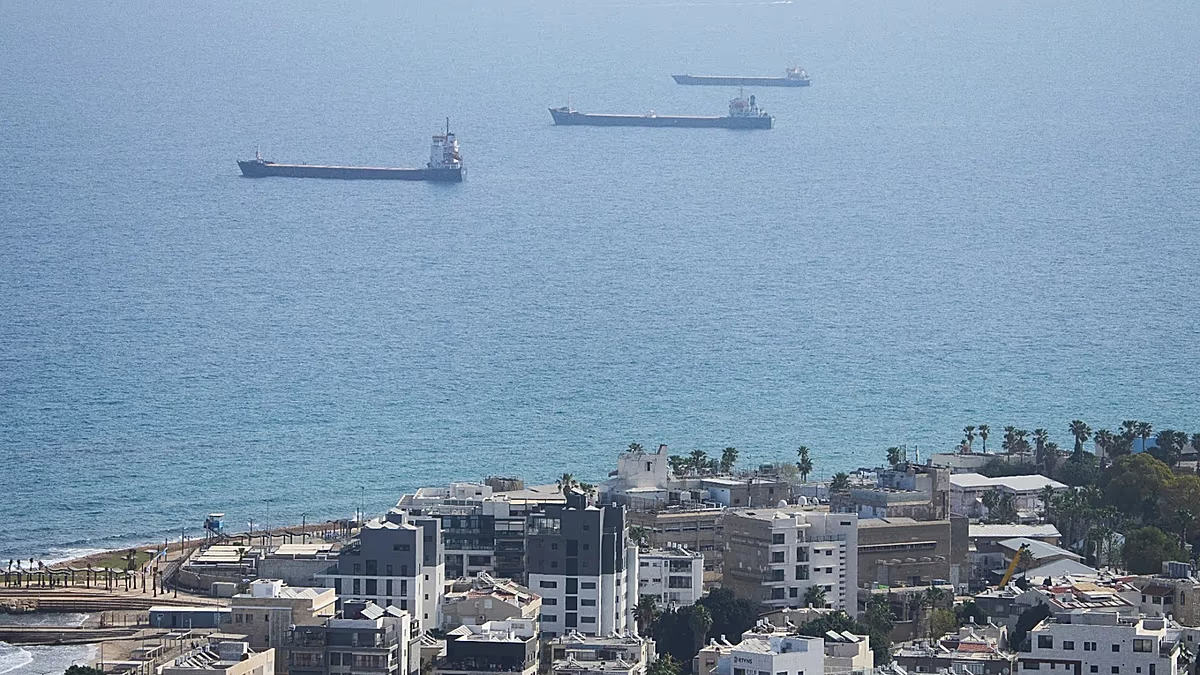
A significant development in the ongoing issue of Russia’s alleged theft of Ukrainian grain has unfolded off the coast of Israel. According to Israeli media reports, the import company Zenziper has stopped the unloading of a cargo ship, the Panormitis, which was suspected of carrying grain looted from Russian-occupied Ukrainian territories. The vessel, flying the flag of Panama, had been waiting to dock at the port of Haifa. This decision represents a tangible, on-the-ground consequence of the intense diplomatic pressure Ukraine has been applying globally to prevent the sale of what it terms “stolen” agricultural products, marking a potential shift in how nations handle these contentious shipments.
Paragraph 2
Ukraine’s government swiftly and publicly welcomed this action. Andrii Sybiha from Ukraine’s foreign ministry stated on social media that the move demonstrates the effectiveness of Kyiv’s persistent legal and diplomatic campaigns. His message carried a clear warning to the international shipping and trade community: “Do not buy stolen Ukrainian grain. Do not become part of this crime.” This framing elevates the issue from a mere trade dispute to a matter of international law and ethics, urging companies, insurers, and governments to scrutinize their supply chains to avoid complicity in what Ukraine asserts is a war crime—the pillaging of resources from occupied land.
Paragraph 3
The details surrounding the halted shipment are telling. Zenziper, citing “the circumstances,” stated it was forced to delay unloading and that the Russian supplier must now find an alternative destination for the cargo. Concurrently, marine tracking data showed the Panormitis moving away from Haifa at near full speed, its final destination unknown. Ukrainian officials identified the cargo as over 6,200 tonnes of wheat and 19,000 tonnes of barley. This incident did not occur in a vacuum; it followed a recent diplomatic clash where Ukraine accused Israel of allowing a previous vessel with similar suspected cargo to unload without intervention, setting the stage for this escalated confrontation.
Paragraph 4
The diplomatic friction between Kyiv and Jerusalem reached a new peak just days before this event. Ukraine formally requested that Israel arrest the Panormitis, a direct legal challenge that intensified existing tensions. Israeli officials, however, pushed back, denying they had received sufficient evidence from Ukraine to justify such an action and criticizing Kyiv’s approach as ineffective “Twitter diplomacy.” This exchange highlights the complex challenges in enforcing accountability in global trade during wartime, where intelligence sharing, legal standards, and political will often clash, leaving vessels like the Panormitis in a legal and logistical limbo.
Paragraph 5
The broader implication of Zenziper’s decision is profound. By refusing the cargo, a private company effectively enforced a moral and reputational red line that governments have sometimes hesitated to cross unequivocally. This action sends a powerful market signal about the growing risks—both legal and reputational—associated with handling commodities of disputed origin from conflict zones. Ukraine has vowed to continue tracking the Panormitis and to warn ports worldwide against facilitating its operations, aiming to turn the vessel into a floating symbol of the difficulties Russia will face in monetizing allegedly stolen goods.
Paragraph 6
In conclusion, the diversion of the Panormitis from Haifa is more than a single ship changing course. It is a microcosm of the wider economic and diplomatic war unfolding alongside the battlefield conflict. It underscores Ukraine’s strategy of leveraging international law and public pressure to isolate Russia economically, while also revealing the precarious position of neutral states and businesses caught in the middle. As the vessel sails toward an uncertain destination, its journey mirrors the ongoing global struggle to define and enforce principles against wartime plunder in the complex, interconnected world of maritime trade. The ultimate fate of its cargo will be a telling indicator of the international community’s commitment to upholding these principles.