

A Tense Morning at Farringdon: An “Unknown Substance” Sparks a Major Emergency Response
The morning commute in central London took a frightening and disruptive turn when Farringdon Station, a major hub for Thameslink and Elizabeth Line services, became the epicenter of a significant emergency incident. British Transport Police, supported by armed officers, raced to the scene following multiple reports of passengers feeling unwell, with initial suspicions pointing towards a potential gas leak. The response was immediate and sweeping: the entire station was evacuated, and as a precaution, several nearby office buildings were also emptied. Within moments, the orderly flow of the morning rush hour was transformed into a scene of confusion, with hundreds of commuters and office workers spilling out onto the surrounding streets, their routines abruptly halted by the unfolding crisis.
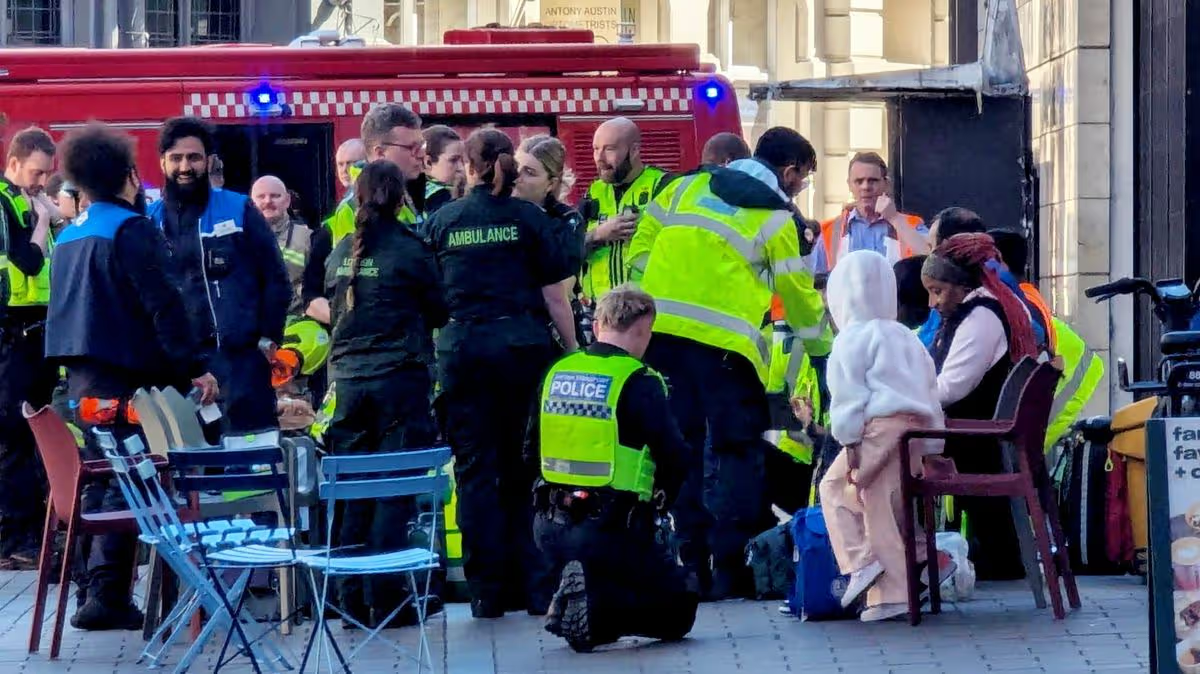
The scale of the emergency response was substantial and visibly alarming to those gathered outside. Dozens of police vehicles and ambulances converged on the area, their flashing lights painting the urban landscape in hues of blue and red. Paramedics quickly set up a triage area outside the station gates, where they assessed and treated individuals. Eyewitnesses, like Kasia Lesforis who works opposite the station, described seeing armed police patrolling the perimeter and people receiving medical attention, though the precise cause remained a mystery. The presence of armed officers, while later explained as a standard protocol for significant incidents, undoubtedly heightened the anxiety of the public, coming just a day after a terrorist attack elsewhere in London.
In total, fourteen people required medical treatment at the scene for symptoms likely related to the unknown irritant. While the majority were treated and discharged, two individuals were taken to hospital as a precaution, underscoring the seriousness with which authorities treated the situation. Inside the station, the London Fire Brigade conducted meticulous sweeps of the platforms, particularly focusing on the Elizabeth Line, using specialist equipment to detect any hazardous chemical readings. Throughout the operation, the key question hung in the air: what was the substance that had caused such a widespread reaction and prompted such a major deployment of emergency resources?
After a tense investigation lasting several hours, the London Fire Brigade made a crucial announcement: no elevated levels of any dangerous chemicals were detected. The station was declared safe shortly before 11:35 AM. This finding allowed British Transport Police to provide a more detailed summary, stating that it was believed a small number of people had potentially come into contact with an “unknown substance,” which had initially triggered the gas leak response. The swift all-clear was a profound relief, transforming the narrative from one of imminent danger to an isolated, if unsettling, incident.
By midday, the gates to Farringdon Station were reopened, and services began to resume normal operations. The crowds that had gathered at the entrance gradually dissipated as people returned to their delayed journeys. The minor delays on the Underground network began to ease, and the rhythm of the city slowly recalibrated. The visible emergency vehicles departed, leaving behind only the lingering memory of a disrupted morning. The incident served as a stark reminder of the vulnerability of crowded public spaces and the delicate balance of urban life, where a single unexplained smell can swiftly escalate into a full-scale emergency operation.
Ultimately, the event at Farringdon Station highlighted the efficiency and coordination of London’s emergency services. From the initial medical response to the thorough environmental checks and the cautious armed presence, the protocols for managing an undefined threat were executed in full. While the exact nature of the substance may remain unknown, the outcome demonstrated a system designed to prioritize public safety above all else, capable of mobilizing immense resources at a moment’s notice and, just as importantly, standing them down when the threat is assessed and neutralized. For the thousands affected, it was a morning of inconvenience and worry, but one that concluded with a return to normalcy and a testament to the city’s preparedness.