



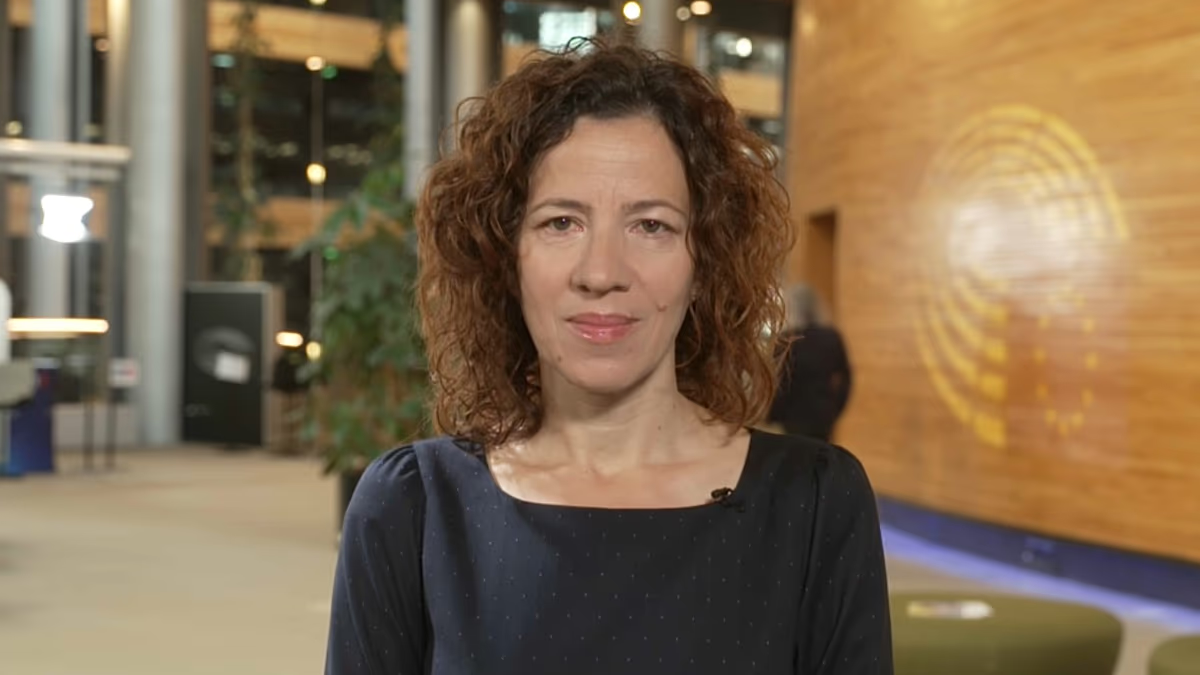
In the complex and often turbulent political landscape of Eastern Europe, a steadfast voice for European unity has emerged. Roxana Mînzatu, a Romanian politician and Vice-President of the European Commission, has publicly reaffirmed her deep faith in the foundational European spirit of the continent. Despite emerging signs of a potential eurosceptic shift in the region, Mînzatu stated she is “absolutely counting on the pro-European stance of every member state.” Her comments come at a sensitive time, as political winds show signs of change. In Bulgaria, the recent electoral success of Moscow-friendly President Rumen Radev, who is now tasked with forming a government, hints at a geopolitical reorientation. Meanwhile, in her own country of Romania, Mînzatu’s own Social Democratic Party (PSD) has undertaken a controversial political maneuver, aligning with the far-right AUR party in a bid to topple the centrist ruling coalition. This juxtaposition creates a tense backdrop for her message, which is ultimately one of confidence in the enduring will of the people. She bases this optimism on the grassroot attachment to the EU project, particularly in nations like Romania and Bulgaria, suggesting that governments ultimately remain “driven by the pro-European position of their own peoples.”
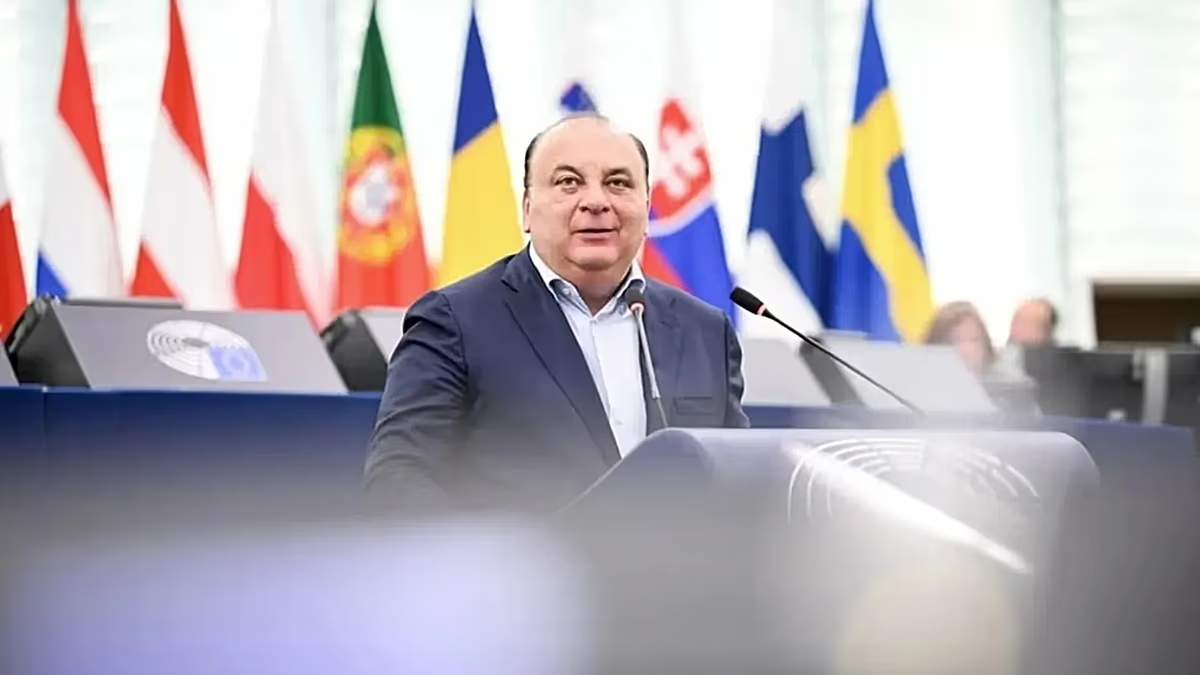
However, the domestic political reality in Romania presents a direct challenge to Mînzatu’s confident European narrative. The formal alliance between the left-leaning PSD and the nationalist, eurosceptic AUR party to file a no-confidence motion against Prime Minister Ilie Bolojan’s government is a stark and unusual development. For a mainstream European socialist party to join forces with a group on the far-right fringe breaks with traditional political conventions and has sent shockwaves through the European political community. Critics, such as Romanian MEP and European Parliament Vice-President Siegfried Mureșan, have been quick to pounce, declaring that this pact “confirms what many already know: the Romanian Socialists’ pro-European label is declarative, not real.” This internal contradiction places Mînzatu in a delicate position, advocating for European solidarity on a continental stage while her party engages in tactics at home that appear to undermine that very principle. The upcoming parliamentary vote on the motion will be a critical test, not just for the Romanian government, but for the credibility of pro-European forces within the nation.
Amidst this political turbulence, Mînzatu anchors her pro-European argument in the fundamental concept of democracy itself. She frames the current political competitions, however contentious, as an intrinsic and healthy part of the democratic process. “Democracy is the strongest asset of the European Union,” she asserted, noting that elections and the ensuing political maneuvering are “part of this process” and “part of the game.” This perspective seeks to normalize the current instability as a manifestation of vibrant, if messy, democratic practice, rather than a symptom of decay. Her argument suggests that the ultimate check on any drift towards euroscepticism is not the backroom deals of politicians, but the ballot box and the consistent will of an electorate she believes is deeply committed to the European project. In this view, democracy acts as a self-correcting mechanism, ensuring that the political trajectory of member states, even when navigating complex coalitions, remains aligned with the broader European ideal.
Shifting from political philosophy to concrete policy, Mînzatu’s work at the European Commission provides a tangible counterpoint to the abstract debates about allegiance. Next week, she is set to unveil a landmark initiative: the EU’s first comprehensive anti-poverty strategy. This plan directly addresses the lives of the 93 million Europeans at risk of poverty and social exclusion, a stark reminder of the Union’s core mission to improve the lives of its citizens. Mînzatu highlighted the phenomenon of in-work poverty, where millions “live from salary to salary,” underscoring that economic vulnerability persists even amidst employment. The strategy moves beyond mere crisis management, focusing instead on prevention and providing “the right tools to support people throughout their lives.” By targeting the root causes and instituting lifelong support frameworks, the policy represents the EU acting in its most potent social dimension, aiming to build resilience and security from the ground up.
The anti-poverty strategy will feature several key pillars, with a particular emphasis on breaking the cycle of intergenerational disadvantage. A cornerstone is a “reinforced child guarantee,” designed to shield the youngest citizens from the vulnerabilities of their families’ economic situations. This initiative recognizes that poverty is often inherited, and it seeks to ensure that every child has access to essential services like education, healthcare, and proper nutrition, irrespective of their household’s income. Furthermore, the strategy will encompass broader support in education, healthcare, and social services for all ages. To fund this ambitious social agenda, the plan proposes a multi-source approach, leveraging private investment and direct contributions from member states alongside established EU financial instruments like the European Social Fund. Notably, Mînzatu indicated that a significant portion—€100 billion from the Commission’s proposal for the next long-term EU budget—would be dedicated specifically to poverty prevention, signaling a major budgetary commitment to this human-centric priority.
In conclusion, Roxana Mînzatu presents a dual portrait of the European Union at a crossroads. On one hand, she confronts the palpable political anxieties emanating from Eastern Europe, where alliances are being tested and traditional political boundaries blurred. Her faith in the pro-European sentiment of the public is a deliberate anchor in this uncertainty, positioning democracy itself as the ultimate safeguard. On the other hand, she proactively champions the EU’s role as a force for tangible social good, exemplified by the pioneering anti-poverty strategy. This interplay defines the current European moment: a continuous negotiation between navigating immediate political challenges and fulfilling the long-term promise of solidarity, prosperity, and dignity for all citizens. The success of initiatives like the anti-poverty plan may, in fact, prove to be the most convincing argument for the European project, demonstrating its relevance and compassion directly to the people whose support Mînzatu so strongly relies upon. The coming months, with their pivotal votes in Bucharest and the rollout of this major social policy, will reveal much about the resilience of both her optimism and the European ideal itself.