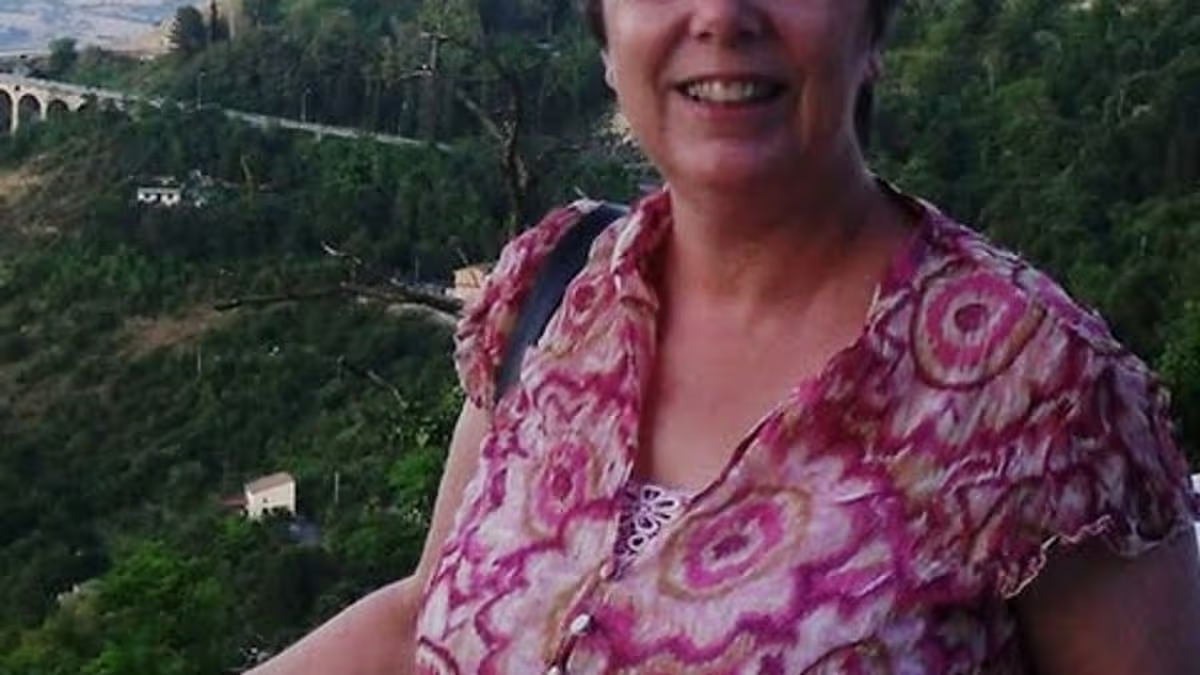




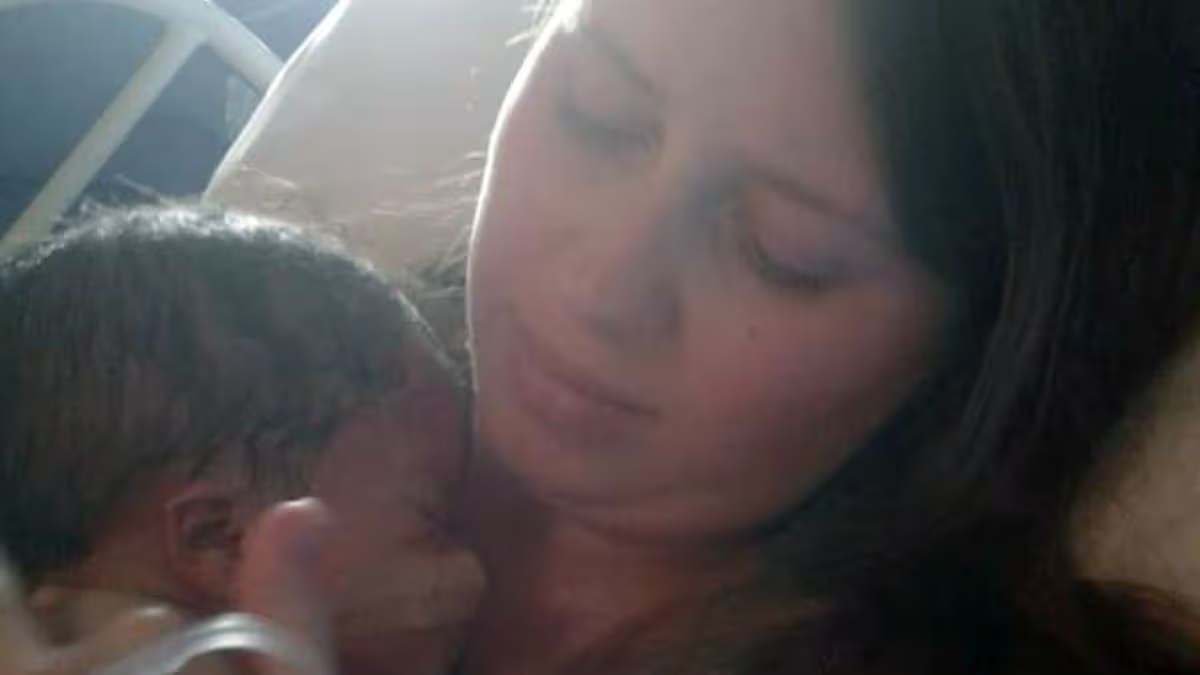
Gemma Kempthorne’s world shattered in 2024 when her vibrant eight-year-old son, Theo, died suddenly from catastrophic brain damage. A malfunction in the shunt that had managed his hydrocephalus—a condition diagnosed at 20 weeks of pregnancy—proved unsurvivable. In the devastating immediacy of that hospital room, facing the unimaginable loss of her child, Gemma found a clarity born of profound courage. She approached the medical team not with a question of “if,” but with a statement of intent: she wanted Theo to be an organ donor. This decision, made in the rawest moment of grief, meant that Theo’s tragic passing became a bridge to survival for four critically ill individuals. His heart saved the life of another child, while his kidneys, liver, and pancreas gave renewed life to three adults in their 30s, one of them a father. In an instant, Theo’s legacy transformed from one of a life ended far too soon to one of enduring, lifesaving generosity.
Remarkably, this moment of decisive compassion was not a spontaneous thought, but the fulfillment of a silent promise Gemma had made to herself years before. While pregnant with Theo and grappling with the uncertainties of his condition, she had read a news article about the urgent need for pediatric organ donors. That story planted a seed. “I’d been having conversations about resuscitation and things like that if Theo was born really poorly,” Gemma recalls. “I’d seen an article about a baby needing a transplant, and it made me think, if Theo wasn’t going to survive, what I would do.” For eight joyful years, as Theo thrived beyond expectations, that hypothetical question faded into the background. But when the unthinkable happened, that long-ago reflection provided a fragile roadmap through the chaos. She knew, without hesitation, that if an organ could have saved her son, she would have said yes in a heartbeat. Extending that same chance to others felt like the only path forward.
Now, from her home in Wadebridge, Cornwall, Gemma channels her grief into advocacy, issuing a powerful, heartfelt plea to all families. She urges adults not to shy away from the difficult but crucial conversation about organ donation. “People don’t want to think about it, until it happens,” she observes with hard-won wisdom. “And unless you’ve thought about it beforehand, it’s just easier to say no.” In the traumatic, time-pressured moments following a loved one’s death, grieving relatives are asked to interpret wishes they may never have discussed. Gemma believes that by signing the organ donor register and, more importantly, explicitly sharing that decision with family, we can lift an immense burden from their shoulders. “There isn’t that much time when it happens and no one wants to make the wrong decision,” she says. A clear, known choice becomes a final gift of clarity from the deceased to those they love.
Gemma’s story underscores the critical importance of the UK’s “deemed consent” or opt-out system, for which The Mirror successfully campaigned. While this law presumes consent for donation unless an individual has explicitly opted out, the family’s right to be consulted and their ultimate say remains paramount. This is why Gemma’s message is so vital: a signature on the register is a powerful signal to your family, reinforcing your altruistic intent and making their agonizing decision infinitely clearer. It transforms an abstract legal concept into a personal and honored wish. Anthony Clarkson of NHS Blood and Transplant echoes this, noting, “Considering your decision now could make a decision on the hardest day of your family’s lives so much easier, should the worst happen.”
For Gemma, there is a bittersweet solace in knowing parts of her son live on, granting other families precious time. “I’d give anything to have Theo back,” she says, her love and loss forever intertwined. “But he’s left that legacy behind and been able to help other families not have to lose someone and given them their life back. It’s bittersweet for me that I’ve had to lose Theo—nothing’s going to take that pain away—but a part of him is living on.” This perspective—where profound sorrow coexists with purposeful legacy—is the heart of her advocacy. She honors Theo not only by remembering the joyful boy he was, but by championing the life-saving potential he continues to embody.
Theo Kempthorne’s story is a piercing reminder of both life’s fragility and its incredible capacity for connection. A curious mother’s reading during a difficult pregnancy, a child’s brave medical journey, and a single moment of selfless decision created a ripple effect that saved four people. Gemma’s courage in the face of tragedy invites us all to be brave in a quieter way: to have a conversation that feels uncomfortable, to make a choice that feels distant, and to clearly state a wish that one day might offer hope in another family’s darkest hour. By doing so, we honor the memory of children like Theo and ensure that even in tragedy, the potential for healing, love, and legacy endures.