



On a cold November evening in Wolverhampton, a city’s routine was shattered by an event that seemed ripped from an action film, yet was tragically real. Darren Coffey, a 41-year-old father-of-four, made a decision under the heavy influence of drugs and alcohol that would unravel into nearly three hours of chaos. His target was a massive, 24-tonne Caterpillar bulldozer, valued at £385,000, which he took from his employer’s site near the Staffordshire border. This was not a calculated theft, but the explosive culmination of a personal grievance. Coffey had been locked in a dispute with Willenhall Autos over a vehicle he owned, and his simmering frustration boiled over into a catastrophic plan. Before his rampage even began, he called the police, warning them he was “heading there with two petrol cans”—a threat that signaled the storm to come, transforming a private dispute into a very public emergency.
What followed was a slow-motion, yet terrifying, spectacle of destruction. From approximately 5:30 PM, Coffey commandeered the enormous machine onto Wolverhampton’s roads, becoming a danger to everything in his path. He drove the bulldozer along the A454, navigating Wolverhampton’s ring road, Willenhall Road, and into Willenhall town centre itself. The image of a construction vehicle ploughing through urban streets at night is surreal, but for other road users, it was a nightmare. Coffey drove on the wrong side of the road, reversed into oncoming traffic, and even reversed into police cars attempting to contain him. For nearly three hours, he turned the city’s infrastructure into an obstacle course, causing untold disruption and leaving a trail of damaged property and terrified witnesses in his wake. This was not a joyride; it was a protracted, drug and alcohol-fueled episode that held a section of the city captive.
The authorities faced an unprecedented challenge: how to stop a machine designed to move earth and demolish structures. Conventional police vehicles were no match for the bulldozer’s brute strength. As the situation escalated, senior officers made the critical decision to commandeer a Royal Mail articulated lorry, using its substantial mass to block the bulldozer’s path. This drastic measure underscores the perceived level of danger Coffey posed. Yet, even this formidable barrier was not enough. In a final act of defiance, Coffey used the bulldozer’s blade to push the heavy trailer out of the way, finally bringing the ordeal to an end around 8:15 PM. The physical cost of his spree was tallied at over £8,000, including significant damage to the Royal Mail lorry and the bulldozer itself. However, the true cost extended far beyond the monetary—it encompassed the risk to human life, the strain on emergency services, and the collective anxiety inflicted on the community.
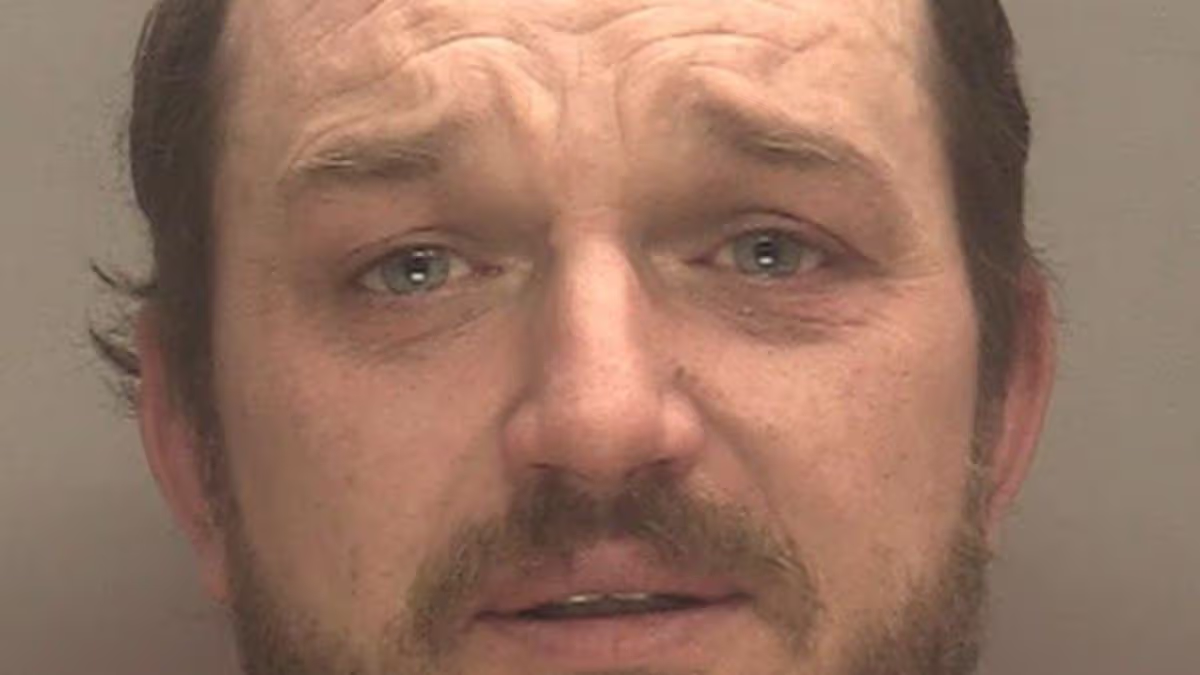
In Wolverhampton Crown Court, the human reality behind the headlines came into stark focus. Darren Coffey, sobbing in the dock, faced the consequences of that November night. He pleaded guilty to a litany of charges, including dangerous driving, criminal damage, drink and drug driving, and making threats to destroy property. The court learned he was a man with a history of struggles: long-term issues with cocaine and cannabis, a diagnosis of post-traumatic stress disorder, and past convictions, though he had stayed out of trouble since 2015. His defence argued that his mental health and efforts to seek help for his addictions were mitigating factors, pleading for a suspended sentence. This portrait complicated the narrative, painting Coffey not just as an agent of chaos, but as a man battling his own demons, whose coping mechanisms catastrophically failed him and endangered the public.
Judge David Perry, however, was faced with balancing this personal history against the sheer scale and danger of the offence. After reviewing damning video footage of the rampage, he described the “untold chaos” Coffey had caused and deemed the risk he represented too serious to overlook. While acknowledging Coffey’s prospects for rehabilitation, Judge Perry stated that the seriousness of the crime made an immediate custodial sentence “unavoidable.” He concluded that only a prison term could adequately reflect the gravity of endangering so many lives and the calculated nature of the threat made prior to the event. With that, Coffey was sentenced to 18 months in prison, a term from which he must serve at least 40% before release on licence. Additionally, he was banned from driving for three years and nine months and will be required to pass an extended test before ever legally getting behind the wheel again.
The story of Darren Coffey’s bulldozer rampage is a stark tapestry woven from threads of personal crisis, substance abuse, and profound public endangerment. It serves as a jarring reminder of how quickly a personal grievance, amplified by intoxication, can spiral into a community-wide trauma. The sentencing closes the legal chapter, imposing accountability for the wreckage left on Wolverhampton’s streets. Yet, it also leaves open difficult questions about the intersections of mental health, addiction, and criminal responsibility. For the city, the memory exists as an evening of surreal danger; for Coffey, it culminates in a prison cell and a long road to reclaiming his life; and for society, it stands as a cautionary tale about the devastating potential that lies at the collision point of individual despair and a moment of irrevocable, destructive choice.