



Of course. Here is a humanized and expanded summary of the content, structured into six paragraphs.
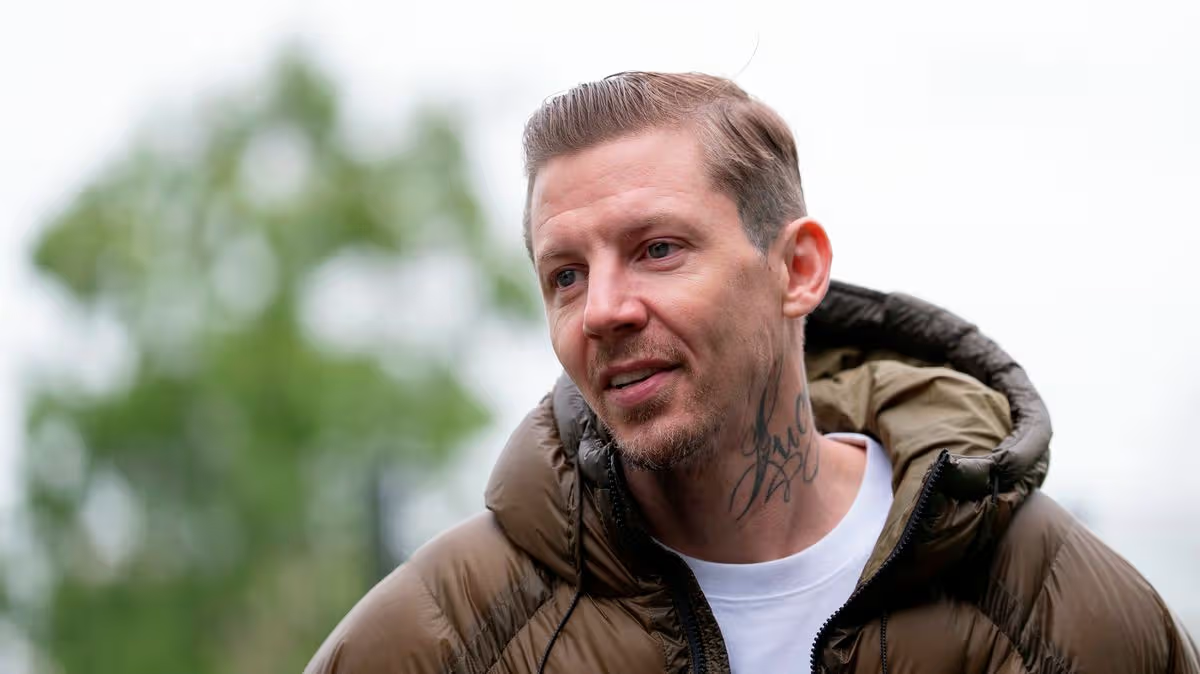
The journey of Stephen Manderson, known to the world as the rapper and presenter Professor Green, is a powerful testament to the silent battles many men face. Beyond the platinum records and the public persona, Manderson has become one of the UK’s most compelling voices campaigning for men’s mental health. His advocacy is deeply personal, forged in the twin fires of late-in-life diagnosis and profound loss. Eighteen years ago, when he was just 24, his father died by suicide—a tragedy that left an unresolved wound for decades. Like so many, he navigated his grief and internal turmoil in isolation, a path that nearly led him to a similar precipice. His story underscores a critical, often unspoken truth: the road to crisis is frequently walked alone, and the decision to seek help is often the hardest step a man can take.
For Manderson, the breaking point arrived just two years ago. His life, by outward measures successful, had spiraled into a private darkness characterized by what he calls “escape decisions”—a dangerous misuse of substances in isolation. He reflects on this period with stark clarity, stating that while he never attempted to take his own life, his behavior created a high risk of “death by misadventure.” He found himself trapped in a cycle of reaching crisis points, coping in the moment, only to falter again. It was at one of these lowest ebbs that he finally sought psychiatric help, a decision that led to a life-changing revelation at age 40: diagnoses of ADHD and autism. “Forty years of being me nearly killed me,” he admits, articulating the exhausting weight of navigating a world without understanding his own mind. This late diagnosis was not an end, but the beginning of making sense of a lifetime of struggles.
His personal awakening coincided with his role spearheading a significant study for the British Association for Counselling and Psychotherapy (BACP). The findings painted a sobering picture of the state of male mental health: 65% of men surveyed had faced mental health issues in the past three years. Yet, the most telling statistic was that 70% would only consider therapy if they reached a breaking point. This data validated Manderson’s own experience and revealed a widespread cultural reflex. Men, often conditioned to be stoic and self-reliant, frequently view asking for help as a last resort, a final admission of defeat rather than an act of strength. This “crisis-point” model of care means countless men suffer needlessly for years, their pain compounding until it becomes unbearable.
Emerging from his own crisis, Manderson was confronted with a harrowing realization: he had almost recreated the very trauma that shattered his own youth for his young son, Slimane. The shame of his near-miss was eclipsed by the profound understanding of what his death would have meant. “I could have put my son through everything I went through and then some,” he says. This paternal perspective also allowed him to re-examine his father’s suicide with new eyes, moving from a place of unresolved anger and confusion to one of painful empathy. Becoming a parent himself became a cornerstone of his healing, providing a powerful motivator to stay clean, sober, and committed to his therapeutic journey. It transformed his mission from one of personal survival into a legacy of protection.
Now firmly on a path of recovery, Manderson is channeling his experience into tangible change. Having worked directly with Health Secretary Wes Streeting, he contributed to the formation of England’s first men’s health strategy, launched last year with a focus on suicide prevention and addressing harmful behaviors like problematic alcohol and gambling use. As a spokesman for BACP, his goal is to dismantle the stigma that prevents men from seeking help earlier. He advocates for better education and awareness, hoping to shift the narrative so that therapy is seen as a routine tool for maintenance—like a service for the mind—rather than an emergency repair. His message is clear: seeking understanding and support is a sign of wisdom, not weakness.
Today, Stephen Manderson embraces life with a hard-won perspective. He continues his creative work, releasing new music and preparing for tours, but his most significant project is the one he lives publicly: demonstrating that it is possible to stumble into the deepest darkness and still find a way back into the light. His candid discussions about ADHD, autism, grief, and addiction offer a roadmap for others feeling similarly lost. “Getting older is a luxury,” he notes, “there’s only one alternative.” In sharing his story without filter, Professor Green is doing more than campaigning; he is extending a hand to those still in the shadows, proving that the most powerful verse a person can write is the one that saves their own life.