



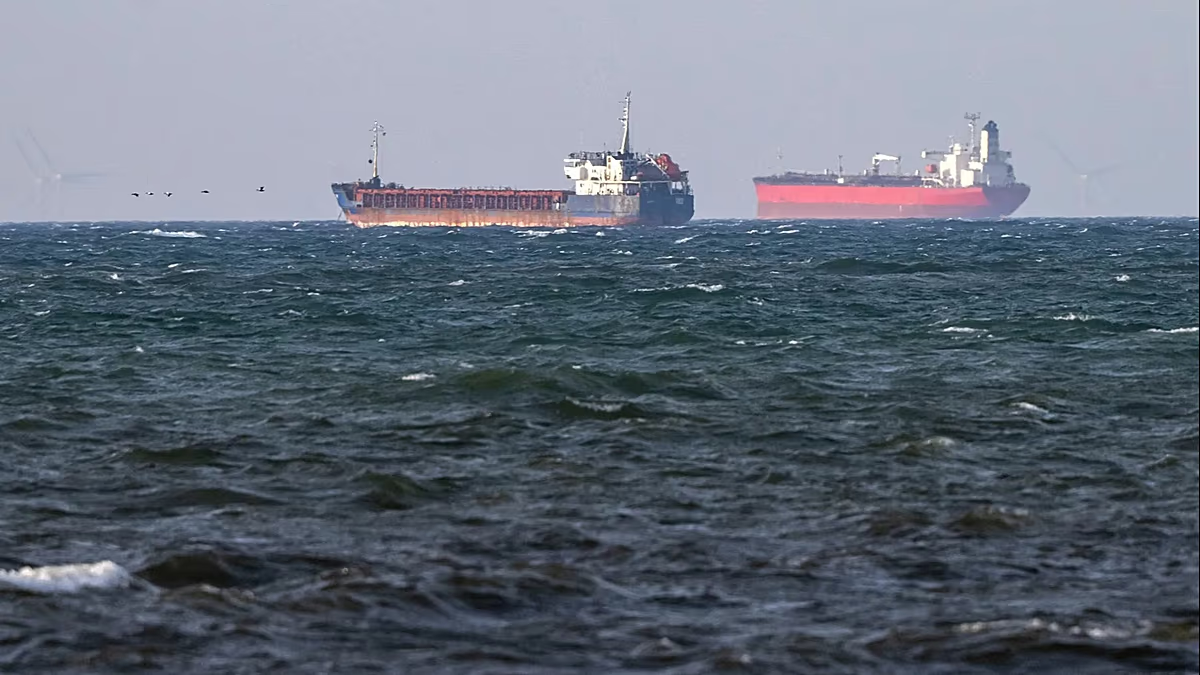
In late March of 2026, Swedish authorities took decisive action against the clandestine networks that Russia has built to circumvent international sanctions. The Swedish Prosecution Service announced the formal confiscation of a cargo ship named the Caffa, a vessel that had been seized earlier that month under dramatic circumstances. This move represents a significant escalation in the ongoing, global effort to enforce sanctions imposed after Russia’s 2022 full-scale invasion of Ukraine. The Caffa, while headed for the Russian port of St. Petersburg, was boarded by armed Swedish police and found to be sailing under a fraudulent Guinean flag. More critically, officials suspected it of being a carrier for grain stolen from Ukrainian occupied territories, directly linking its activities to the war’s economic underpinnings and the humanitarian crisis of looted resources. By confiscating the ship, Sweden is not merely detaining an asset; it is preparing to potentially transfer the vessel to a foreign state, following a formal legal assistance request, setting a powerful legal precedent.
The operation against the Caffa sheds direct light on the murky world of Russia’s so-called “shadow fleet.” This is not an isolated incident but part of a vast and deliberate strategy. Faced with severe Western sanctions designed to cripple the oil revenues financing its war machine, Russia assembled a flotilla of older tankers and cargo ships. These vessels operate under complex, opaque ownership structures and frequently fly false flags of convenience, allowing them to skirt bans on Western insurance, financing, and shipping services. The goal is simple: to keep Russian commodities, primarily oil but also apparently stolen grain, flowing to international markets. The detention of the Caffa confirms that this sanctioned network has expanded beyond oil to include the systematic plunder of Ukrainian agricultural wealth, turning theft into a tool of both war and profit.
The human and geopolitical dimensions of this case are stark. Of the Caffa’s eleven crew members, ten are Russian nationals, highlighting how these operations are staffed and sustained. One crew member was detained on suspicions related to maritime code violations and the use of forged documents, pointing to the illegal mechanics that keep the shadow fleet afloat. The Russian embassy in Stockholm has undoubtedly taken note, framing such seizures as hostile acts. For Sweden and other nations bordering the Baltic Sea, these vessels are not just sanctions-busters; they represent a direct national security threat operating in their territorial waters. The case transforms from a matter of customs enforcement into a front-line confrontation with Russia’s economic warfare apparatus.
This threat extends far beyond sanctions evasion into the realm of outright sabotage, part of what experts term Russia’s “hybrid war” against the West. The shadow fleet is suspected of being a platform for more aggressive acts. In a chilling precedent from December 2024, three crew members of the shadow fleet tanker Eagle S were accused in Finland of deliberately dragging their ship’s anchor across the Gulf of Finland seabed, damaging five crucial undersea communication and power cables. Similarly, in late January 2026, the French navy intercepted a sanctioned Russian oil tanker flying a false flag in the Mediterranean. These incidents paint a picture of a dual-purpose fleet: one that generates revenue while simultaneously testing and threatening critical Western infrastructure, probing for vulnerabilities, and creating a climate of insecurity.
Sweden’s decision to confiscate the Caffa, rather than simply detain it, marks a bold shift in the international response. It moves the debate from diplomatic protests to concrete judicial action. By processing a foreign state’s legal assistance request—likely from Ukraine—through its own courts, Sweden is elevating the issue to a matter of international law and asset recovery. This process could create a legal blueprint for other nations to follow, turning every port into a potential checkpoint for the shadow fleet. It sends an unequivocal message to the networks that own and operate these ships: your assets are not safe, and the international community is building the legal frameworks to seize them permanently.
Ultimately, the saga of the Caffa is a microcosm of the broader, grinding conflict between a sanctioned Russia and a determined West. It underscores that modern warfare is fought not only on battlefields but in ports, courtrooms, and the obscure pathways of global shipping. Each intercepted vessel is a small victory in choking off the resources for war and contesting the normalization of theft. For the nations of the Baltic and beyond, confronting the shadow fleet is a necessary, if perilous, duty—a defense of both international law and their own security. As this case proceeds through Swedish courts, it will be watched closely, potentially defining new rules of engagement in the economic and hybrid struggle that continues to unfold across Europe’s waters.