

A Fresh Start for Hungary and the EU
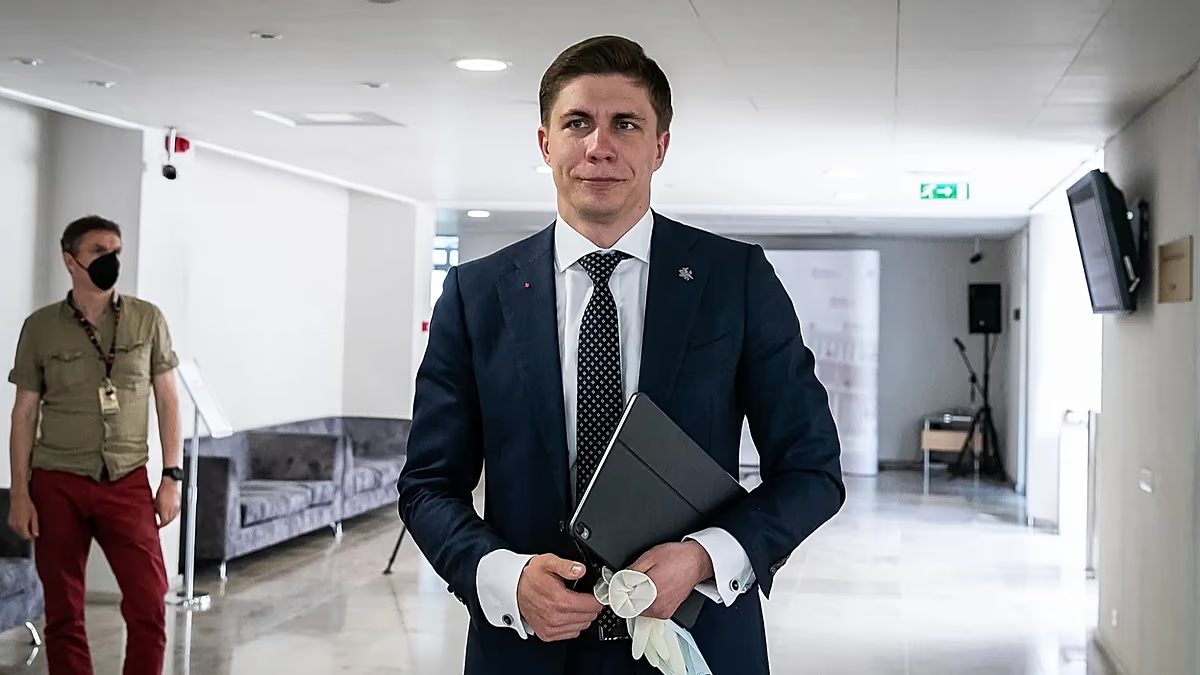
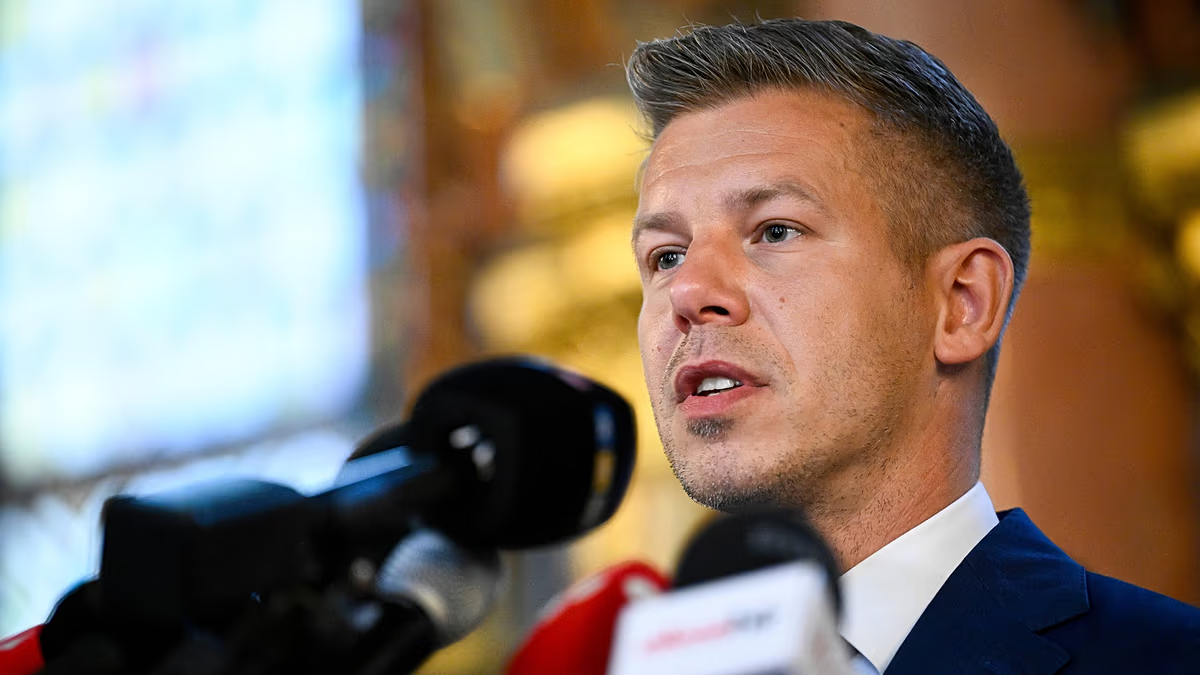
Good morning. I’m Angela Skujins, and it’s my first day writing Euronews’ flagship daily newsletter—a debut that serendipitously coincides with another significant first: incoming Hungarian Prime Minister Péter Magyar’s inaugural visit to Brussels. After 16 years under Viktor Orbán, Hungary’s political landscape has shifted dramatically. Magyar’s trip is a highly anticipated mission to reset his country’s strained relations with the European Union, a relationship fraught with tension over democratic principles. Orbán’s tenure culminated in roughly €17 billion of EU funds being frozen due to concerns over democratic backsliding and rule of law issues. With a critical deadline looming at the end of August—which could see Hungary lose €10 billion in post-COVID recovery funds—Magyar’s agenda is urgent and clear: to unlock this vital capital. His social media message, “We have no time to waste,” underscores the pressing economic stakes for Hungary.
The Urgency of Unlocking Frozen Funds
Magyar’s strategy hinges on high-level, closed-door diplomacy. He is scheduled to meet European Commission President Ursula von der Leyen to directly negotiate the release of the frozen funds, with no press interactions planned, suggesting a focused, behind-the-scenes effort. This meeting follows preparatory talks by lower-level delegations, including incoming Foreign Affairs Minister Anita Orban, indicating a building momentum. A European Commission statement noted a clear willingness from both sides to “start work on various urgent topics,” reflecting a newfound political openness. European Council President Antonio Costa will also meet Magyar, a notable encounter given Costa’s past rebuke to Orbán about the Council not tolerating blackmail. This diplomatic sequence highlights the EU’s cautious but engaged approach toward a government-in-waiting that has already shown pragmatic cooperation, such as dropping vetoes on EU sanctions against Russia and aid for Ukraine.
A Reform Plan to Restore Trust
However, the path to restoring trust is steep. A recent European Commission report paints a stark picture, noting Hungary has shown no improvement in seven out of eight key reform areas concerning the rule of law, with a “deteriorating environment” still present. Magyar’s response is a concrete four-step plan focused on combating corruption, restoring judicial independence, and safeguarding press and academic freedoms. He has even pledged to revise Orbán’s €16 billion defence plan, citing corruption risks. This agenda signals a substantive departure from the past. Support from key EU figures like European People’s Party President Manfred Weber, who stated that “trust is the main message” and that “Europe must be now the friend on the side of Hungary,” suggests a political readiness within the bloc to reward genuine reform. The outcome of these Brussels meetings will test whether Magyar’s promises can translate into tangible progress and unlocked funds.
EU Warns Israel Over Stolen Ukrainian Grain
Beyond Central Europe, the EU is flexing its geopolitical muscle in another arena. The bloc has issued a direct warning to Israel, stating it is ready to impose sanctions on entities aiding the trade of Ukrainian grain stolen by Russia from occupied territories. This follows the arrival of a vessel allegedly carrying thousands of tonnes of stolen wheat and barley in Haifa. A European Commission spokesperson condemned all actions funding Russia’s war and circumventing sanctions, confirming Brussels’ readiness to list responsible individuals and entities in third countries. Ukrainian President Volodymyr Zelenskyy echoed this, announcing coordinated sanctions preparation against those profiting from this “criminal scheme.” Israel’s Foreign Minister responded that authorities would examine the ship and act lawfully. This situation highlights the EU’s broader strategy to enforce its sanctions regime globally and uphold ethical trade principles amidst the ongoing conflict.
Legislative Progress: Defining Rape Across the EU
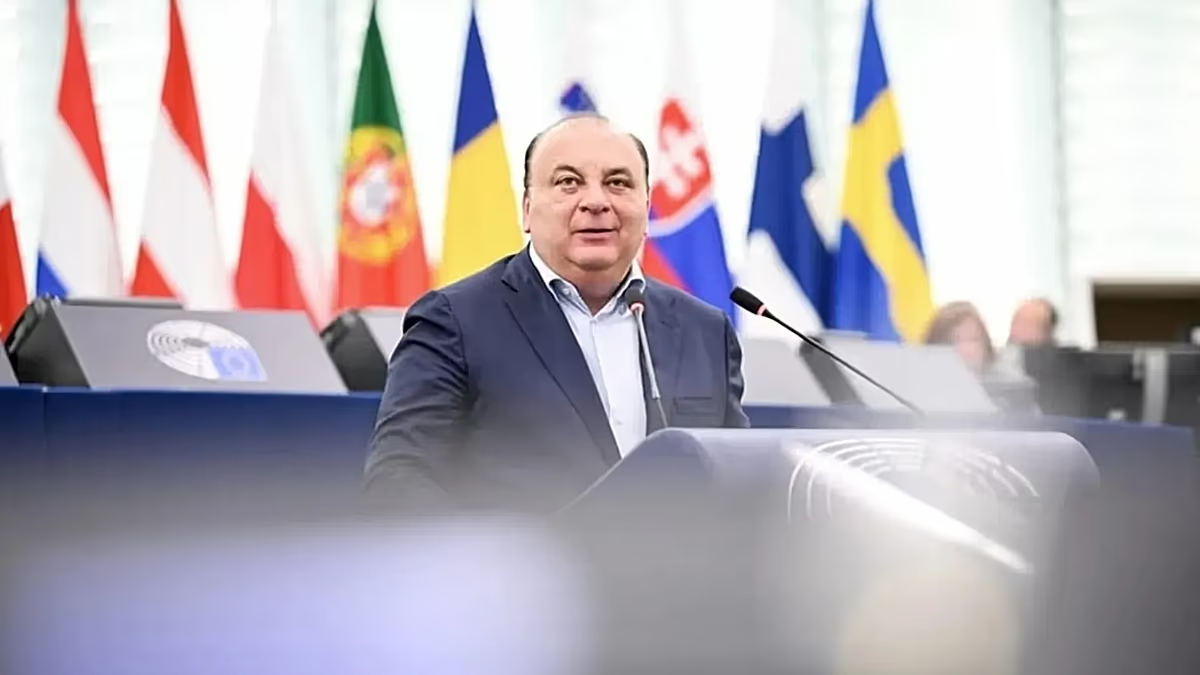
In Strasbourg, the European Parliament took a significant step toward harmonising fundamental legal protections across member states. It approved a resolution calling for an EU-wide definition of rape based on the absence of freely given consent. Currently, definitions vary wildly—from Latvia’s focus on acts committed under “constraint” to Romania’s emphasis on the victim’s inability to express consent. This resolution aims to fill a critical gap in EU legislation on violence against women, establishing a clear, consent-based standard. However, the real work begins now: the European Commission must propose legislation based on this resolution, which then needs support from member states and the European Council. This move represents a foundational effort to create a unified, modern standard for justice and victim protection across the Union.
In Other News: From Prison Releases to Parliamentary Debates
Our newsrooms report further developments across Europe and beyond. Polish-Belarusian journalist Andrzej Poczobut, who was serving an eight-year sentence in Belarus widely condemned as politically motivated, has been freed. In a starkly different context, a Frenchman, Louis Arnaud, detained for two years in Tehran’s notorious Evin prison, has also been released. Meanwhile, the European Parliament’s plenary session in Strasbourg continues, with debates heating up on the EU’s response to the Middle East conflict, energy price shocks, and the contentious issue of normalising relations with Russia through sport. Additionally, Commissioner for Tech Sovereignty Henna Virkkunen will present the EU’s proposed age verification app. These stories, contributed by Maria Tadeo, Sasha Vakulina, Jorge Liboreiro, and Vincenzo Genovese, reflect a day of dynamic political, humanitarian, and legislative activity across the continent. That’s all for this inaugural edition. Thank you for reading.