



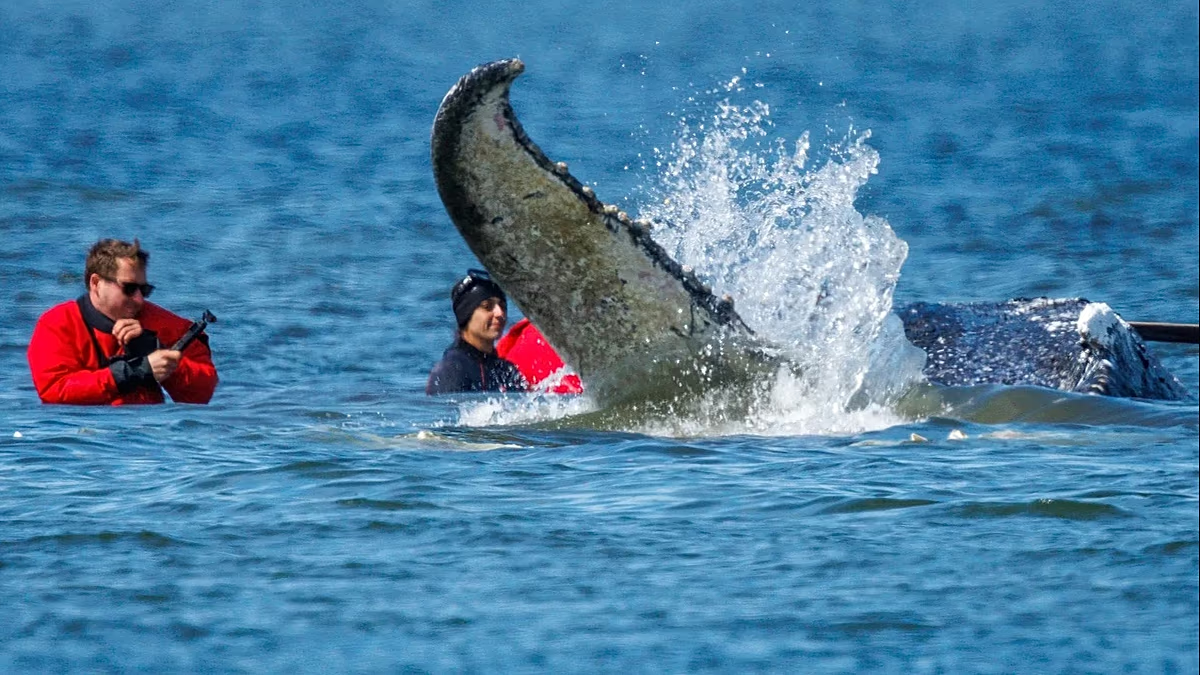
The plight of a lone humpback whale, far from its natural Arctic home, has become an unexpected national drama in Germany over recent weeks. Named “Timmy” by a captivated public, the whale’s struggle began in late March when it was first discovered stranded on a sandbank near Lübeck on the Baltic Sea coast. This shallow, enclosed body of water is an alien environment for such a majestic deep-sea creature, and its repeated entrapments painted a picture of a confused and weakening animal fighting for survival. Initial rescue efforts, involving attempts to dig channels to guide it back to deeper water, proved futile. By early April, the grim reality seemed set: officials declared that saving the whale was impossible and that nature would take its course. This resignation, however, did not sit well with a nation that had been emotionally invested in Timmy’s story from the start.
The official decision to cease rescue operations sparked a public outcry that ultimately rewrote the script. The power of collective empathy and media pressure persuaded authorities to reconsider. Two entrepreneurs, Karin Walter-Mommert among them, stepped forward to finance and spearhead a bold new rescue plan. This culminated in Tuesday’s extraordinary operation: using a specialized barge, typically employed for transporting ships, as a makeshift whale ambulance. Its water-filled hold was designed to carry Timmy safely. After a channel was dug to the vessel near the island of Poel, rescuers carefully attached straps and, with immense effort, guided the massive creature. The moment Timmy actively swam into the barge, rather than being forcibly hauled, was profound. It was a burst of agency from the whale, a sign of lingering strength and will, that ignited cheers from the rescuers and observers on shore. For Walter-Mommert, it was a moment of pure joy, confirming that the fight for Timmy’s life was meaningful.
The operation, however, has not been without controversy. Many scientists and animal rights activists have voiced strong criticism, viewing the entire endeavor as a high-risk, low-probability spectacle that may ultimately cause more harm than good to the distressed animal. The stresses of capture, transport, and a subsequent release into an unfamiliar ocean—the plan is to tow the barge to the North Sea—pose significant dangers. Critics argue that the chances of long-term survival are slim and that the resources and intervention prioritize human sentiment over animal welfare. Mecklenburg-Western Pomerania’s environment minister, Till Backhaus, who authorized the mission after veterinarians deemed the whale fit for transport, defended the attempt. His stance, that “those who do nothing make no mistakes,” underscores the ethical tension between passive acceptance and active intervention, a debate that lies at the heart of this saga.
Beyond the physical rescue, the story of Timmy has evolved into a full-blown media phenomenon, reflecting a deep human fascination with and connection to whales. Television channels, online outlets, and social media influencers have provided relentless coverage, turning the whale’s fate into a national conversation. This attention speaks to the symbolic power whales hold in our collective imagination—as intelligent, gentle giants, often seen as ambassadors of the ocean’s mysteries. Timmy’s ordeal became a real-life narrative of vulnerability and hope, a proxy for broader concerns about marine life and our responsibility toward it. The public’s refusal to accept its presumed fate was not merely about one animal; it was an expression of a societal desire to correct a perceived wrong, to defy inevitability with compassion and technology.
Now, Timmy rests in the temporary sanctuary of the barge’s hold, with a piece of green netting securing the entrance. The next phase of this unprecedented journey is its transport to the North Sea, a more suitable though still distant habitat from its native waters. The hope is that, if Timmy shows sufficient strength and recovery, it will be released there to resume its life. Yet this hope is tempered by the sobering uncertainties acknowledged by experts. Whether this entire monumental effort—a testament to human ingenuity and empathy—will culminate in a true salvation or remain a well-intentioned but tragic finale is a question only the coming days and the whale’s own resilience can answer.
Ultimately, the saga of Timmy is more than a wildlife rescue report; it is a modern parable about our relationship with nature. It highlights the complexities of intervention, where emotion, ethics, science, and media collide. It demonstrates the powerful urge to act when confronted with suffering, even when the odds are long and the risks are high. Whether viewed as a noble mission or a misguided project, the story has undeniably united a country in watchful anticipation. As the barge prepares for its slow voyage, carrying not just a whale but a nation’s hopes, the outcome remains uncertain. But the journey itself has already confirmed something significant: in the face of a creature’s struggle, the human response is not indifference, but a compelling, costly, and deeply felt determination to try.