


The recent acquisition of the venerable British footwear retailer Russell & Bromley by the fashion giant Next marks a significant, and somber, turning point in the high street’s evolving story. While the Russell & Bromley brand itself has been rescued from oblivion through a pre-pack administration deal valued at £2.5 million, the human and physical cost of this corporate transition has been substantial. The transaction, finalized in late January, saw Next acquire the valuable brand name, its associated intellectual property, and a select portfolio of just three prestigious stores located in London’s affluent Chelsea and Mayfair districts, as well as the Bluewater shopping centre in Kent. This strategic purchase allows Next to absorb a respected name with a legacy of quality into its expansive portfolio, but it left the vast majority of the existing retail network in a perilous position.
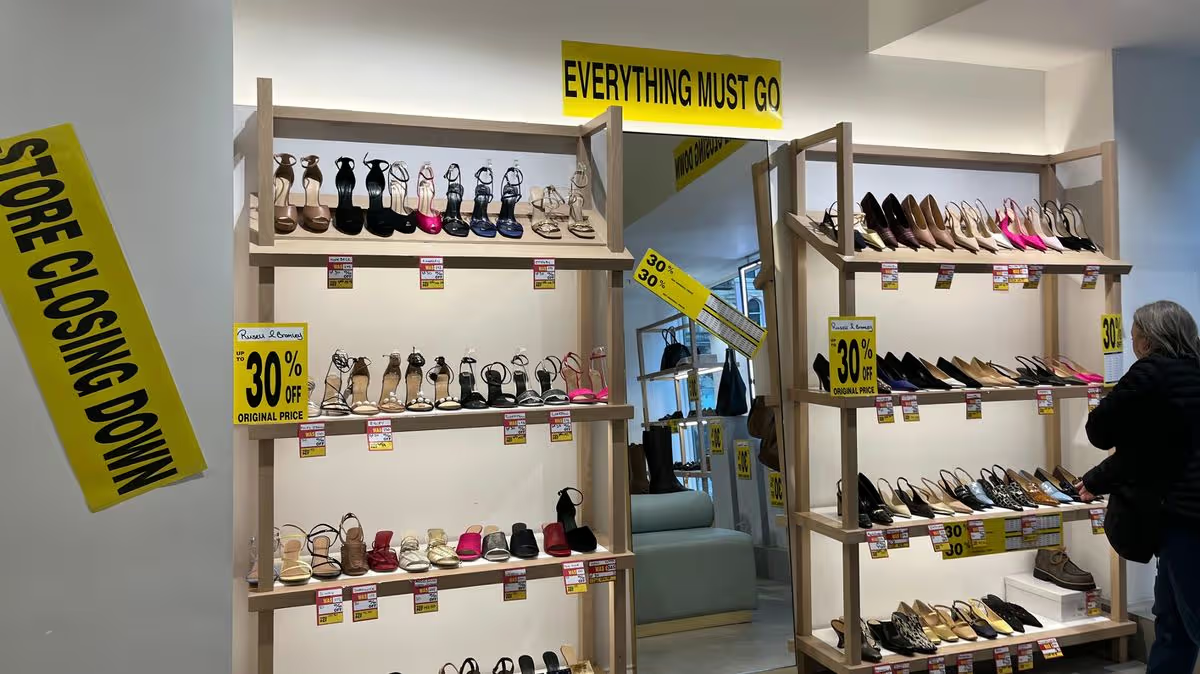
This precariousness culminated in a sweeping wave of closures throughout April, delivering a stark finality to a chapter of British retail history. Administrators from Interpath confirmed the planned closure of 33 standalone Russell & Bromley shops and nine concessions that were not included in the Next acquisition. The process began swiftly, with the first ten stores shutting their doors on April 21, and concluded just two days later on April 23, when the last remaining branches not transferred to Next closed permanently. These shuttered stores, once hubs for customers seeking classic, well-crafted shoes, now stand as empty reminders of a shifting commercial landscape, leaving gaps in high streets and shopping centres across the country.
The most profound impact of this restructuring, however, lies not in vacant shopfronts, but in the displaced workforce. Prior to the administration, Russell & Bromley employed approximately 320 staff across its retail estate. With the rescue deal preserving only a tiny fraction of the physical stores, the majority of these positions were rendered redundant. The joint administrators’ statement acknowledged this difficult reality with regret, confirming that most employees working in the non-transferring stores had lost their jobs. In the immediate aftermath of the Next acquisition, a sense of uncertainty was compounded for some business partners, as reports emerged that several suppliers had received no communication from the historic brand, highlighting the disruptive and often opaque nature of the administration process.
In the face of this upheaval, the administrators have emphasized their commitment to supporting the affected staff during this challenging transition. Their teams are reportedly engaging closely with all redundant employees to guide them through the necessary procedures, most crucially assisting individuals in submitting claims to the Redundancy Payments Service to secure the financial compensations owed to them. This support is a vital lifeline, offering some measure of stability as these workers navigate the job market. Meanwhile, the administrators continue to oversee the intricate wind-down of the residual elements of the Russell & Bromley business that were not absorbed by Next, a complex task that involves managing remaining assets and liabilities.
The acquisition of Russell & Bromley by Next is a emblematic case of modern retail consolidation, where powerful conglomerates absorb iconic but struggling brands, preserving their name and premium appeal while drastically stripping back their operational footprint. For Next, the move is a logical expansion, adding a complementary, heritage-rich brand to its stable alongside other recent acquisitions. For the commercial landscape, it represents a further concentration of market power. But for the loyal customers and communities accustomed to their local Russell & Bromley, it means the loss of a dedicated destination, and for the hundreds of staff, it has meant an abrupt end to their roles within a familiar company.
Ultimately, the story of Russell & Bromley’s administration is one of paradoxical continuity and closure. The brand itself will live on, likely re-emerging within Next’s online platform and its three retained boutique locations, catering to a specific clientele. Yet, the heart of the business—its widespread network of stores and the dedicated teams that ran them—has ceased to exist. It underscores a persistent trend on the British high street, where heritage and legacy are increasingly distilled into intangible assets like brand names, often at the expense of physical presence and local employment. The final closure of those 33 stores on April 23rd was not just an administrative step, but a poignant moment for the employees who turned off the lights and for the retail era they represented.