



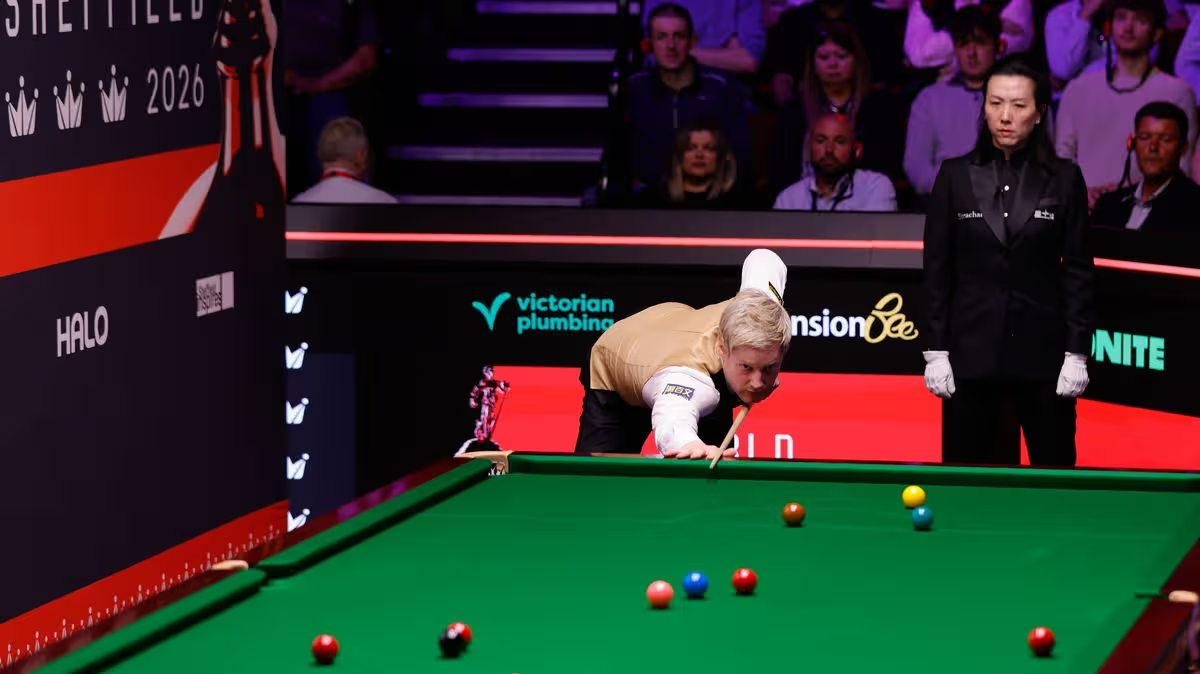
An afternoon of high-stakes snooker at the Crucible Theatre was unexpectedly punctuated by a moment of pure, surreal farce during Tuesday’s quarter-final clash between Neil Robertson and John Higgins. The Australian, leading the venerable Scotsman 3-2, had just compiled a commanding break of 70 to claim the fifth frame. As the balls were being re-racked for the next, however, a peculiar scene unfolded. Instead of taking his customary seat to await his opponent’s break-off, Robertson remained standing. After a brief, puzzled consultation with the referee, both players exited the arena entirely. For viewers, the mystery was soon solved by BBC presenter Seema Jaswal, who, alongside snooker legends Steve Davis and Stephen Hendry, explained the improbable cause of the delay: Neil Robertson’s chair had broken. A maintenance technician had to be summoned to the most famous stage in snooker to perform emergency furniture repairs, offering a decidedly mundane interlude in the midst of a World Championship quarter-final.
The incident provided a moment of levity and bewilderment for commentators and fans alike. Jaswal queried her pundits, Davis and Hendry, if they had perhaps brought their toolkits, marveling at the absurdity of the situation. Stephen Hendry, a seven-time champion, confessed he had never witnessed anything like it in all his years in the sport. Before the match could resume, Hendry turned analytical, suggesting that the contest itself needed a similar “fix,” as it had yet to ignite. “You’re waiting for someone to take this by the scruff of the neck and stamp their authority on it,” he remarked, describing the play as somewhat mechanical—”snooker by numbers.” The broken chair, in its absurd way, symbolized a match that was, thus far, functionally sound but missing a spark, a stark contrast to the pyrotechnics of the previous evening.
That previous night had set an almost impossible standard for drama. John Higgins had just emerged from an all-time Crucible classic, a brutal 13-12 victory over his arch-rival Ronnie O’Sullivan. Higgins had been staring down the barrel, trailing 9-4 and later 8-3, only to mount a staggering resurgence. He won six consecutive frames across Sunday night and Monday morning, displaying a level of grit and sublime skill that left the snooker world in awe. 1997 champion Ken Doherty declared it perhaps the greatest last-16 match he had ever seen, calling the standard of snooker “from the Gods.” For Higgins to then walk into another titanic battle less than 24 hours later was a testament to his physical and mental fortitude, even if the initial frames against Robertson lacked the same relentless intensity.
Higgins himself had reflected on the monumental effort required to overcome O’Sullivan, expressing sheer delight at finding his top form when it mattered most. “I’m just delighted I came to the party in the third session,” he said, acknowledging he was fortunate to only be 9-7 behind after the first two. His mindset, he revealed, was one of pure resilience: “It was just about not giving up.” He paid tribute to O’Sullivan’s phenomenal cue ball control, noting how well his rival was striking the ball, which made his own comeback all the more remarkable. To transition from that emotional and physical Everest to a new summit against a player of Robertson’s caliber presented a unique psychological challenge, perhaps explaining the match’s initially tentative rhythm.
Once the chair was deemed fit for purpose and the players returned, the question hung in the air: would the repair job on the furniture coincide with one of these champions finding the switch to unlock their best game? The unscheduled break offered both a moment to reset. For Robertson, it was a pause while holding a slender lead; for Higgins, a chance to catch his breath after the Herculean effort against O’Sullivan and refocus on the task at hand. These incidental pauses can sometimes disrupt momentum or, conversely, provide a vital reset, altering the flow of a match in unpredictable ways. The maintenance man, an unlikely participant in this sporting drama, had inadvertently become a part of the narrative.
In the grand tapestry of the World Championship, where legends are forged over grueling 17-day marathons, this episode will stand out as a quirky footnote—a reminder that beneath the intense pressure and flawless professionalism, the human and hilariously mundane elements of sport persist. A worn screw or a loose bolt in a player’s chair is as much a part of the Crucible’s story as a century break. The incident momentarily peeled back the curtain on the meticulous behind-the-scenes world that keeps the show running, all while the two giants of the green baize waited in the wings, their fierce competition temporarily on hold for a most ordinary repair. It was a charmingly absurd slice of life, sandwiched between sessions of sporting genius and monumental endurance.