



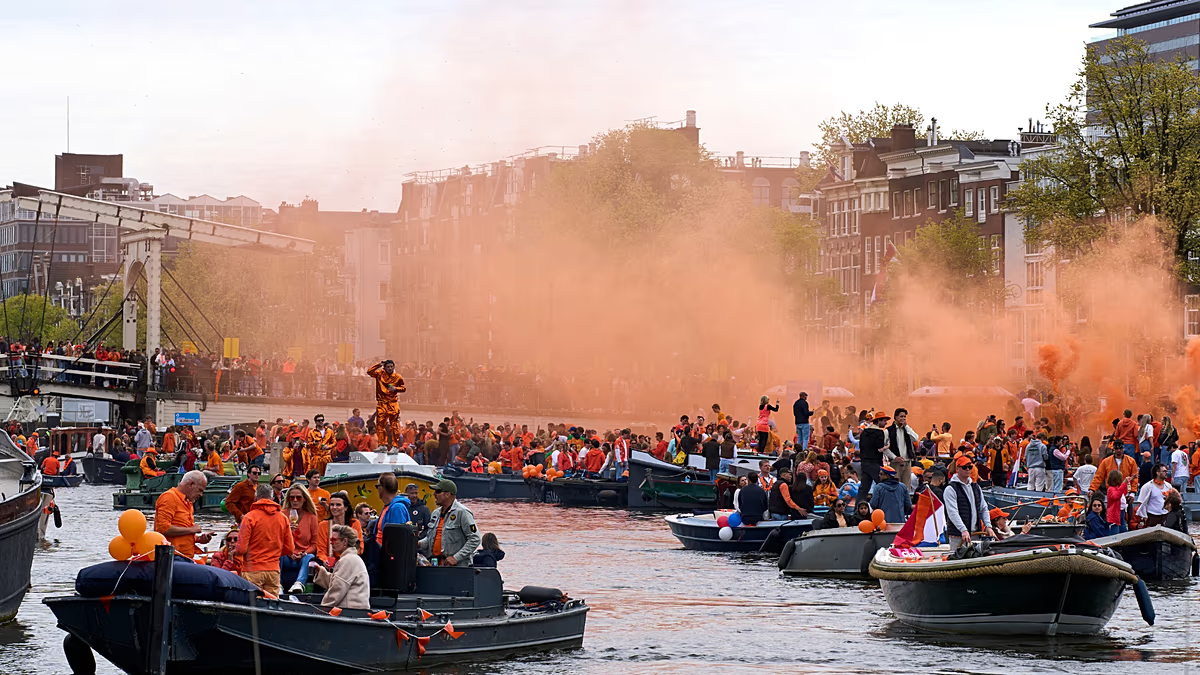
In vibrant waves of orange, the streets and canals of Amsterdam transformed into a living, breathing celebration as the nation gathered to mark King Willem-Alexander’s birthday. The color, a proud nod to the Dutch royal family name, the House of Orange-Nassau, washed over the city in a joyful tide. From the bustling central squares to the narrow, historic alleyways, a sea of creatively adorned revelers—in everything from simple orange wigs and feather boas to elaborate, head-to-toe costumes—flowed with a shared, buoyant energy. The atmosphere was less of a formal royal tribute and more of a massive, decentralized block party, where the entire city became a stage for collective merriment.
This communal spirit found its most iconic expression on the water, where the canals, typically routes for quiet sightseeing, throbbed with life. Hundreds of boats, from sleek private vessels to densely packed party barges, navigated the waterways in a cheerful, slow-moving parade. The air hummed with a mix of Dutch pop anthems, international hits, and the constant, happy chatter of crowds. Bridges became vantage points for spectators, while those on board exchanged cheers with people lining the quaysides. On land, the streets were lined with a sprawling, spontaneous flea market, where children and adults alike sold pre-loved toys, books, and homemade treats, embodying the day’s spirit of informal, neighborhood fun. Stalls offered fresh stroopwafels and savory snacks, while impromptu bands and DJ setups provided soundtracks for dancing in the open air.
While the King’s presence is the occasion’s origin, King’s Day, or Koningsdag, has evolved far beyond a simple birthday fête into a profound celebration of national identity and the arrival of spring. The royal family themselves participate in a characteristically Dutch manner, visiting one or two selected towns to join in games, converse with citizens, and watch local performances—a gesture of connection rather than distant ceremony. This down-to-earth interaction mirrors the holiday’s overall ethos. It is a day where social barriers soften, and the entire country, from major cities to smallest villages, engages in a unified expression of community. The bright orange serves as a great equalizer, a visual shorthand for participation that invites everyone into the fold.
The day’s magic is woven from this unique combination of elements: the liberation of a city-wide party, the tradition of the vrijmarkt (free market), the beauty of the springtime setting, and the subtle, unifying thread of the monarchy. It is a testament to a society that values both its historical institutions and its modern, egalitarian spirit. For tourists, it is an unforgettable immersion into Dutch culture at its most exuberant. For residents, it is an annual reset—a day to reconnect with neighbors, celebrate public space, and bask in the collective good fortune of warmer days after the long winter. The sound is not one of riotous noise, but of sustained, widespread happiness.
As the afternoon sun began to warm the cobblestones, the celebration showed no signs of abating. The energy, rather than peaking, simply shifted and flowed, moving from the markets to the squares, from the cafes to the houseboats. Strangers became temporary friends, sharing stories and songs. The very architecture of the old city, with its gabled roofs and leaning buildings, seemed to lean in to witness the joy. It was a spectacle of human connection, painted in the brightest of hues, proving that a national holiday can feel wonderfully personal and inclusive.
When dusk eventually crept over the canals, the orange gave way to the golden hour, casting a gentle, forgiving light on the happily exhausted city. The crowds would slowly disperse, leaving behind a quiet hum and the tangible warmth of a day well spent. The cleanup would begin, but so would the memories—of music echoing off water, of the laughter of children selling their old toys, of a king shaking hands in a crowded square, and of a nation, for one brilliant day, wearing its heart on its sleeve in the color of the sun. King’s Day, in its beautiful chaos, ultimately celebrates a simple, powerful idea: that unity is found not in solemnity, but in shared joy, and that sometimes, the strongest national tradition is knowing how to throw a truly wonderful party for everyone.