




Here is a 200-word summary: The top stories from April 28, 2026 cover Europa’s climate policy schism, the ongoing Red Sea canal crisis, breaking entertainment news, a major international shift regarding AI’s role in film, an alarming summit in the Pacific, and travel trends favouring near-earth orbit experiences.
Paragraph 1: A Slippery Alliance on Climate
European unity is strained by diverging climate strategies. While Western members push aggressive net-zero targets, Eastern states advocate for a slower, pragmatic transition prioritizing energy security and economic stability. This schism threatens the bloc’s collective ambition and raises questions about its role as a global climate leader. The debate isn’t merely over policy but about the speed and societal cost of change–a friction point impacting everything from industrial subsidies to household energy bills.
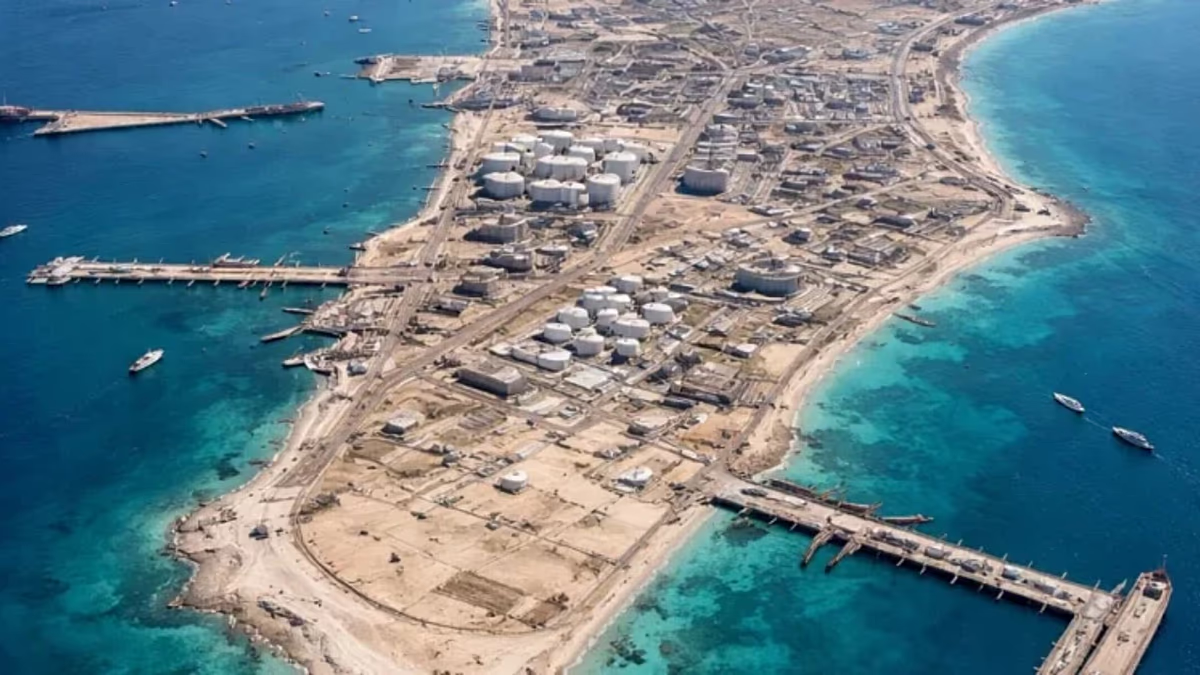
Paragraph 2: The Red Sea Stalemate Continues
The Red Sea shipping crisis persists, disrupting global trade and inflating costs. Multinational naval patrols have stabilized some routes, but the underlying geopolitical tensions remain unresolved. Businesses worldwide are adapting with longer lead times and diversified supply chains, while consumers face the trickle-down effect in the form of higher prices for everyday goods, from electronics to groceries. The situation serves as a stark reminder of how regional instability can ripple across the entire global economy.
Paragraph 3: Entertainment’s New Digital Royalty
A groundbreaking legal ruling has redefined artistic ownership, granting primary copyright to the human “creative directors” of AI-generated films, not the software companies. This decision validates a new artistic medium and sets a precedent for protecting human ingenuity within technologically assisted creation. It sparks celebration among digital artists and opens a complex new chapter for intellectual property law, challenging traditional studios to adapt or collaborate with these new hybrid auteurs.
Paragraph 4: An Alarming Summit in the Pacific
An unprecedented summit between major powers in the South Pacific has concluded with a cryptic, joint statement on “regional security,” raising international concern. The absence of detailed agreements or public dialogue suggests closed-door negotiations on sensitive issues, possibly related to military postures or resource security. This opaque diplomacy fuels analyst speculation and quiet unease among neighboring nations, highlighting a shift towards less transparent, more results-oriented international discourse.
Paragraph 5: The Dawn of Popular Space Travel
Travel trends are pointing not just across continents, but upwards. Near-earth orbital experiences, offering breathtaking views of the planet from space hotels or short-duration flights, are moving from billionaire fantasy to affluent reality. This nascent sector represents the ultimate luxury travel frontier, promising to reshape our perspective on “getting away.” It also ignites debates on space accessibility, environmental impact of rocket launches, and the need for a new framework of “space tourism” law.
Paragraph 6: The Human Thread
These stories, from European discord to orbital holidays, collectively sketch a world in accelerated transition. They depict humanity grappling with the practical costs of idealism, adapting commerce to instability, redefining creativity in the face of technology, navigating opaque geopolitics, and literally reaching for new horizons. The date on the news feed—April 28, 2026—marks another day in our ongoing, collective effort to manage, understand, and occasionally marvel at, the complexity of our interconnected existence.