



Paragraph 1: The Stark Announcement
In late April 2026, BP unveiled a financial report that painted a stark and unsettling picture of the global economy. The British oil giant announced its quarterly profits had soared to nearly £2.4 billion, a figure that more than doubled its earnings from the same period the previous year. This staggering sum, calculated to flow in at a rate of roughly £365 every second, far exceeded market predictions. The primary driver behind this windfall was a sharp surge in global oil prices, a direct consequence of the conflict that erupted between the US, Israel, and Iran in February. While the numbers signaled corporate triumph, they also served as a grim economic indicator for households worldwide, foreshadowing a period of financial strain for the public.
Paragraph 2: The Human Cost Versus Corporate Gain
The announcement immediately ignited fierce criticism from advocacy groups and watchdogs, who framed BP’s profits not as a success story, but as a symptom of a deeply broken system. Simon Francis of the End Fuel Poverty Coalition called the profits “astronomical” and a “startling reminder” that during geopolitical crises, energy companies profit while households pay. The sentiment was echoed and amplified by environmental and human rights campaigners. Maja Darlington of Greenpeace UK condemned the “oil industry’s capacity to profiteer from human misery,” while Patrick Galey of Global Witness expressed horror, noting a disturbing parallel to the bumper profits extracted by oil firms during the war in Ukraine years earlier. The core of their argument was clear: billions in corporate gains were being directly extracted from global instability and human suffering.
Paragraph 3: The Rationale from the Helm
From BP’s perspective, the narrative was one of operational resilience and duty. The company’s new chief executive, Meg O’Neill, presented the results as evidence of her team’s relentless work to keep assets producing safely and reliably amid turmoil. She emphasized BP’s role in working with governments and customers to “get fuel where it’s needed” and to minimize disruption to people’s lives. This corporate statement aimed to frame BP not as a beneficiary of crisis, but as a crucial stabilizer in the global energy supply chain during a volatile period. However, this defense sat uncomfortably against the reality experienced by consumers facing soaring costs.
Paragraph 4: The Ripple Effects on Everyday Life
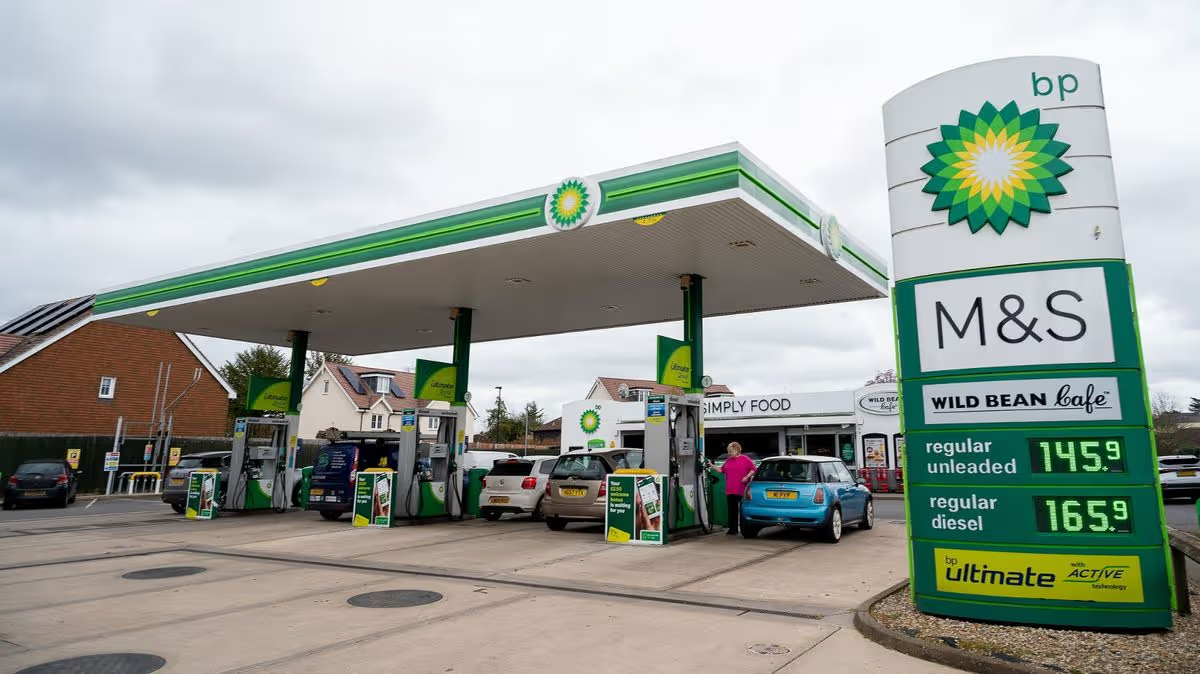
The abstract numbers on BP’s balance sheet translated into concrete and painful realities for millions. The surge in wholesale oil prices, from which BP profited, led to immediate “pain at the pumps,” with motorists facing skyrocketing fuel prices. The fallout extended far beyond transportation. Household energy bills were projected to rise, adding pressure to already strained budgets. Economists forecast that the energy price spike would feed into broader inflation, threatening to dampen economic growth and impact economies around the world, including the UK. Thus, BP’s quarterly profit report was, for the public, a precursor to a wave of personal financial challenges.
Paragraph 5: The Critique of Strategic Direction
Critics argued that the problem was not merely cyclical but systemic, accusing BP of actively perpetuating the harmful cycle. Robert Palmer of the campaign group Uplift labeled the profits “appalling” and an “unearned windfall.” He warned that this was likely just the first of many bumper profit quarters for oil and gas firms as the crisis persisted. More critically, he and others pointed to BP’s strategic decisions, noting the company was “rowing back” on investments in renewable energy like wind and solar. This retreat, they argued, demonstrated a desire to keep society “hooked on oil and gas” to ensure the company could continue profiting from future volatility, rather than accelerating a transition to stable, clean energy sources.
Paragraph 6: The Fundamental Dichotomy
The BP profit announcement of April 2026 ultimately highlighted a profound and persistent dichotomy in the modern global economy. On one side, geopolitical conflict creates windfall conditions for fossil fuel corporations, rewarding them with billions in what critics call “unearned” profits. On the other side, the same conflict imposes a heavy tax on ordinary citizens through higher energy costs, inflation, and economic uncertainty. The concurrent reports of BP’s soaring earnings and warnings of rising household bills crystallized a recurring debate: whether the current energy system inherently transfers the costs of crisis to the public while insulating and enriching the corporations at its center. The event served as a catalyst for renewed calls to accelerate the transition away from fossil fuels, not only for the planet’s health, but for economic justice and stability in an increasingly turbulent world.