


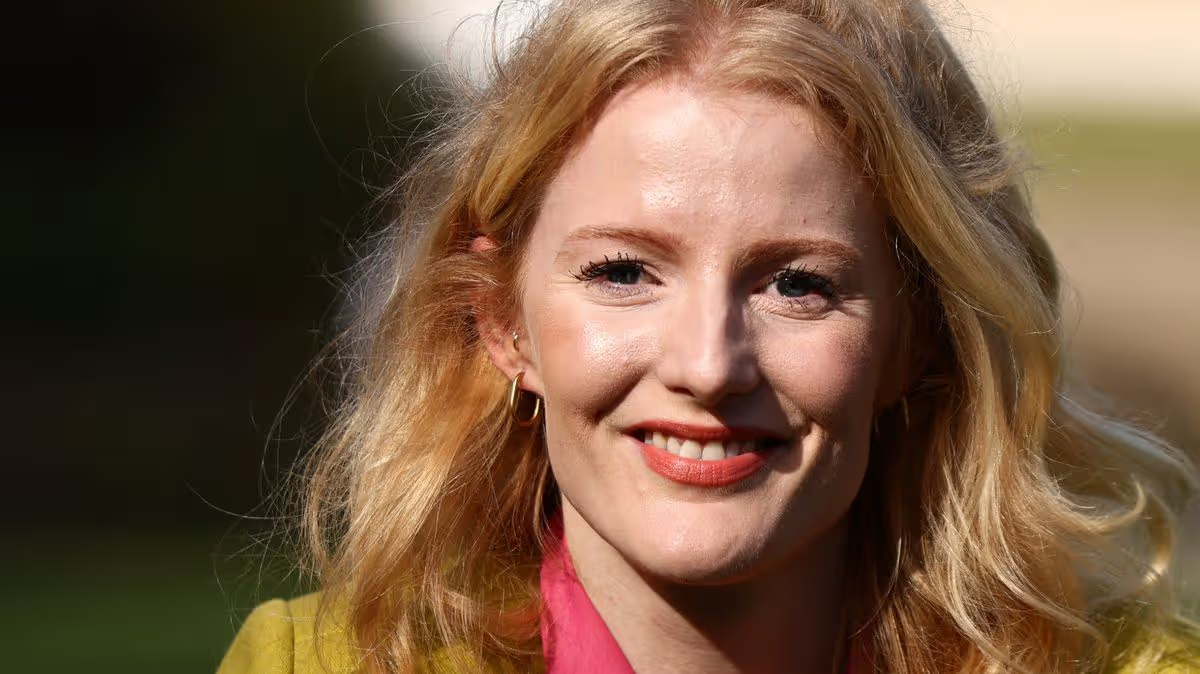
In the historically hallowed halls of the UK Parliament, a new and notably sobering voice has emerged to question a long-standing tradition. Hannah Spencer, the newly elected Green Party MP for Gorton and Denton, has publicly expressed her deep unease about the pervasive drinking culture within Westminster. She described tangible moments, such as walking past a room where colleagues were openly having drinks between votes, and the disconcerting experience of being able to smell alcohol on individuals as they fulfill their parliamentary duties. Her point is stark and relatable: in almost any other profession, from a cleaner to a bank teller, such behavior would be grounds for immediate disciplinary action or dismissal. Spencer’s observations puncture the Westminster bubble, bringing a fundamental question of workplace professionalism into the public square, challenging the normalization of alcohol consumption during the official working day.
The reaction from segments of the political establishment was both swift and dismissive, illustrating just how entrenched this culture truly is. Colleagues from across the aisle, including Labour’s Natalie Fleet and Luke Charters, trivialized her concerns. Fleet nostalgically cited the smell of “fags & beer” as something that makes the Commons feel “a tiny bit normal,” while Charters dismissed the critique as “classic clickbait farming,” framing it as an attack on MPs simply being human. This defense, however, misses the core issue entirely. Spencer is not critiquing social drinking after hours; she is highlighting the impropriety of consuming alcohol during the work of governance, in the intervals between voting on legislation that shapes the nation. The backlash reveals a defensive instinct to protect a perceived privilege rather than engage with a legitimate question about accountability and decorum.
Importantly, Hannah Spencer is far from the first to sound this alarm. The concerns she raises are echoed in official reports and by authoritative internal figures. A 2023 report from Parliament’s own behaviour watchdog explicitly linked Westminster’s drinking culture to incidents of “intimidating behaviour” and an unsafe working environment. Furthermore, Sue Gray, now Sir Keir Starmer’s Chief of Staff, famously caused a stir two years prior by advocating for the closure of the Commons bars. This context reveals Spencer’s comments not as a radical outlier, but as the latest and most public articulation of a known and documented problem. It underscores that this is not about puritanical judgment, but about addressing a documented risk factor for poor conduct and ensuring a professional, safe environment for all who work within the parliamentary estate.
The hypocrisy at the heart of this issue becomes glaring when viewed from the perspective of the British public. MPs are quick to legislate on social behavior and enforce standards in every other sector, yet they seem to operate under a different, self-granted set of rules. As the opinion piece rightly points out, bus drivers, nurses, teachers, and firefighters—countless professionals who work late or under high pressure—are held to a strict standard of sobriety on duty. The notion that they could have “a few drinks” before returning to their posts is unthinkable, and for good reason, given the serious consequences of impaired judgment in such roles. Why, then, should the same not apply to those making weighty decisions on national policy, security, and law? The defense of this practice suggests an alarming disconnect and a sense of entitlement that treats the Commons less as a chamber of state and more as a private members’ club.
The political maneuvering around Spencer’s comments further clouds the issue. Figures like Nigel Farage attempted to caricature her stance, disingenuously framing it as an attack on having “an afternoon pint.” This is a deliberate minimization, a tactic to shift the debate from one about professional integrity to one about personal freedom, thereby rallying a certain sentiment. However, this misrepresentation only strengthens the argument for reform. The issue is not about social liberty; it is about the basic expectation that elected officials, while on the clock and funded by the taxpayer, should be fully present and unimpaired. The call is for modernizing an archaic culture that no longer aligns with public expectations of accountability, not for banning MPs from ever enjoying a drink.
Ultimately, Hannah Spencer’s intervention holds up a mirror to Westminster, and the reflection it shows is at odds with the gravity of the institution’s purpose. Defending a culture where alcohol is consumed during the workday is an indefensible hill to die on, especially for public servants. True leadership would involve acknowledging this anachronism and aligning parliamentary practices with the standards expected of every other workplace in the country. It is about ensuring that when MPs walk into the chamber to vote, they are guided solely by clear judgment and a sense of duty, not by the lingering effects of a drink taken on the job. Reform in this area is not an attack on tradition; it is a necessary step toward restoring public trust and ensuring the solemn work of democracy is conducted with the utmost professionalism and respect.