



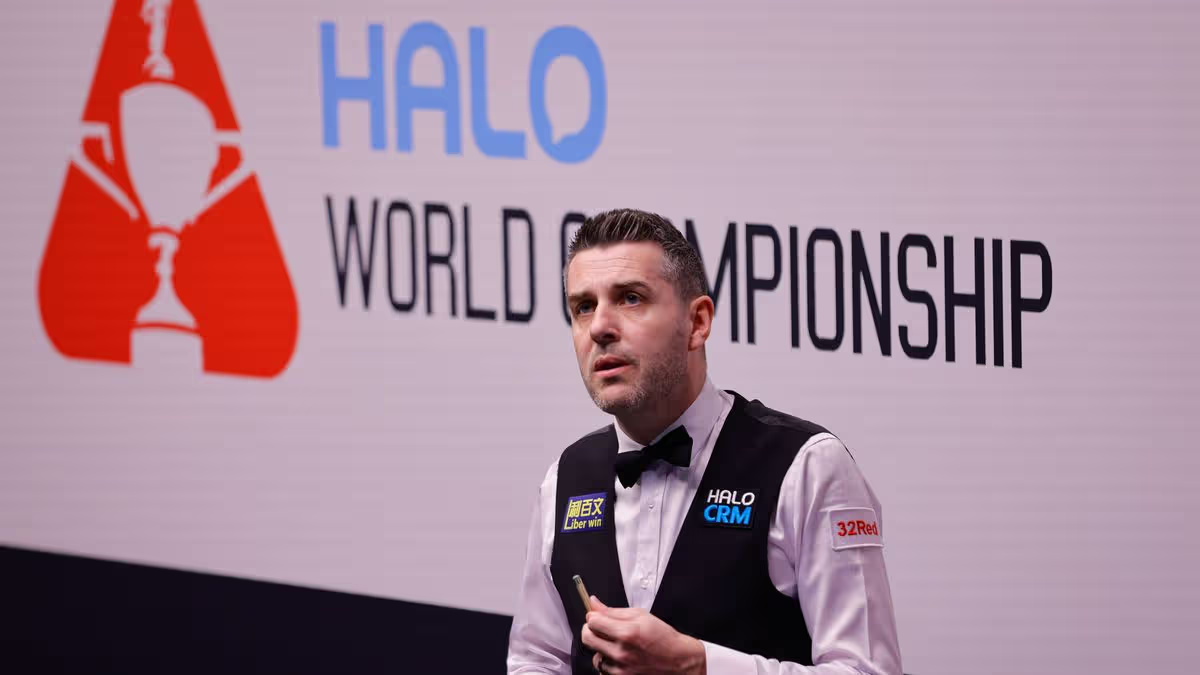
The World Snooker Championship at the Crucible Theatre in Sheffield is renowned for its intense pressure and historic prestige, but this year’s tournament generated unexpected controversy following Mark Selby’s dramatic exit. The four-time champion, known for his resilience and tactical mastery, was narrowly defeated 13-11 by China’s rising star, Wu Yize, in a match that stretched across two days. While the 22-year-old Wu displayed remarkable composure to secure his maiden quarter-final berth at this elite event, the aftermath was dominated not by celebration of his achievement, but by Selby’s sharp criticism of the playing conditions. The veteran’s frustration cast a shadow over the young player’s victory and sparked a conversation about the standards maintained at snooker’s most hallowed venue.
Selby’s critique focused squarely on the state of the table itself. Following his loss, he described the conditions as “horrific” and “atrocious,” particularly noting issues with the cushion responsiveness after a re-covering of the table overnight. He conceded that Wu’s long potting and safety play were strong, but felt that neither player could score consistently due to the unpredictable table. “I felt like I only played well really in the first session,” Selby reflected, acknowledging a litany of unforced errors from both sides. Importantly, he stressed that his comments were not an excuse for his defeat—he admitted he “didn’t deserve to win”—but rather an observation on an environment that he believed hindered high-level play. This feedback from such an experienced and respected champion placed immediate scrutiny on the tournament’s organizers.
In response to Selby’s comments, a World Snooker Tour (WST) spokesperson issued a statement acknowledging the complexities of maintaining perfect conditions. They emphasized the tireless work of their dedicated table-fitters and noted that systems exist for player feedback after every match. This diplomatic response highlighted the ongoing challenge of balancing the many variables—humidity, temperature, the wear of the cloth—that affect play at such a prolonged event. However, it also underscored a potential disconnect between player experience and organizational perception, a tension that is not uncommon in professional sports where minute details can dramatically impact performance.
Despite his dissatisfaction with the environment, Selby was generous and insightful in his assessment of his opponent. He praised Wu Yize as “great for our game” and a “world champion in the making,” highlighting his attacking style and fearless shot selection. Selby noted that while some of Wu’s choices might have been questionable tactically, his success in potting them made the approach effective. This recognition from a multiple world champion carries significant weight, projecting a bright future for the young Chinese player. Selby’s ability to separate his criticism of the conditions from his praise for Wu demonstrated a professional respect for the human element of the sport, even in defeat.
The match itself was a compelling narrative of shifting momentum. Wu built a commanding lead, reaching 12-9, before Selby summoned his famous fighting spirit to claw back two consecutive frames, tightening the score to 12-11. The final frame, described as scrappy by observers, was a tense affair where both players struggled under the pressure, ultimately culminating in Wu sealing his historic victory. This back-and-forth struggle exemplified the psychological warfare intrinsic to snooker, where technical skill must coexist with mental fortitude. Wu’s ability to withstand Selby’s late charge and close out the match speaks volumes about his burgeoning temperament.
Ultimately, this episode serves as a multifaceted story within the broader championship. It is a tale of a generational shift, where a seasoned champion falls to a promising newcomer, and a reminder of the immense pressure and scrutiny that defines the Crucible. It also opens a constructive dialogue about the relentless pursuit of perfection in sporting conditions. While Wu Yize’s breakthrough is a celebratory moment for the global expansion of snooker, Selby’s candid feedback ensures that the focus remains not only on the players who triumph, but also on the stage upon which they perform. The tournament continues, but the conversation about preserving the integrity and quality of its iconic setting is now firmly part of its 2024 narrative.