



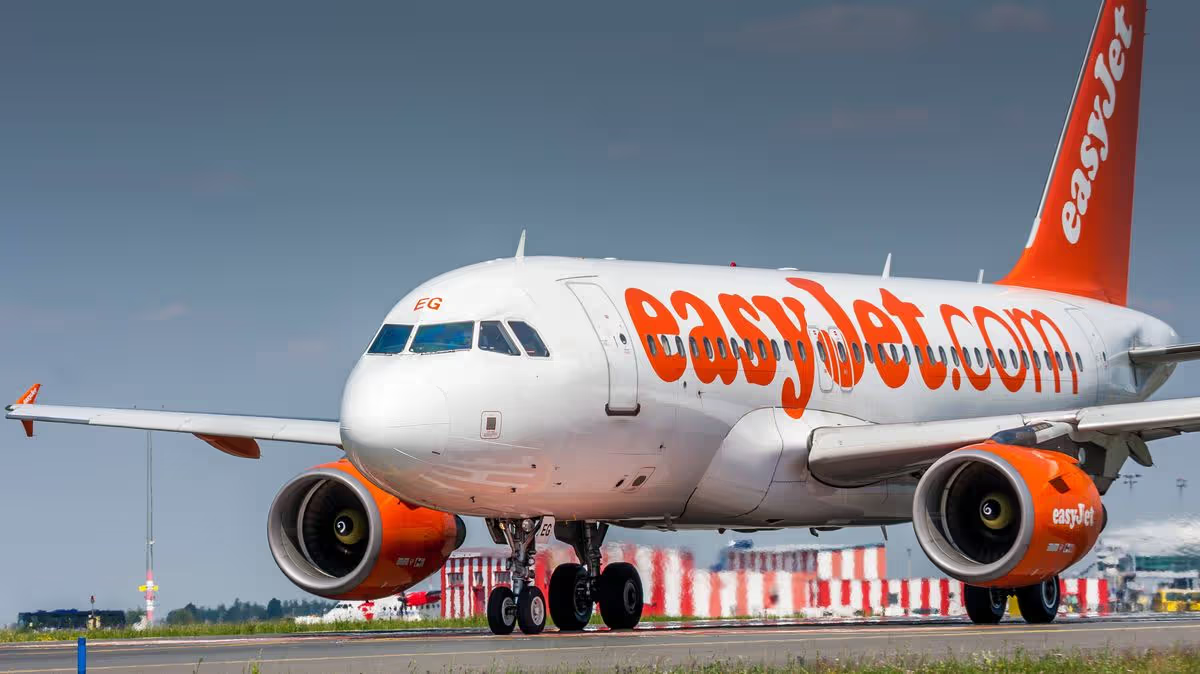
Money Saving Expert, the invaluable financial guidance platform founded by Martin Lewis, has revealed a clever and perfectly legitimate travel tip that could save easyJet flyers from costly baggage fees. The trick centers on a specific, often overlooked part of the airline’s cabin baggage policy, offering a potential loophole for those needing just a little extra carrying capacity. For budget-conscious travelers, every pound saved on luggage charges is more money for the holiday itself, and this insight taps directly into that thrifty mindset.
The crucial detail lies in easyJet’s official rules regarding what passengers can bring on board in addition to their main piece of hand luggage. Beyond the standard cabin bag, the airline’s policy explicitly states under ‘Accessories’ that flyers are permitted to bring “one standard bag of goods bought at the airport.” This essentially means that any purchase made after security—be it from a duty-free shop, a bookstore, or a café—comes in its own carrier bag, and that bag is granted its own boarding allowance. It’s not a secret hack, but a formal provision that many travelers simply don’t notice or fully utilize.
As Money Saving Expert wisely advises, the key is strategic planning rather than unnecessary spending. The site is careful to note it does not encourage buying items solely for the bag, but rather highlights an opportunity for those who were going to make a purchase anyway. For instance, if you were planning to buy a bottle of water, a book, or some snacks for the flight, that transaction now also provides you with a secondary, airline-approved carry vessel. Passengers have reported using this extra bag to accommodate overflow items that wouldn’t fit in their primary hand luggage, or even to discreetly carry a small handbag, effectively giving them three items: their main cabin bag, a personal item, and the airport shopping bag.
This tip is particularly welcome given easyJet’s structured baggage system. While the airline allows up to three checked bags per passenger for a fee, with weight limits up to 32kg, managing cabin baggage is often a game of meticulous packing. The post-security shopping bag provides a buffer for those last-minute additions or the awkwardly shaped souvenir acquired at the departure gate. It offers a layer of flexibility, turning what could be a stressful squeeze at the gate into a smoother boarding experience, all within the written rules.
Of course, travelers should apply this advice with common sense. The policy specifies a “standard” bag from an airport retailer, so it’s best to use the actual bag provided at purchase. While some flyers claim to have successfully brought an empty carrier bag from home, the safest approach is to have a recent receipt and items visibly from an airport outlet. The goal is to avoid disputes and ensure a hassle-free journey, using the rule to your advantage without pushing it to the point of confrontation.
In essence, this Money Saving Expert insight humanizes the often rigid and frustrating world of airline fees. It empowers travelers with knowledge, encouraging them to read the fine print and understand the full scope of what they are entitled to. For anyone flying easyJet, it’s a small reminder that a little awareness can lead to tangible savings and a bit more breathing room in the cabin, making the start of your journey just that much more comfortable and economical. It’s a perfect example of the platform’s mission: turning complex policies into simple, actionable wisdom for everyday life.