


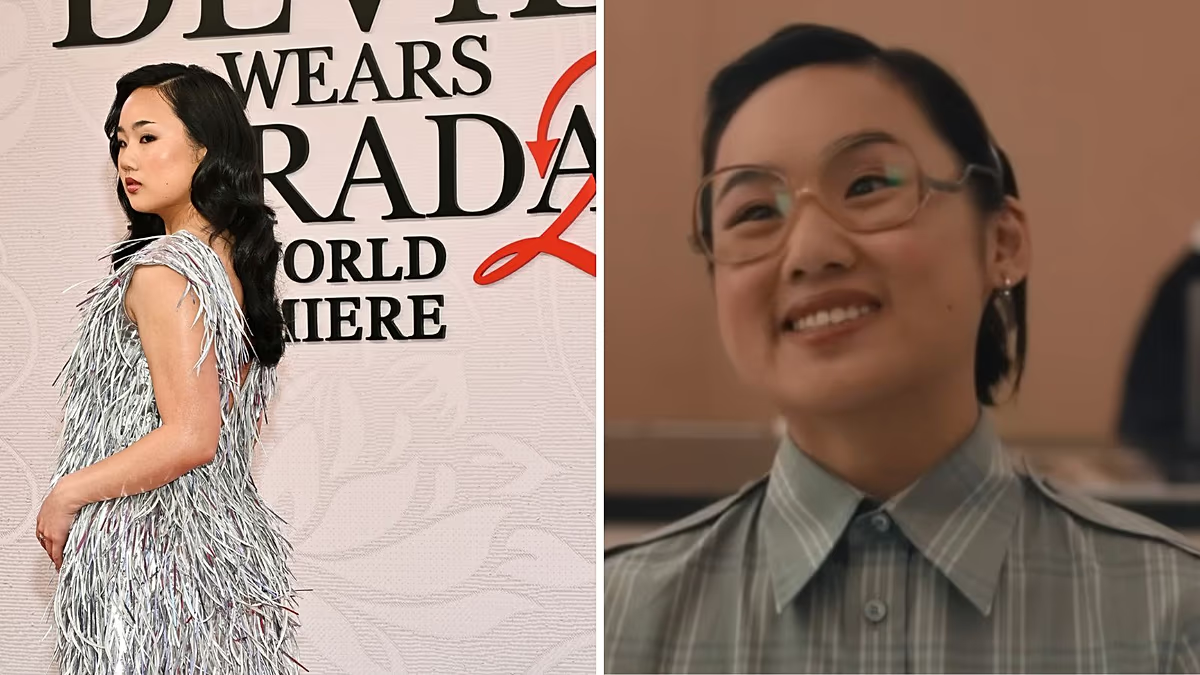
Nearly two decades after the original film defined an era of fashion and workplace satire, the highly anticipated sequel to The Devil Wears Prada is set to arrive in theatres. However, its journey back to the glossy halls of Runway magazine has hit a significant and early snag. A mere 38-second promotional clip, released ahead of the film’s premiere, has ignited a firestorm of criticism and accusations of racist stereotyping, threatening to overshadow the film’s release. The clip, viewed tens of millions of times, focuses on the introduction of a new character, Jin Chao, played by Chinese-American actress Helen J Shen. As the assistant to Anne Hathaway’s now-ascendant Andy Sachs, the character’s brief appearance has sparked a vital conversation about Hollywood’s persistent and damaging portrayals of Asian Americans.
The problematic scene unfolds as Jin Chao meets Andy, presenting a cringe-inducing caricature. She is styled in deliberately unflattering, child-like clothing and oversized glasses, embodying a trope of social awkwardness and a desperate eagerness to please. Her dialogue consists almost entirely of robotically listing her impeccable academic credentials—Yale, a near-perfect GPA, a top ACT score—while simultaneously undermining herself with insecure declarations like, “If you don’t want me, you can interview someone else.” This combination of hyper-competence and profound social insecurity is at the heart of the backlash. Critics argue it reduces a complex human being to a bundle of outdated stereotypes: the overqualified, obsequious Asian bookworm whose worth is measured only in test scores and who lacks any trace of coolness or personal confidence.
Online, the reaction has been swift and damning. On platforms like X and Reddit, viewers have expressed a profound sense of exhaustion and betrayal, highlighting that in 2026, such a lazy and harmful portrayal feels shockingly out of touch. One widely shared critique pinpointed the dynamic as “not Asian American stereotypes, they’re white women’s fantasies”—a searing observation that the character seems designed through a lens of white projection rather than authentic representation. The backlash extends beyond the character’s demeanor to her very name, Jin Chao, which some audiences hear as phonetically similar to a racial slur. Others have criticized it as a generically “Asian-sounding” name constructed without cultural nuance, drawing direct parallels to the controversial naming of characters like Harry Potter’s Cho Chang.
This moment of controversy does not exist in a vacuum. It taps into a long and painful history of Hollywood sidelining Asian actors or relegating them to roles that are either invisible or intensely stereotyped—the nerdy sidekick, the dragon lady, the perpetual foreigner. The clip for The Devil Wears Prada 2 feels like a regression, coming after years of public discourse and some genuine progress toward more nuanced representation. The intense public critique reflects a community and its allies who are now empowered to vocally reject these caricatures, demanding stories that reflect the vibrant, diverse realities of Asian American life rather than recycled, offensive clichés used for easy, tonedeaf laughs.
As the film prepares for its global release, the studio and creative team now face a formidable public relations challenge. The excitement for a reunion with beloved characters like Miranda Priestly and Andy Sachs is now heavily tempered by this significant misstep. The question audiences are asking is whether this 38-second clip is indicative of the film’s overall approach to the character, or a poorly chosen marketing focal point. The incident serves as a stark reminder to creators that in today’s cultural landscape, audiences are critically engaged and will hold major productions accountable for harmful representations, regardless of a franchise’s nostalgic appeal.
Ultimately, the pre-release drama surrounding Jin Chao transcends a single movie promo. It has become a case study in the ongoing struggle for authentic representation in mainstream media. The passionate response underscores that visibility alone is insufficient; it matters profoundly how characters are seen. As viewers, we are left to hope that the full film offers more depth and humanity than this preview suggests, and that the industry takes this lesson to heart. True storytelling requires moving beyond the worn-out templates of the past and embracing the rich, complicated humanity of all people, both on screen and off.