

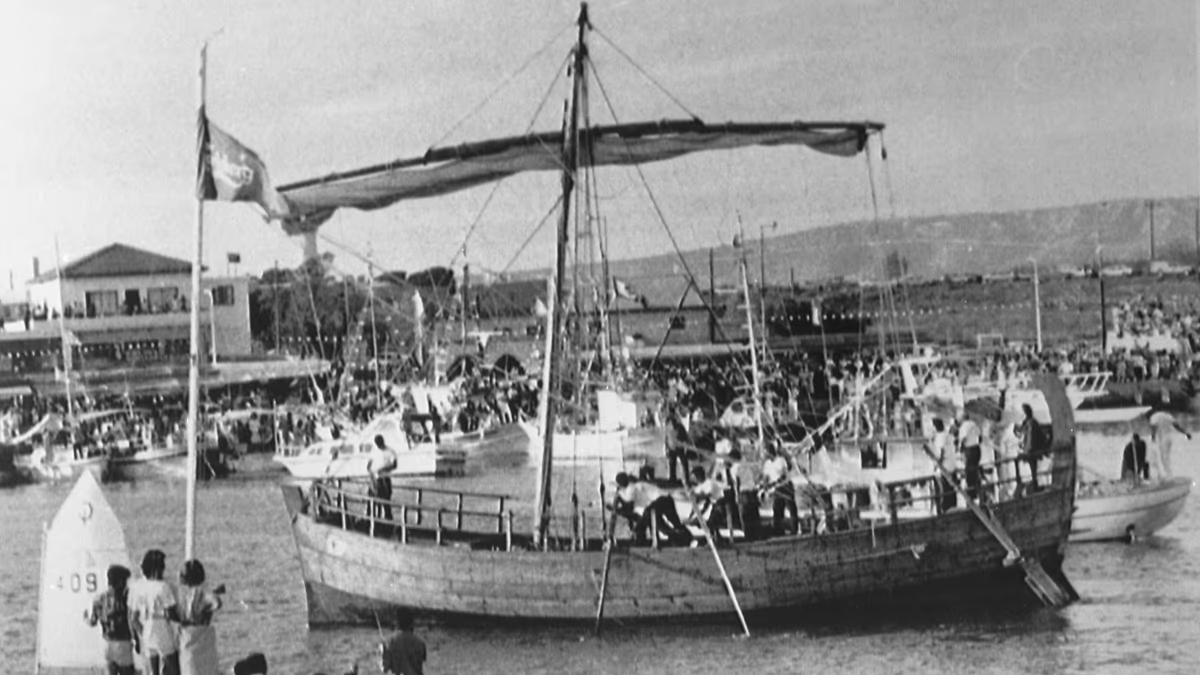
In a stirring display of maritime heritage, the unique replica of an ancient merchant ship, Kyrenia II, has taken to the waters off Cyprus. This voyage is a centerpiece of cultural events surrounding the Cyprus Presidency of the Council of the European Union. The original vessel, dating back to 300 BC, represents a tangible link to the island’s profound historical role as a crossroads of ancient trade. By launching this replica now, Cyprus merges its deep past with its contemporary European identity, offering a powerful symbol of continuity. The sight of the wooden ship against the modern Cypriot coastline creates a poignant bridge across millennia, celebrating both national pride and shared European cultural roots.
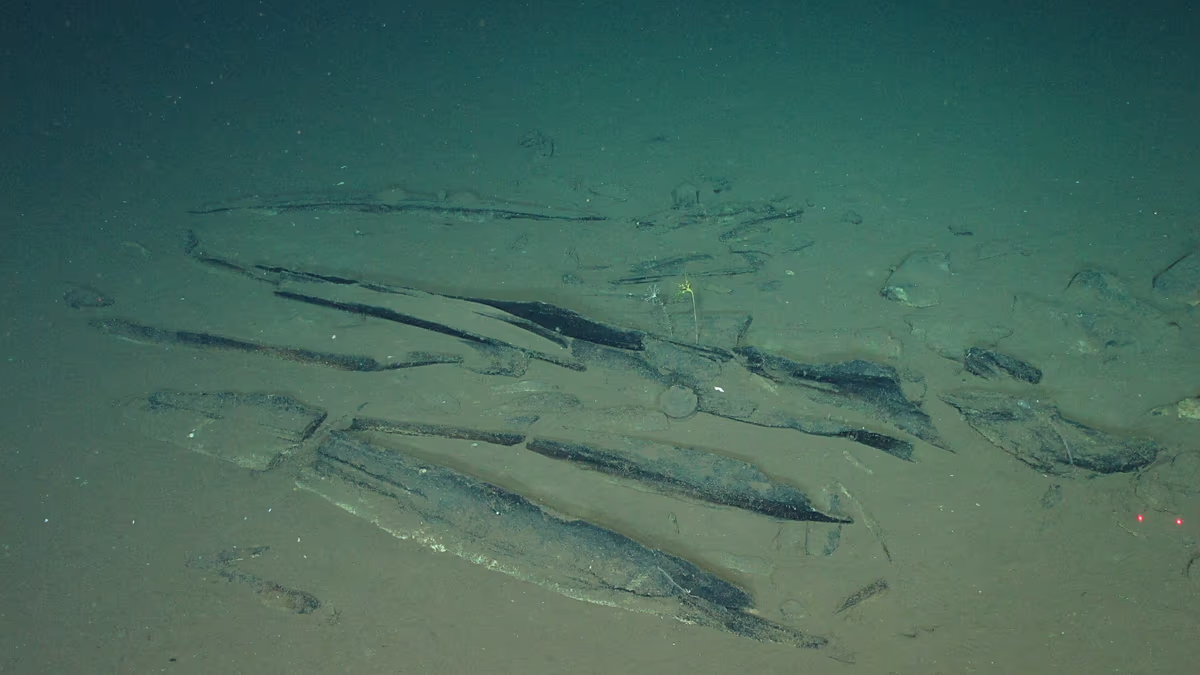
The story of Kyrenia II begins not in 1985, when the replica was built, but two decades earlier in 1965. It was then that the astonishingly well-preserved wreck of the original 4th-century-BC merchant vessel was discovered off the coast of Cyprus near Kyrenia. This archaeological treasure was carefully recovered and its secrets studied by a dedicated team from the University of Pennsylvania. For historians, the wreck was a time capsule, revealing details about ancient shipbuilding, trade routes, and daily life. The decision to build a seaworthy replica was driven by a desire to move beyond static museum displays, to truly bring history back to life and understand how such a ship handled the Mediterranean seas it once plied.
Constructed in Piraeus, Greece, the replica Kyrenia II was launched in 1985 and promptly embarked on her maiden voyage to Paphos, Cyprus. For over four decades, she has served as a floating ambassador for Cypriot history and culture. Her journeys have taken her far beyond the Mediterranean, including a notable visit to New York City in 1986 for the Statue of Liberty’s centennial celebrations and a trip to Japan in 1988. These voyages transformed the ship from a mere historical experiment into a global icon. She does not simply represent ancient trade; she actively conducts a modern cultural exchange, carrying the story of Cyprus’s maritime legacy to international audiences and fostering cross-cultural dialogue.
After 41 years, a special operation was undertaken to return Kyrenia II to her symbolic home waters. The Cypriot National Guard coordinated the effort to tow the venerable replica, ensuring she could sail once more along the island’s coast. This reactivation is far more than a nostalgic journey; it is a dynamic part of the Cyprus Presidency of the Council of the EU. The ship’s voyage underscores key themes of the presidency, such as unity, shared heritage, and resilience. As she sails, Kyrenia II visually communicates Cyprus’s commitment to preserving and promoting Europe’s collective historical patrimony, while also highlighting the island’s own unique contribution to that shared story.
The initiative powerfully encapsulates the mission to preserve intangible historical heritage. It moves beyond conserving artifacts behind glass, instead opting for living history. Sailing the replica provides invaluable data on ancient navigation, but more importantly, it creates an unforgettable emotional and educational experience for the public. The creak of the timbers, the billow of the square sail, and the skill required to maneuver her make the ancient world immediate and accessible. This effort aligns with broader European goals of safeguarding cultural heritage, demonstrating that preservation can be an active, engaging process that ignites public imagination and strengthens communal identity.
In conclusion, the voyage of Kyrenia II is a multifaceted endeavor. It is a tribute to archaeological scholarship, a feat of experimental reconstruction, and a successful program of cultural diplomacy. As she sails under the Cyprus Presidency, the ship embodies the seamless integration of national history with European cooperation. She reminds onlookers that the Mediterranean has always been a connective sea, fostering exchange and unity—ideals at the very heart of the European project. This journey of the ancient replica is ultimately a forward-looking act, ensuring that a priceless legacy is not only remembered but continues to inspire future generations.