


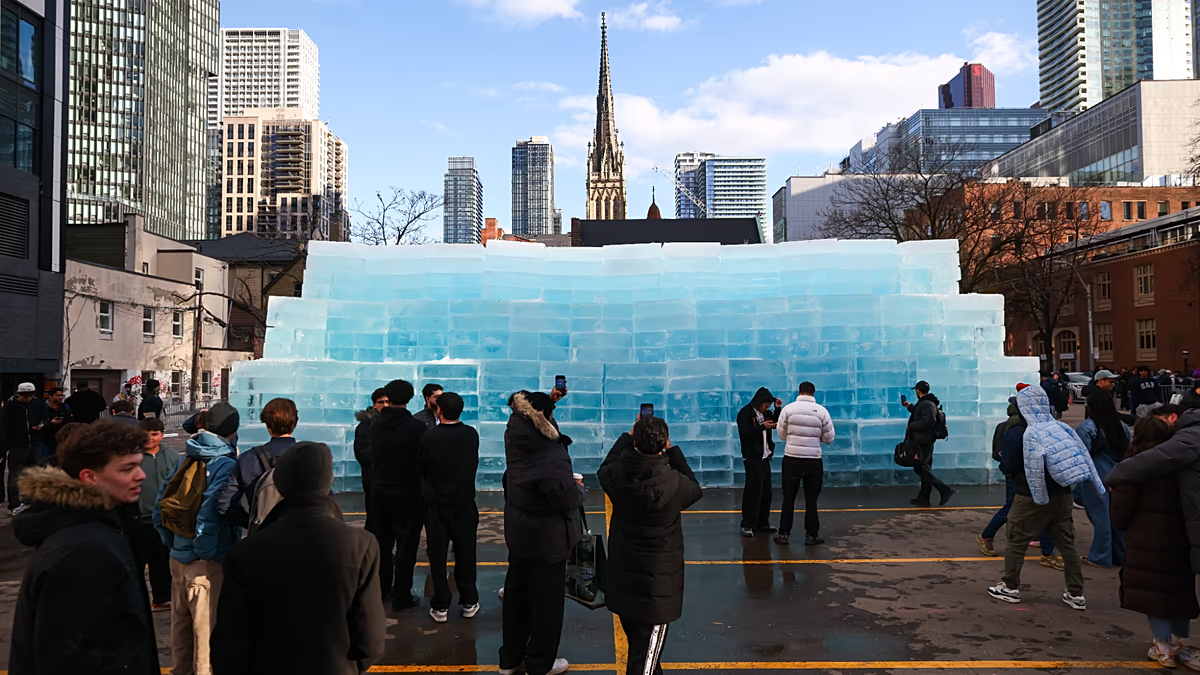
In late April 2026, the streets of downtown Toronto were transformed into a scene of surreal chaos, all orchestrated by the city’s most famous son, Drake. The catalyst was a 25-foot-tall ice sculpture, installed unceremoniously in a car park as a cryptic teaser for his upcoming album, ‘ICEMAN.’ What began as a curious public art piece rapidly devolved into a spectacle of fanatical frenzy. Crowds descended, clambering over the frozen monolith for photos and live streams, but the interaction soon turned destructive. The internet lit up with videos of people armed with sledgehammers, blowtorches, and even flamethrowers, hacking and melting the structure in a bizarre, almost ritualistic attempt to uncover its secrets. Small fires flickered on its surface, turning the promotional stunt into a public safety hazard that was equal parts mesmerizing and alarming. This was not a peaceful art exhibit; it was a viral scavenger hunt with the fervor of a mob, a testament to Drake’s unique power to command global attention through sheer theatrical audacity.
The anarchic mission bore fruit when a popular Toronto-based streamer, Kishka, managed to breach the sculpture’s top. Inside, he found a blue bag marked with the phrase “Freeze the world.” Following instructions from fellow streamer Adin Ross, Kishka then journeyed to Drake’s palatial Bridle Path mansion, “The Embassy,” to open the prize. The revelation was the album’s release date: May 15, which Drake later confirmed online. As a reward for his efforts, Kishka was given a second bag, this one filled with stacks of Canadian cash. Meanwhile, back at the car park, city officials had seen enough. Concerned for public safety, they intervened to formally melt down the remains of the ice block. Mayor Olivia Chow struck a diplomatic tone, thanking police and fire crews while acknowledging the fan excitement. “I can understand why fans are excited,” she said, capturing the city’s mixed feelings of exasperation and bemusement. The stunt, though forcibly cut short, achieved its ultimate goal: it dominated conversations and news cycles worldwide, proving that Drake’s flair for generating hype remained utterly unmatched.
This elaborate, dangerous publicity push arrives at what may be the most critical juncture of Drake’s career. ‘ICEMAN’ is poised to be his first solo album since his devastating and highly publicized rap feud with Kendrick Lamar—a clash that, by nearly universal consensus, Drake lost decisively. The battle escalated through a series of increasingly personal diss tracks, culminating in Lamar’s “Not Like Us,” a scathing anthem that became a cultural phenomenon. It dominated global charts, shattered streaming records, and swept major categories at the 67th Grammy Awards, including Record and Song of the Year. The track’s allegations and its omnipresent success struck a deep chord, leaving Drake in an unfamiliar position: widely perceived as the defeated party in a war of words that defined the rap landscape for over a year. The victory wasn’t just musical for Lamar; it was a tectonic shift in public perception and critical regard.
In the aftermath, Drake’s response took a contentious legal turn. In January 2025, he filed a lawsuit against Universal Music Group, alleging defamation over the claims in “Not Like Us” and accusing the label, along with Spotify, of artificially inflating the song’s popularity. The legal gambit escalated further when Kendrick Lamar headlined the Super Bowl halftime show, performing the very diss track to a record audience of over 133 million viewers. Drake promptly amended his lawsuit to include the performance. However, the courts were unswayed; the case was dismissed in October 2025, marking another very public loss. While he did release a collaborative project with PartyNextDoor in early 2025, ‘ICEMAN’ represents far more than just another album. It is his first solo endeavor to step back into the arena, an attempt to reclaim narrative control and reassert his artistic dominance after a period of significant reputational damage. The stakes could not be higher.
The choice of the album title “ICEMAN” itself is laden with provocative connotations. In the wake of a feud where his perceived authenticity and character were central themes, a title that evokes emotional detachment, cool superiority, or even cold-heartedness is a bold, perhaps defiant, statement. Furthermore, within the heated political climate of the mid-2020s, the term could be seen as politically tone-deaf, adding another layer of potential controversy. This ambiguity seems intentional. Is he embracing a villainous persona? Is it a metaphor for resilience and coolness under fire? Or is it simply a brash refusal to acknowledge the heat of his recent setbacks? The chaotic Toronto stunt—a giant block of ice literally attacked with fire—perfectly mirrored this tension. It was a physical manifestation of the “ice” enduring an assault, much as Drake himself has endured a firestorm of criticism. The spectacle begged the question: would the ice melt away, or would it prove unbreakable?
As the May 15 release date approaches, the world watches to see if the “ICEMAN” can thaw his own chilly reception. The album is not merely a collection of songs; it is a strategic counter-offensive. Can Drake’s signature hitmaking prowess and cultural savvy overcome the shadow of the Lamar beef? Will the album address the conflict head-on, or will it attempt to glide past it with cool indifference? The melting sculpture in Toronto serves as a perfect metaphor for this moment: a grandiose, attention-grabbing edifice that ultimately could not withstand the intense heat it attracted. Now, the pressure is on the music itself to solidify his legacy. For an artist who has defined a generation of pop-rap, ‘ICEMAN’ represents either a triumphant return to form or a potential confirmation of a decline. After the flamethrowers and lawsuits have faded, the final verdict will come from the listeners, who will decide if Aubrey Graham can once again freeze the world in place, hanging on his every word.