

The global pop charts may pulse with English and Spanish rhythms, but the French language continues to prove its enduring vitality and cultural resonance far beyond its European borders. While France itself remains a beacon, the true strength of Francophonie—the worldwide community of French speakers—lies in its astonishing diversity and global reach. A powerful testament to this vibrancy unfolded recently in Kazakhstan, host of the 16th edition of the Francophonie Spring. This annual festival, far from being a singularly French export, is a collaborative celebration orchestrated by the embassies of numerous nations including Belgium, Canada, Morocco, Switzerland, Armenia, and Lithuania. This multinational effort underscores a central, beautiful truth: the French language is a shared passport to a kaleidoscope of cultures, not a monolith belonging to one nation.
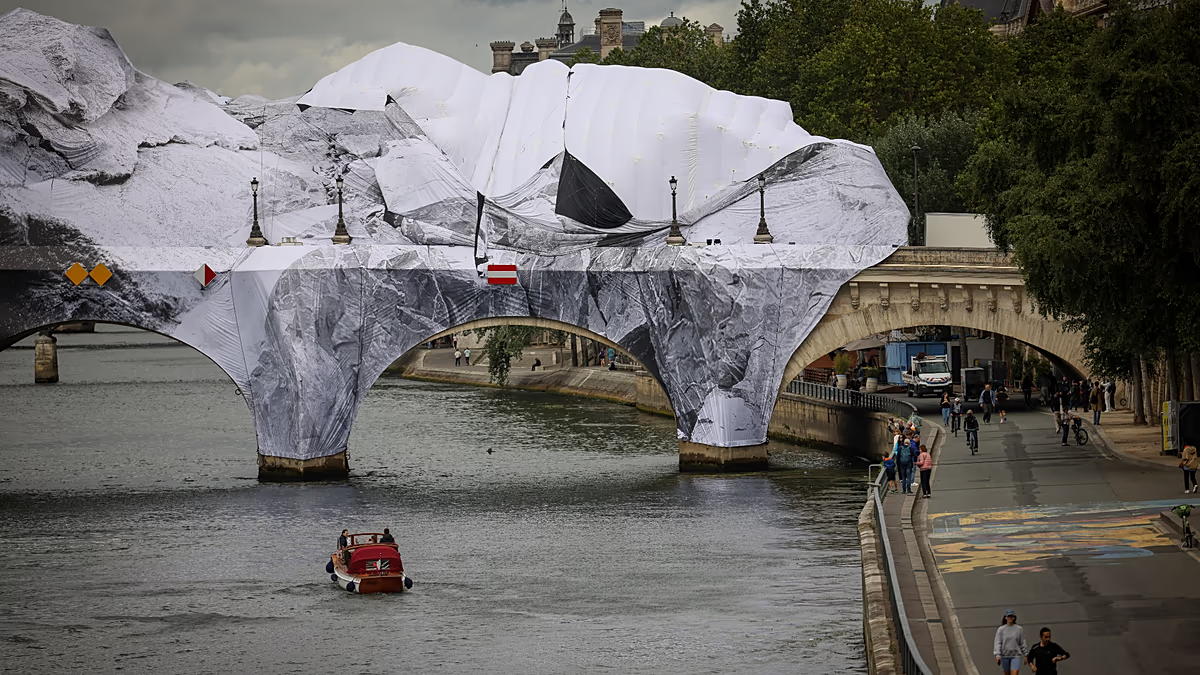
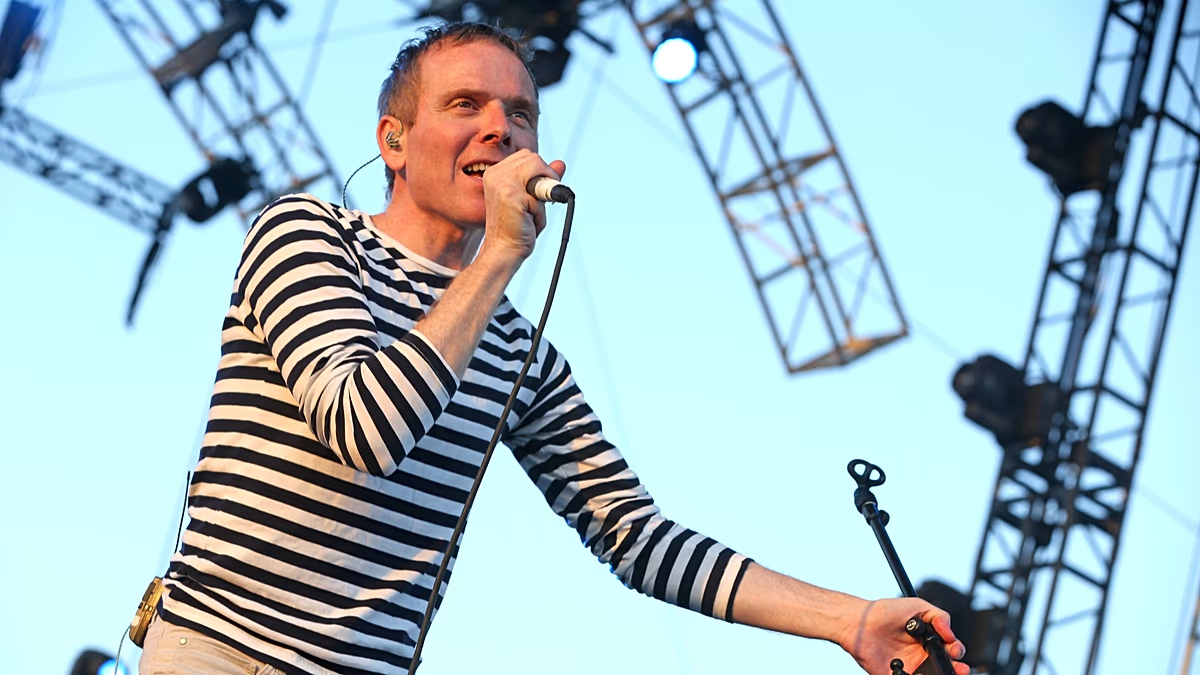
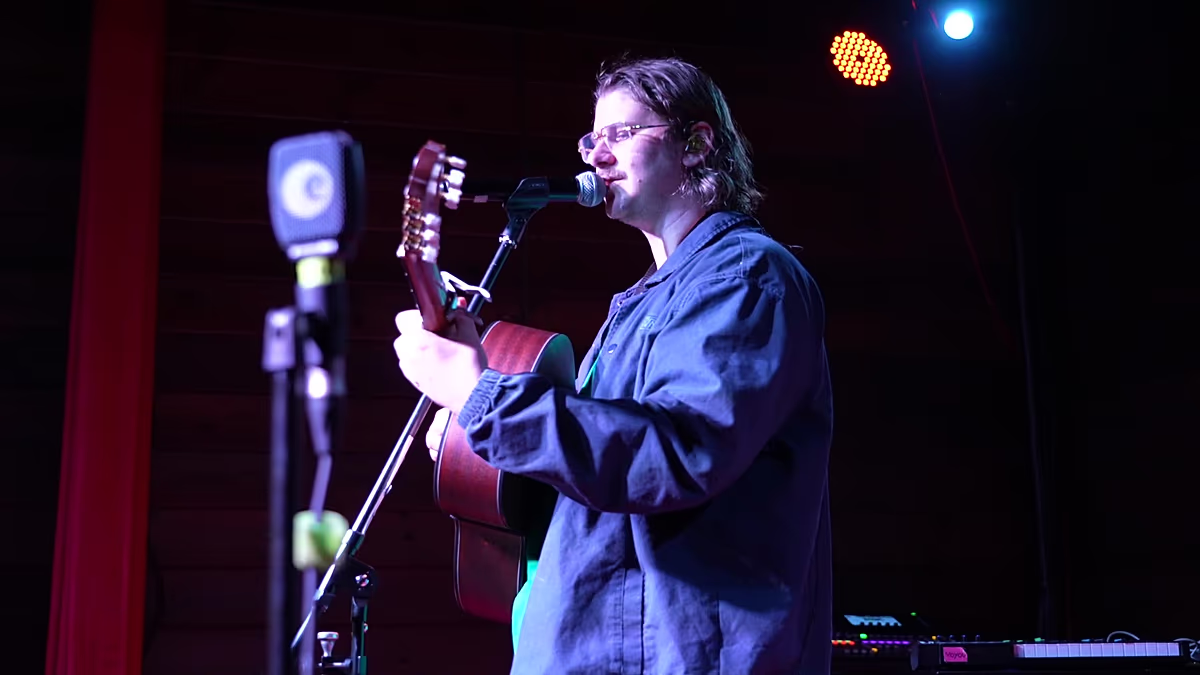
This year’s festival transformed seven Kazakh cities into hubs of Francophone exchange, featuring a rich programme designed to engage and inspire. The event opened with a curtain of short films, followed by a dedicated week of cinema showcasing the breadth of French-language storytelling, from François Ozon’s poignant drama When Fall Is Coming to the charming animated feature Little Amélie. Beyond the screen, the programme resonated with music from the evocative French singer Voyou and pianist Christine Fonlupt, and even offered a poignant exhibition on the reconstruction of Notre-Dame de Paris. Each event served as a dialogue, not a lecture. As Voyou reflected after his performance, singing in French in Central Asia was profoundly meaningful, a chance to share carefully crafted lyrics with an attentive new audience. It was a living demonstration that this language is a vibrant, contemporary vehicle for artistic expression.
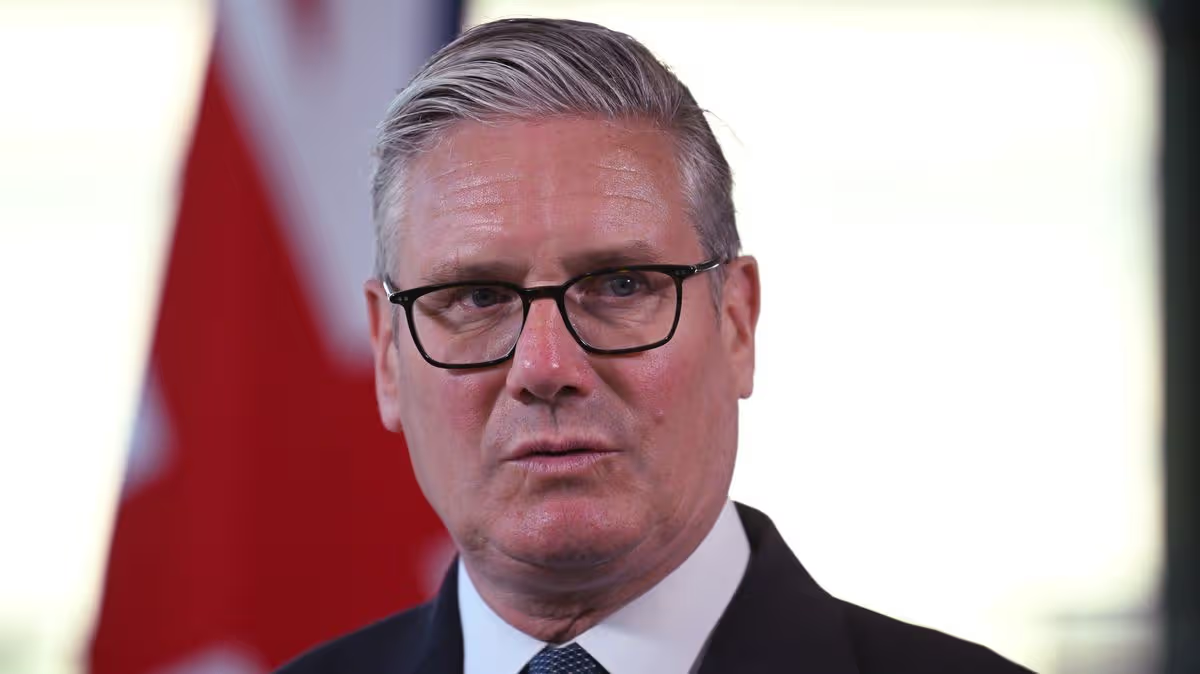
The enthusiastic reception in Kazakhstan is no accident; it reflects a growing and measurable interest in French language and culture within the country. Currently, an estimated 11,000 students are studying French across Kazakhstan, with about 25,000 fluent speakers. This demand is being met with significant institutional commitment. In 2024, Kazakhstan signed an agreement to build two new French schools in Astana and Almaty in partnership with the Agency for French Education Abroad. This concrete step is a direct response to a perceived value—families and students recognize French as a key to educational opportunities, international business, and tourism. As French Ambassador Sylvain Guiaugue noted, the festival’s success proves an authentic curiosity about Francophone modernity, from its films and music to its global perspectives.
To understand the scale of this cultural current, one must look at the staggering statistics of the Francophone world. French is spoken by over 390 million people across all five continents and holds official status in 29 countries. It is a foundational working language of major international institutions like the United Nations, NATO, and the European Union. Furthermore, some 90 countries and regions are united under the banner of the International Organisation of La Francophonie. This is not merely a linguistic bloc; it is a vast, interconnected network facilitating diplomacy, education, and mutual understanding. The festival in Kazakhstan is a microcosm of this larger reality, a local node connecting to a global circuit.
Therefore, the Francophonie Spring in Kazakhstan signifies much more than a series of cultural events. It has evolved into an essential platform for soft diplomacy and people-to-people connection. In a world often fractured by division, such festivals create shared spaces for appreciation and dialogue. For Kazakhstan, a nation steadily expanding its international ties and emphasizing multilingual education, embracing Francophonie aligns with a strategic vision of openness and collaboration. Each concert attended, each film discussed, and each language lesson taken weaves Kazakhstan more intricately into a wider community of nations.
Ultimately, the story of French in the 21st century is one of shared ownership and dynamic evolution. While English may dominate the airwaves, the French language thrives as a deeply rooted and expanding global tapestry, connecting continents through a common thread of expression. The festival in Kazakhstan, with its multinational organizers and eager local audiences, perfectly captures this spirit. It proves that the French flag flying high in the cultural arena represents a vast and varied alliance—a world where the language belongs not just to France, but to Quebecois filmmakers, Belgian musicians, African poets, Swiss diplomats, and now, to thousands of curious minds in the heart of Central Asia, discovering their own place within this extraordinary conversation.