


Of course. Here is a humanized and expanded summary of the event, crafted into six paragraphs.
In the annals of the Boston Marathon, a race defined by its historic rigor and the sheer human will it demands, a single, unscripted moment during the 2026 event cut through the competitive noise to reveal the profound spirit at the heart of long-distance running. The story centers on a runner named Ajay Haridasse, whose body, pushed to its absolute limit in the final, cruel stretch towards the iconic finish line on Boylston Street, betrayed his heart’s desire. As the roar of the crowd blurred into a distant hum and the world shrank to the pounding of his own pulse, Haridasse collapsed. The asphalt, hard and unyielding, became his immediate reality—a devastating conclusion to months of sacrifice and miles of struggle. Around him, the river of runners, each locked in their own profound battle, continued to flow, a stark reminder of the solitary nature of this very public test.
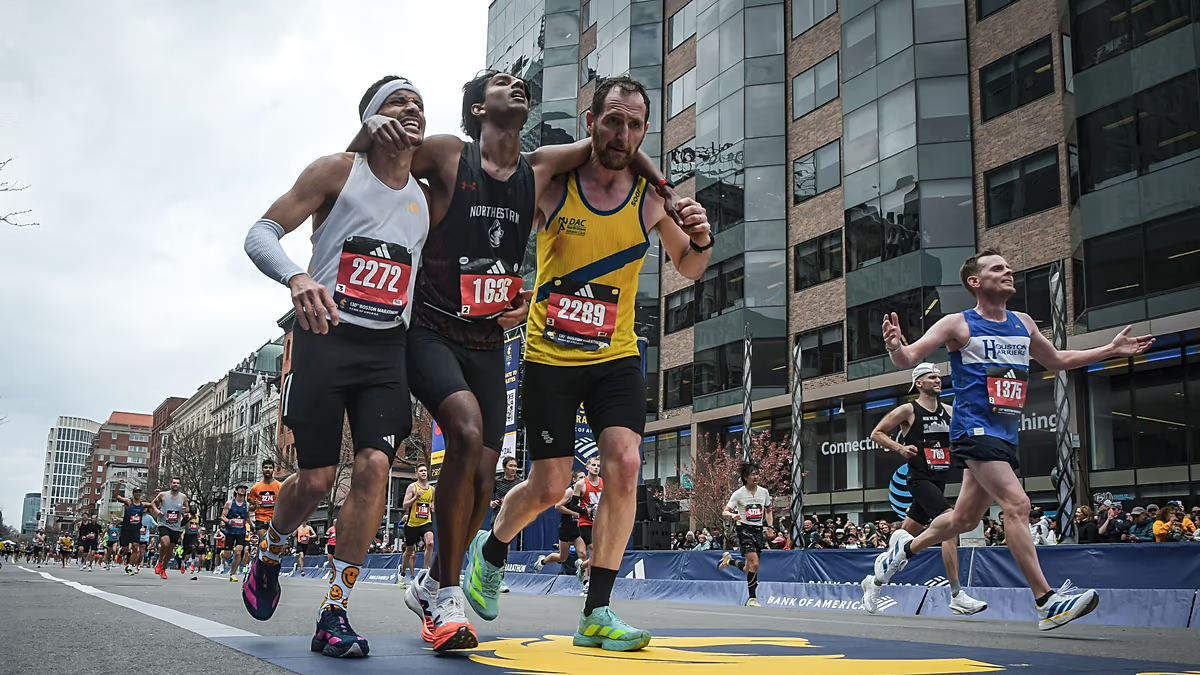
But the narrative was not destined to end there. In that critical instant, the race ceased to be about individual times or personal bests for two other athletes. Robson De Oliveira of Brazil and Aaron Beggs of Britain, themselves in the exhausting throes of the marathon’s climax, made a split-second decision that redefined the meaning of competition. Without hesitation, they altered their course, veering from their own paths to answer a more urgent call. They knelt beside Haridasse, their own fatigue momentarily forgotten. This was not a calculated move for applause; it was a visceral, human reaction to seeing a fellow traveler in distress. In that shared space of pain on the road, the invisible bond that connects all who dare to attempt this feat became tangible.
Together, De Oliveira and Beggs became more than fellow runners; they became living crutches, a scaffold of solidarity. They carefully lifted Haridasse, draping his arms over their shoulders, taking the full weight of his spent body onto their own. What followed was one of the most poignant and powerful marches in sports: a slow, tripartite struggle towards the finish line. Each step was a shared exertion, a collective defiance against the limits that had felled one of their own. The iconic finish line, now just yards away, transformed from a symbol of individual achievement into a shared destination. They were no longer three separate competitors, but a single unit of perseverance, embodying the principle that no one should be left behind.
The contrast surrounding them painted a powerful picture. Other runners, with eyes fixed ahead on their own goals, streamed past the trio. This was not callousness; it was the nature of the marathon’s final, oxygen-deprived push. Yet, the actions of De Oliveira and Beggs introduced a different, parallel truth about sport. In the backdrop of a world often focused solely on winners and records, their choice shouted a louder, more enduring truth: that our greatest victories are often communal. The raw footage of their aid—a stumble transformed into a supported stagger—resonated because it was an instinctual act of kinship, proving that the human impulse to help can outpace even the drive to win.
Ultimately, they crossed the line. Haridasse, supported on both sides, achieved his goal, not alone, but carried by the strength of strangers-turned-brothers. In doing so, Robson De Oliveira and Aaron Beggs secured a finish more meaningful than any personal record. They won a different kind of laurel—one woven from empathy and courage. The official clock would record their times, but the true story was etched in the images of their unwavering support. They demonstrated that the marathon is not merely a race against others or the clock, but a shared human journey where triumph can be redefined in a single, selfless act.
Thus, the 2026 Boston Marathon will be remembered not just for who won the race, but for who won the day. The names Haridasse, De Oliveira, and Beggs are now forever linked in a narrative that transcends sport. It is a modern parable about our capacity for compassion under pressure, a reminder that our shared vulnerability is the source of our greatest strength. Long after the details of split times and finishing orders fade from memory, the enduring image will be that of three runners, leaning on one another, teaching the world that the most powerful way to move forward is sometimes to stop, lift someone up, and carry them home.