



Of course. Here is a humanized and expanded summary of the event.
Paragraph 1: The Morning Shattered by Impact
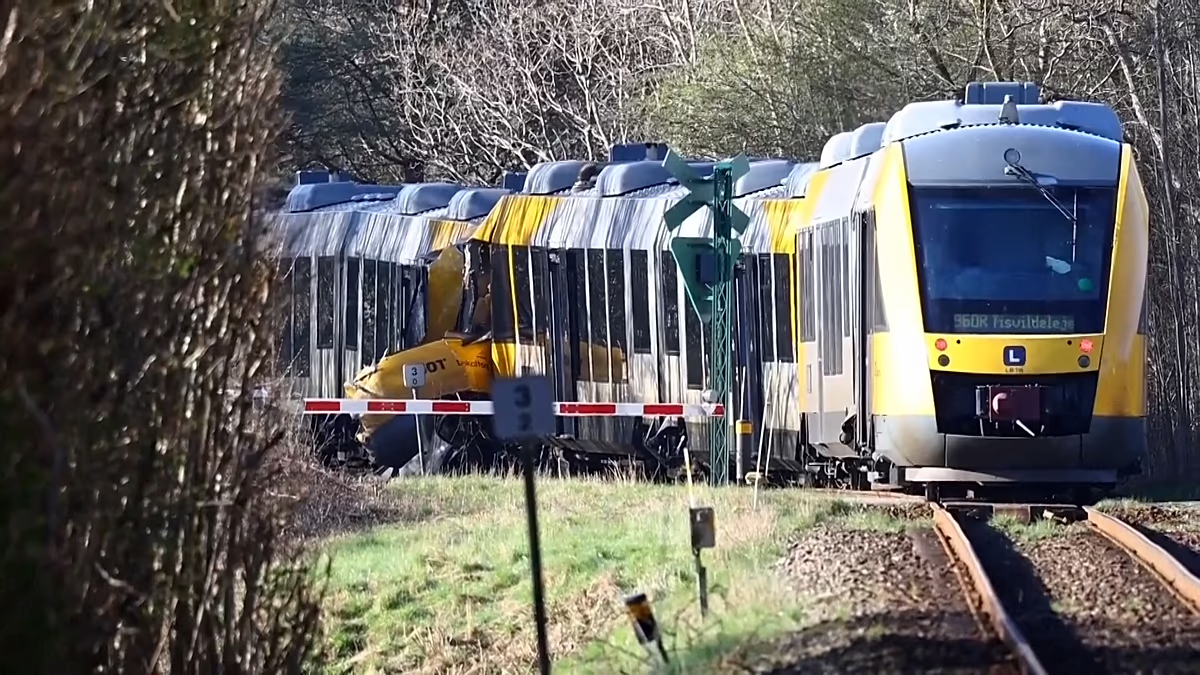
In the quiet, early hours of a Thursday morning, just as the day was beginning to stir, a violent collision shattered the routine commute north of Copenhagen. Near the town of Hillerød, approximately 40 kilometers from the capital, two trains on a local line met with catastrophic force. The clock read 6:30 AM—a time when trains are typically filled with commuters heading to work and students traveling to school, all expecting a journey of quiet predictability. Instead, the ordinary was replaced by sudden chaos and trauma, triggering an immediate and massive emergency response from every available service.
Paragraph 2: A Scene of Chaos and Response
The aftermath on the tracks was a scene of stark contrast: the trains, though miraculously remaining upright, bore the brutal evidence of the impact with their front ends crushed and mangled. This visible damage underscored the violence of the event. Police swiftly declared it a “major accident,” a formal term that conveyed the gravity of the situation to the public. From every direction, the coordinated response unfolded; fire departments, police units, and medical teams converged on the site, their priority being to secure the scene and aid the injured. All passengers were successfully evacuated from the wreckage, a critical first step in the rescue operation.
Paragraph 3: The Human Toll of the Collision
Beyond the twisted metal, the true cost of the accident was measured in human suffering. The Greater Copenhagen Fire Department provided the first, somber tally of the casualties: four individuals were critically injured, their conditions prompting urgent, intensive care. Another twelve people sustained minor injuries, a broader group whose physical and psychological trauma, while less severe, remained significant. Local mayor Trine Egetved highlighted the severity of the situation by noting that some of the most critically hurt were airlifted by helicopter to hospital, a measure reserved for when time and specialized care are of utmost essence. Each number reported represented a person, a life interrupted, and a family awaiting news.
Paragraph 4: The Community and Unanswered Questions
For the local community surrounding Hillerød, the accident was not just a news event but a direct disruption to their daily fabric. The rail line in question is a lifeline for the area, used by residents for work, education, and connection. The sudden severing of this link, coupled with the sight of emergency vehicles and the news of neighbors injured, cast a pall over the region. As the immediate rescue phase concluded, a pressing silence settled around the central, unanswered question: What caused this devastating collision? Authorities explicitly stated that no details on the cause were yet available, leaving a void filled by public concern and the urgent, silent work of investigators beginning their meticulous examination of the tracks, signals, and train systems.
Paragraph 5: The Investigation and the Path Forward
The lack of immediate cause details signifies the beginning of a complex investigative process. Specialists from rail safety agencies, along with police and forensic teams, would now embark on a meticulous mission to piece together the final moments before the impact. They would analyze data from train recorders, review signal and communication logs, and physically inspect every relevant component. This process is deliberate and thorough, prioritizing accuracy over speed, as the findings are crucial not only for potential accountability but for preventing any future recurrence. The path to answers would be long and technical, but it was a necessary journey for healing and restoring public confidence in the safety of the rail network.
Paragraph 6: Reflecting on Vulnerability and Resilience
In summary, this incident near Hillerød serves as a stark reminder of how fragile our daily systems of movement can be, and how a single moment of failure can transform a routine journey into a life-altering event. It highlights the incredible importance of robust emergency response systems that leap into action without hesitation, as witnessed by the swift evacuation and medical triage. Yet, it also leaves a community and a nation waiting, united in concern for the injured and in need of understanding. The collective hope now rests on the careful work of investigators to uncover the truth, and on the resilience of the injured and the affected community to recover from a morning that began with such unforeseen devastation.