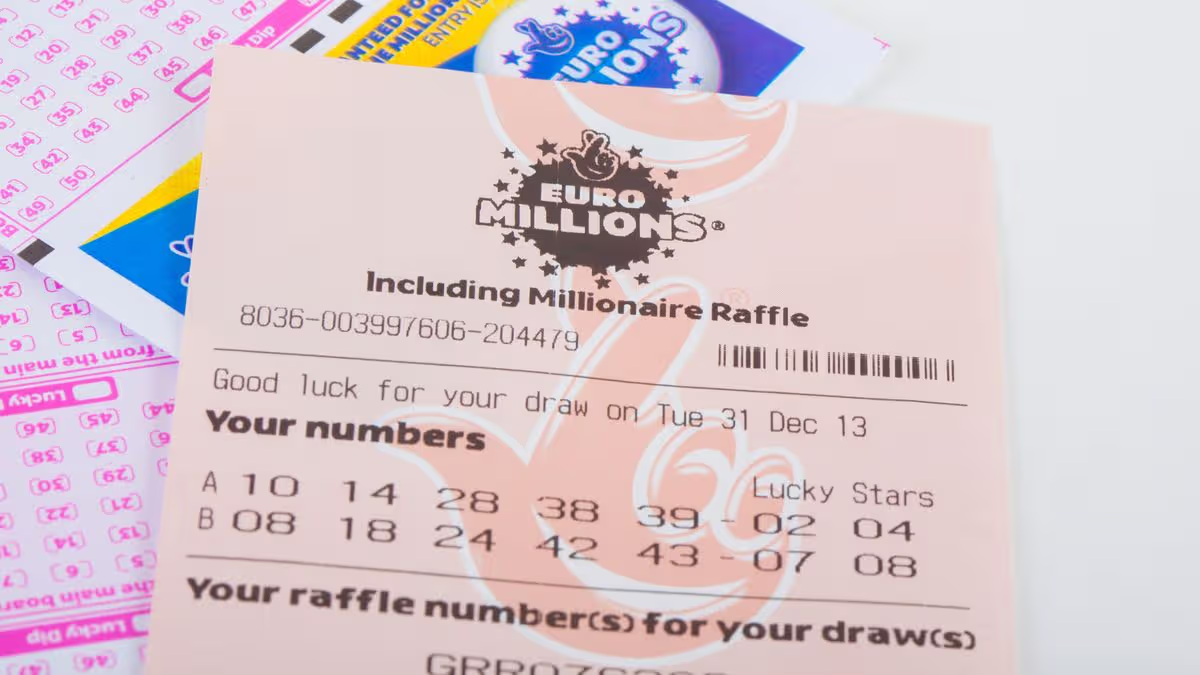




The dream of a staggering £122 million EuroMillions jackpot captured the public imagination this week, offering a tantalizing glimpse into a realm of boundless financial possibility. As the draw took place on Tuesday, countless participants across the nation held their tickets, each number combination representing a potential key to an unimaginably different future. Yet, when the numbers were announced, no single ticket matched them all, leaving the monumental prize unclaimed. This outcome, while disappointing for hopeful players, set the stage for an even more dramatic financial crescendo, as the rules of the game dictated that the entire sum would roll forward. Consequently, the collective anticipation merely intensified, redirected toward the next opportunity, with the stakes now astronomically higher. The very essence of such rollovers lies in this amplifying excitement, transforming a substantial jackpot into a historic one, and ensuring the next draw becomes a must-watch event for both regular players and those who only partake when the numbers reach such eye-watering heights.
The result of that Tuesday draw means that today’s EuroMillions jackpot has swelled to an almost incomprehensible £137 million. This figure is not merely a number; it represents a sum so vast that it transcends ordinary financial planning and enters the territory of legacy wealth. To contextualize, such a fortune would allow the winner to immediately join the ranks of the UK’s wealthiest individuals, with the power to acquire multiple luxury estates, a fleet of supercars, and still have enough capital remaining to generate millions in annual interest through conservative investments alone. The jump from £122 million to £137 million underscores the transformative power of the rollover mechanism, a feature designed to build suspense and participation. It creates a shared national moment, a “what-if” scenario played out in homes and workplaces, where the practical concerns of daily life are momentarily suspended in favor of fantastical planning and dream-building, all hinging on the random fall of a few numbered balls.
Andy Carter, the Senior Winners’ Advisor at Allwyn, the company that operates The National Lottery, emphasized the profound impact of such a win. “This is life-changing money that could transform the lives of you and your loved ones,” he stated, issuing a reminder that resonates far beyond a simple sales pitch. His words cut to the heart of the lottery’s appeal: it is not merely about personal luxury, but about the capacity to alter destinies. For many, buying a ticket is an act of hope—a small investment in a narrative where financial constraints vanish, allowing for the care of family, the support of friends, and the freedom to pursue passions without limitation. Carter’s role is particularly poignant; he is the man who guides newfound multimillionaires through the surreal first days of their win, helping them navigate the practical and emotional tsunami that follows a jackpot claim. His advice to purchase tickets early serves as a pragmatic note in the frenzy, a gentle prompt to ensure that no one misses the chance to participate in this specific life-altering opportunity.
But what does “life-changing” truly mean at this level? Winning £137 million is a metamorphic event so complete that it dismantles a person’s existing reality to construct a new one. It is the difference between saving for a holiday and buying the island; between enduring a daily commute and chartering a private jet; between leaving an inheritance and endowing a charitable foundation in your name. This level of wealth brings absolute financial security, erasing debts, mortgages, and worries about education costs or medical bills in an instant. However, it also introduces unique and profound challenges: managing complex assets, handling sudden fame and the inevitable approaches from strangers and long-lost acquaintances, and the psychological adjustment to a world where material wants no longer exist. The winner must renegotiate their relationship with work, purpose, and identity almost overnight, a journey that Carter and his team are intimately familiar with guiding.
The collective ritual of the big jackpot draw taps into a fundamental human love for stories of sudden transformation. It is a shared cultural event where, for a brief time, society agrees to dream openly and collectively about fortune. Offices pools are formed, casual conversations turn to “what would you do?” and a sense of communal possibility hangs in the air. The EuroMillions, with its transnational reach and colossal rollovers, perfects this phenomenon. The £137 million figure becomes a character in itself—an antagonist to current financial struggles, a protagonist in daydreams of liberation. This process humanizes the vast, impersonal nature of such wealth, breaking it down into relatable fantasies: buying a house for a parent, securing a child’s future, traveling the world, or simply never checking a price tag again. The ticket is a physical token of this shared narrative, a receipt for a chance to step into a different life story.
As the day of the draw arrives, the anticipation reaches its peak. Thousands will queue at retailers or visit online platforms, securing their entry into this modern-day tale of fate and fortune. In doing so, they are buying more than just a slip of paper with numbers; they are purchasing a license to dream expansively for a few days, to engage in a collective exercise of hope and imagination. Whether the £137 million jackpot finds a single owner or rolls again, its existence has already performed a function. It has provided a temporary escape, a topic of connection, and a reminder of the transformative power of chance. And for one incredibly lucky individual or group, should their numbers align, it will provide the ultimate human experience: the daunting, exhilarating, and irrevocable opportunity to rewrite every chapter of their life that is yet to come, surrounded by the means to turn their most altruistic and ambitious dreams into tangible reality.