


On a crisp winter morning in the Swiss Alpine resort of Crans-Montana, a community and a nation were plunged into profound grief. In the early hours of New Year’s Day, a devastating fire erupted at Le Constellation bar, a popular gathering spot for young revelers celebrating the turn of the year. The joyful atmosphere transformed in moments into a scene of unimaginable horror, as flames and toxic smoke rapidly engulfed the basement venue. When the emergency services finally contained the blaze, the staggering scale of the tragedy became clear: 41 lives were lost, and 115 people were injured. The victims were predominantly teenagers and young adults, their futures abruptly and tragically erased. Seventeen of those who perished were aged sixteen or under, a detail that compounded the heartbreak, turning a night of celebration into one of the worst peacetime disasters in modern Swiss history.
As the initial shock gave way to a search for answers, the judicial process began its meticulous and painful work. At the center of the investigation are the bar’s owners, French couple Jacques and Jessica Moretti. They face severe charges of manslaughter by negligence, bodily harm by negligence, and arson by negligence. According to prosecutors, the catastrophe had a chillingly simple ignition point: champagne bottles, equipped with celebratory sparklers, were raised in a toast too close to the basement’s ceiling. The sparks allegedly ignited highly flammable sound-insulation foam, leading to a rapid and deadly inferno. The Morettis have been questioned twice already, and a scheduled hearing in April for Jacques was postponed on medical grounds. Their legal situation remains restrictive; Jacques was held in custody for two weeks following the fire, and both have been barred from leaving Switzerland as the investigation continues.
The judicial focus, however, extends beyond the bar owners. In total, fourteen individuals are under criminal investigation, a group that includes several current and former local officials. This broad scope indicates a probe that is examining every layer of responsibility. A critical and damning fact has already emerged: no annual municipal safety inspections had been conducted at Le Constellation since 2019. This gap of over three years raises urgent questions about the oversight and enforcement of fire safety regulations in the popular resort town. The investigation, therefore, is tasked with a dual examination: scrutinizing the actions and preparedness of the bar’s management, and equally, evaluating the role and potential failures of the local authority charged with ensuring public safety.
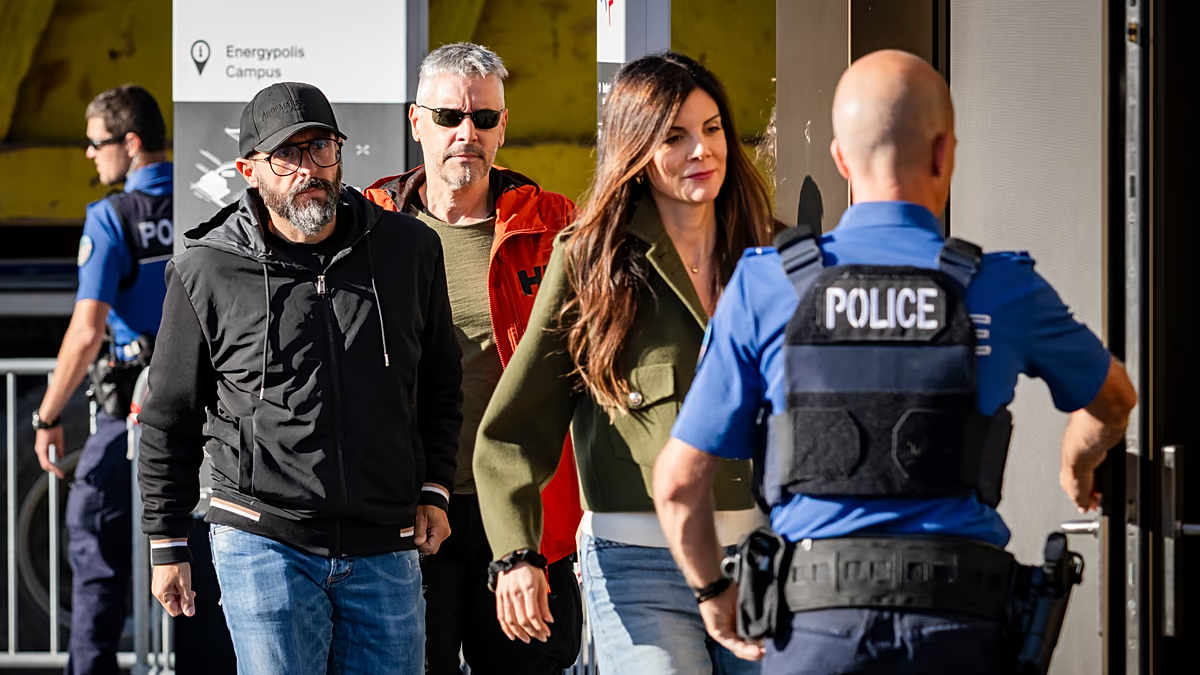
The legal proceedings have now reached a critical juncture. On a recent Friday in Sion, the capital of the Wallis canton, prosecutors and lawyers representing the victims’ families—known as civil parties—were set to cross-examine the Morettis once more. For the families and survivors, these hearings are not merely procedural steps; they are agonizingly personal journeys toward truth and accountability. Romain Jordan, a lawyer for the civil parties, articulated this profound need, stating that this hearing represented “the last opportunity offered to the Morettis to tell the truth, the whole truth.” He emphasized that the victims’ families require this clarity for their grieving process and recovery, adding, “Our expectation remains the same: to get answers, to know the truth and all the responsibilities, so that this can never happen again.”
The human toll of the fire transcends statistics, weaving a tapestry of loss that stretches across borders. While most of the deceased were Swiss nationals, the tragedy also claimed the lives of several French and Italian citizens, reflecting the international allure of the ski resort and reminding us that grief knows no nationality. Each number in the casualty count represents a life filled with potential, a family shattered, and a community left to mourn. The victims were sons and daughters, friends and classmates, whose absence has left a void that can never be filled. The collective trauma experienced by the survivors, the first responders, and the entire region will undoubtedly linger for generations, a permanent scar beneath the idyllic surface of the Alpine paradise.
As the investigation in Sion presses forward, its ultimate goal is to construct a definitive narrative of that fatal night—establishing the exact sequence of events, the chain of decisions, and the oversights that culminated in the loss of 41 lives. The world watches as Switzerland seeks not only justice but also crucial lessons from this catastrophe. The outcome will hopefully lead to rigorous reforms in safety protocols and enforcement, not just in Crans-Montana, but in hospitality venues everywhere. Above all, the process stands as a solemn testament to the memories of those lost, a painstaking effort to honor them by ensuring that such a preventable tragedy is never allowed to repeat itself. The pursuit of truth, in this case, is the deepest form of respect for the victims and the only path toward a semblance of healing for those left behind.