


A Transatlantic Controversy: The Politicization of a Tragedy
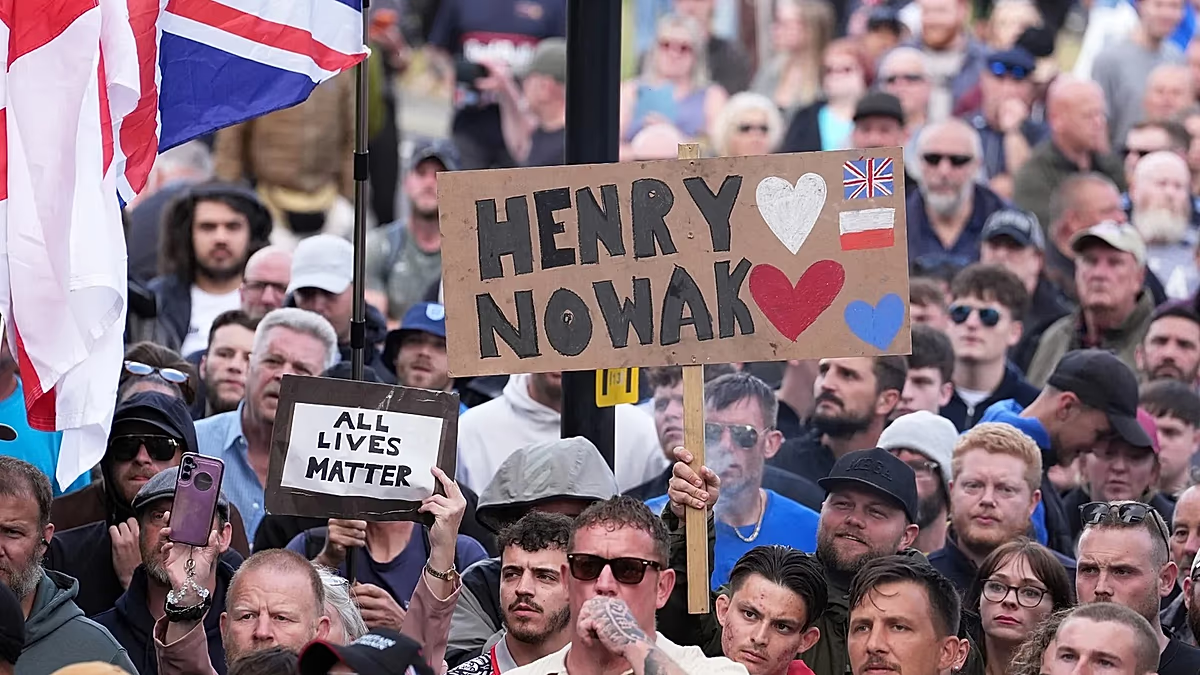
The tragic and violent death of eighteen-year-old Henry Nowak in Southampton last December has evolved from a local crime story into a focal point for intense political and cultural debates, both within the United Kingdom and across the Atlantic. The case took a significant turn when U.S. Vice President JD Vance issued a stark condemnation of Britain’s handling of the incident, framing it as a symbol of a broader civilizational decline. In a statement on the social media platform X, Vance provocatively linked Nowak’s fate to the consequences of mass migration and alleged political failures, stating the young man “died the same way a civilisation dies: abandoned, handcuffed by authorities who neither trusted nor cared for him.” This intervention catapulted a domestic tragedy into the realm of international political discourse, highlighting how such events can become potent symbols in wider ideological battles.
The facts of the case are deeply distressing and have rightly provoked public anguish. Henry Nowak was fatally stabbed during an altercation. In a cruel twist, his assailant, 23-year-old Vickrum Digwa, falsely claimed to be the victim, alleging that Nowak had racially abused him. Consequently, as Nowak lay mortally wounded, police arriving at the scene handcuffed him—a procedural action taken while they worked to establish the chaotic situation. This heartbreaking image of a dying teenager restrained by the very authorities called to help has become the central, visceral detail fueling outrage. The profound failure in those initial moments, while later rectified as the investigation progressed, has left an indelible scar on public trust and raised serious questions about police protocols during live, violent incidents.
Vice President Vance’s commentary, however, moved far beyond critique of police procedure. He explicitly connected the killing to his long-standing criticisms of European migration policy, arguing that Nowak would be alive “if the last few generations of European elites had stood their ground against the politics of self-hatred and the mass invasion of migrants, many of whom despise the West.” This rhetoric, framing migration as an “invasion” and attributing violent crime directly to a disdain for Western values, represents a significant escalation. It transplants a potent American political narrative onto a British tragedy, using the individual case to make a sweeping indictment of societal change, multiculturalism, and elite governance in Europe. Vance’s status as a high-ranking U.S. official lends this perspective considerable weight and ensures it reverberates through global media.
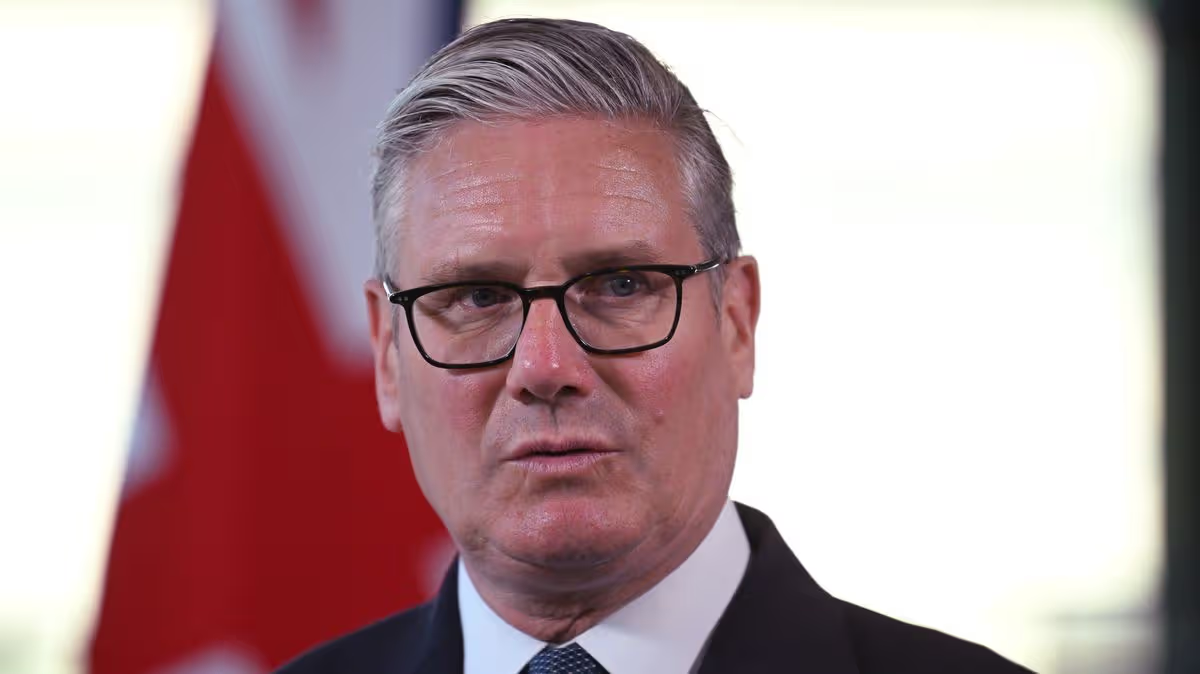
This American political engagement did not occur in a vacuum. The case had already been amplified by another towering figure in the American tech and media landscape: Elon Musk, the owner of X. Musk posted repeatedly about the incident, focusing on the police’s initial response and fueling allegations of systemic bias. His vast platform gave the story unprecedented reach, but also drew a sharp rebuke from British Prime Minister Keir Starmer, who accused Musk of “trying to whip up division” within the UK. Furthermore, the U.S. State Department entered the fray, issuing a statement accusing Britain of “two-tiered policing.” This confluence of commentary from a Silicon Valley billionaire, the U.S. vice president, and a formal diplomatic entity created a perfect storm, making the Nowak case a touchstone for broader debates about national sovereignty, online discourse, and foreign interference in domestic affairs.
Within Britain, the politicization of the tragedy presents a complex challenge. For the Nowak family, their personal grief has been inundated by a tsunami of geopolitical rhetoric. For the British government, it must navigate the delicate task of addressing legitimate public concerns over policing and justice while resisting what it may perceive as reductive and inflammatory narratives imposed from outside. Prime Minister Starmer’s criticism of Musk underscores this tension—the struggle to manage a sensitive domestic issue that is being weaponized in global culture wars. The core British conversation encompasses urgent questions about police training, the handling of violent incidents, and the pursuit of justice for Henry Nowak, but these are now competing with a louder, imported narrative about civilizational conflict.
Ultimately, the story of Henry Nowak’s death is a sobering lesson in how a local tragedy can be transformed into an international symbol. While the search for justice and accountability must remain paramount, the case has been enveloped by wider ideologies. It serves as a stark reminder of the power of narrative, where a single event becomes a canvas upon which various factions project their deepest fears and political agendas. The human loss—a young life cut short, a family in mourning—risks being overshadowed by abstract debates about civilization, migration, and national identity. Navigating forward requires a conscious effort to return focus to the specific facts, the ongoing legal process, and the tangible reforms needed to prevent future tragedies, while thoughtfully engaging with the complex societal debates it has ignited, free from sensationalism and external provocation.