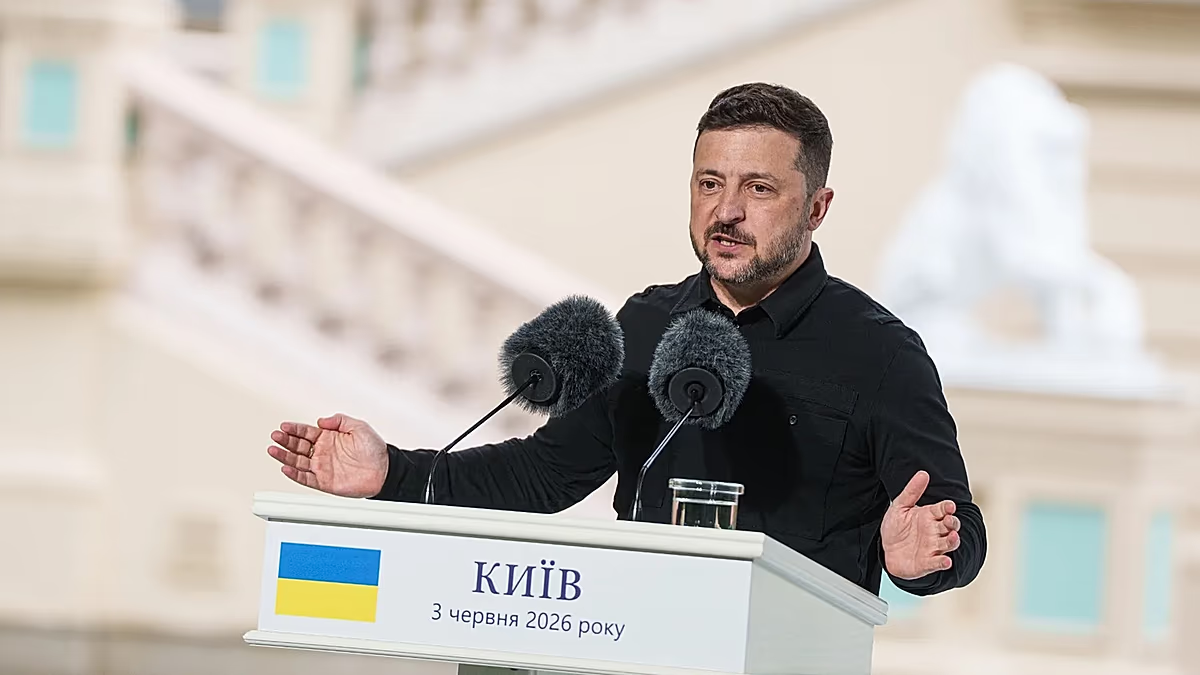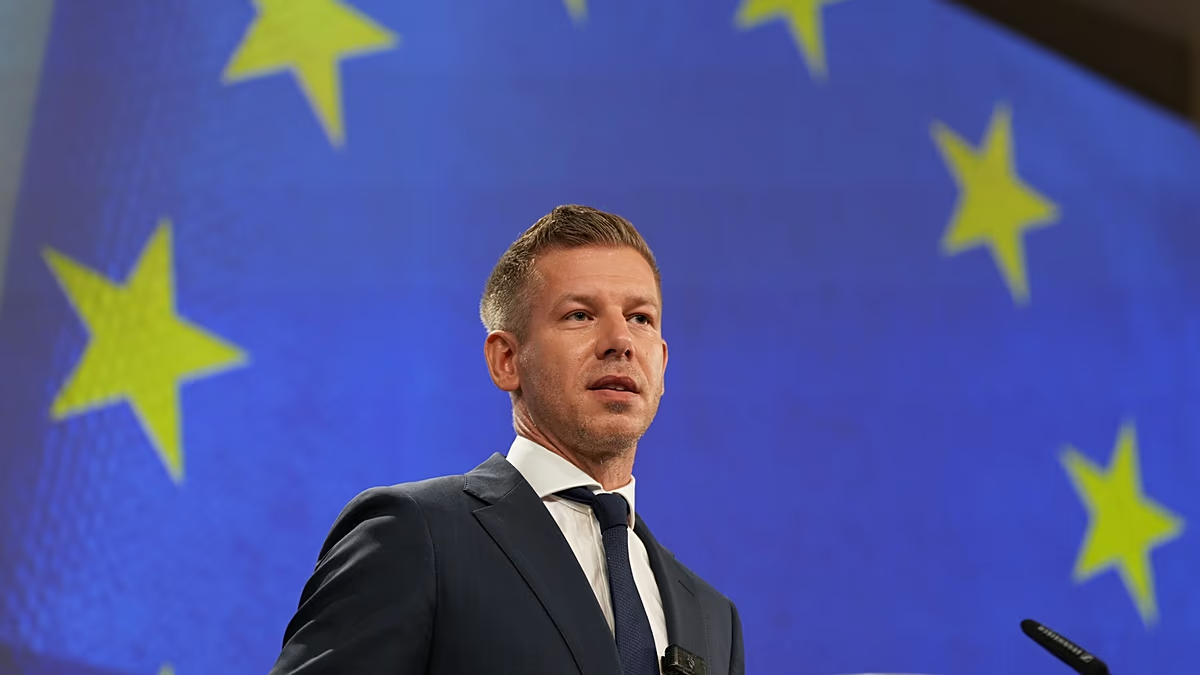



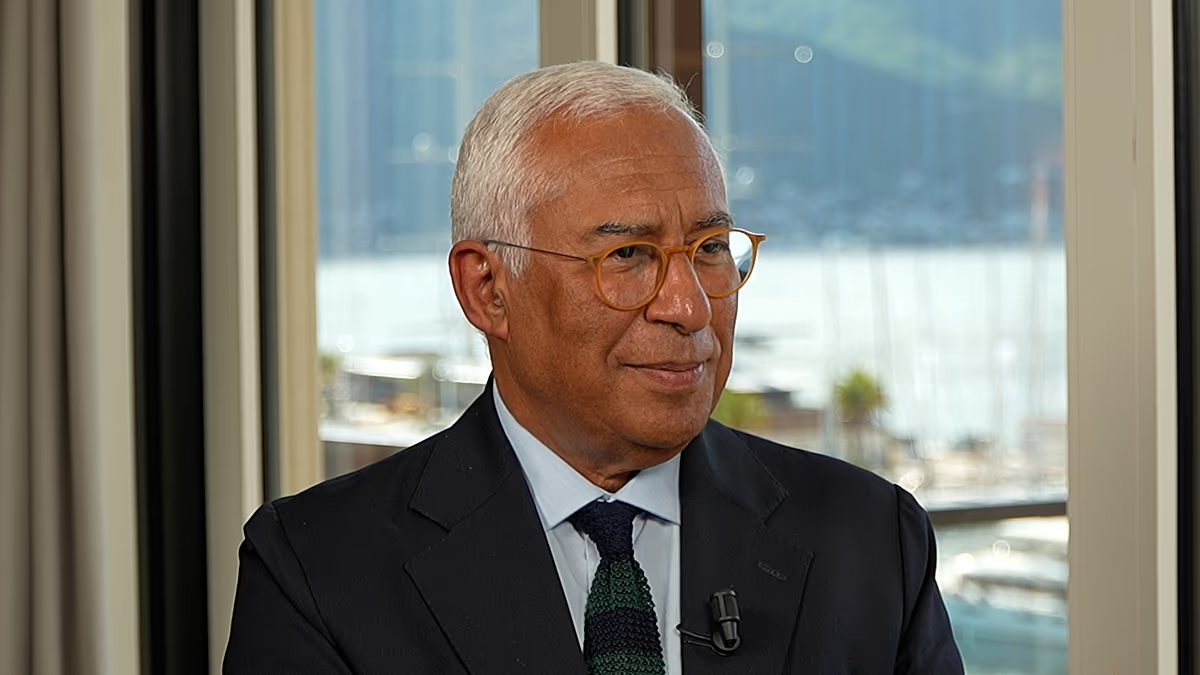
A significant and long-awaited breakthrough has been achieved in Ukraine’s journey toward European Union membership, following the lifting of Hungary’s two-year veto. In an exclusive interview with Euronews, European Council President António Costa revealed that Ukraine is now positioned to “immediately” open and close several chapters of the complex accession negotiations. This advancement comes after intense bilateral talks between Budapest and Kyiv, which resulted in an agreement over the rights of the Hungarian minority in Ukraine’s Transcarpathian region. Costa welcomed this development as a “positive change in attitude” from Hungary’s new Prime Minister, Péter Magyar, marking a distinct departure from the previous administration’s stance and offering a renewed hope for consensus within the EU.
Crucially, Costa emphasized that the prolonged political impasse did not translate into a complete standstill on the ground. He noted that during the period of the veto, substantial technical work and internal reforms continued unabated within Ukraine. This dedicated effort means that the country has already aligned much of its legislation and institutions with EU standards, independent of the political blockages in Brussels. “We are very advanced,” Costa stated, explaining that this preparatory work now allows for a rapid procedural catch-up. The ability to open and close negotiation chapters concurrently is a rare acceleration in the typically grueling accession process, underscoring Ukraine’s sustained commitment even amidst the ongoing war.
The immediate next step is set for 15 June, when Ukraine, alongside Moldova, is expected to open the first cluster of negotiations, known as “Fundamentals.” This cluster encompasses the most critical and demanding areas of reform: human rights, the rule of law, judicial independence, and public procurement. The opening of this cluster is a monumental symbolic and practical milestone, representing the formal beginning of the detailed scrutiny of Ukraine’s governance systems. However, the path ahead remains long and intricate. The full accession process comprises 33 chapters grouped into six thematic clusters, each presenting a potential hurdle where any single member state could, in theory, raise objections or impose a new veto.
Reflecting on the difficulties exposed by Hungary’s veto, President Costa expressed his personal support for reforming the EU’s enlargement methodology. He advocated for a system where unanimity is required only to finally close negotiation chapters, not to open them. This change, he argued, would prevent bilateral disputes between a candidate and one member state from paralyzing the entire European project for everyone else. “Bilateral issues must be properly addressed to avoid blockages,” Costa acknowledged, but suggested the current system grants excessive leverage to individual national concerns, potentially holding the collective strategic interests of the Union hostage.
While Ukrainian officials are ambitiously pushing to open all six negotiation clusters as early as this month, a more measured timeline is anticipated in Brussels. Diplomats and officials suggest the process will likely extend into the summer and possibly September, ensuring each step is thoroughly prepared. This caution aligns with a broader, emerging vision for enlargement articulated by key players like France and Germany. Ahead of the recent summit, Paris and Berlin proposed a model of “structured gradual integration,” wherein candidate countries would gain increasing access to benefits of EU membership—such as participation in the single market—as a reward for completing specific reform milestones, long before the final goal of full accession is achieved.
This moment, therefore, represents more than just the unblocking of a single process; it is a pivotal test case for the future of the European Union itself. Ukraine’s accelerated progress, born from extraordinary circumstance and resilience, is forcing a necessary conversation about how a larger, more geopolitically diverse EU can function. The blend of immediate action on Ukraine’s chapters, combined with forward-looking proposals for a more flexible and incentivized accession model, points to a Union adapting in real-time. The courage and reformatory work demonstrated by Ukraine are now met with a crucial, though cautious, reciprocation from the EU, setting the stage for a historic transformation of the European continent.