
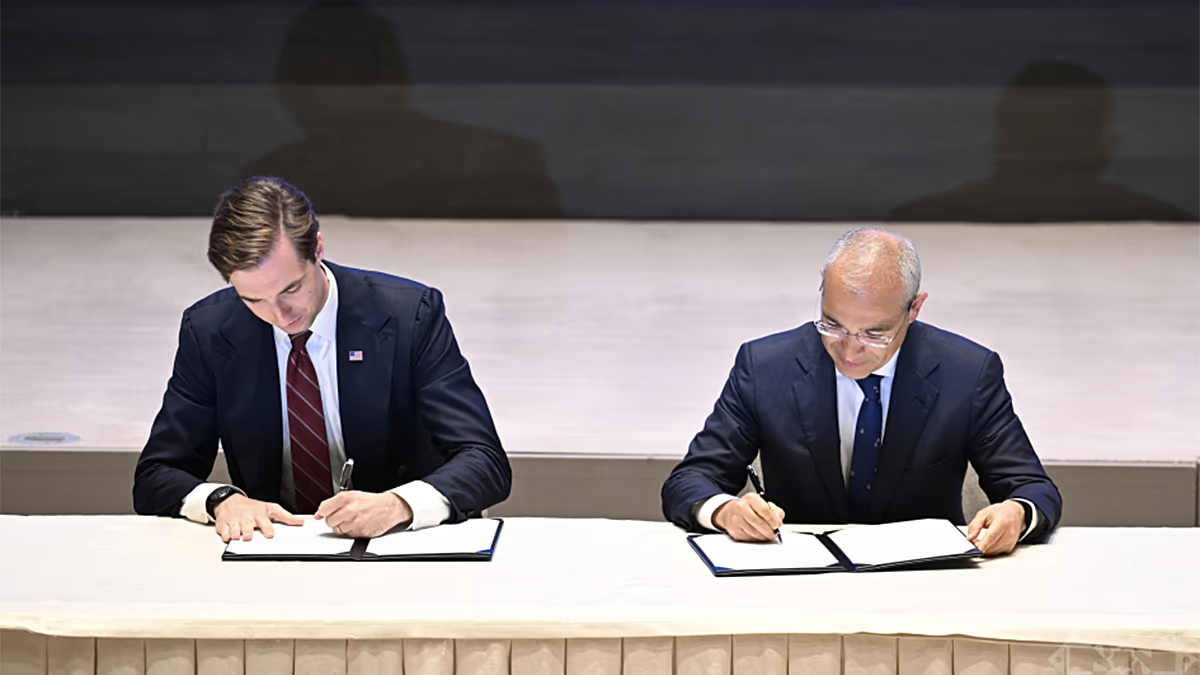


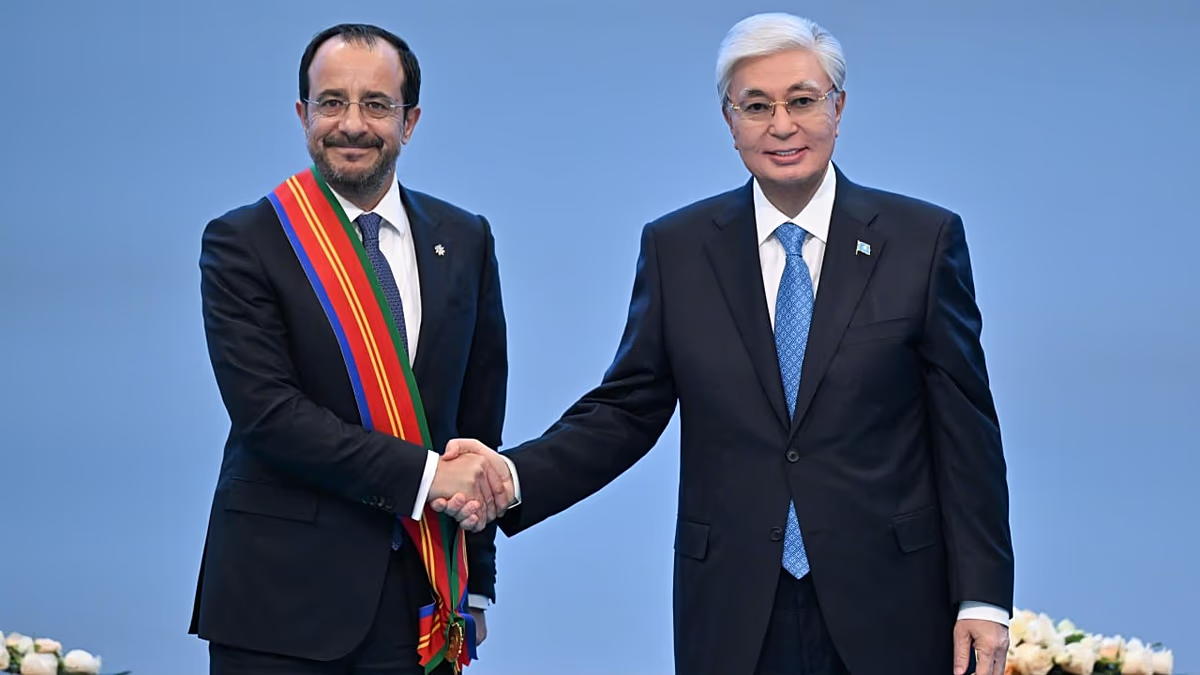
In a historic first official visit to Kazakhstan, Cypriot President Nikos Christodoulides was warmly received by President Kassym-Jomart Tokayev in Astana, marking a significant deepening of ties between the Mediterranean island nation and the Central Asian republic. The cornerstone of the visit was the simultaneous opening of embassies in each other’s capitals—a powerful, tangible symbol of mutual commitment to forging a lasting partnership. The diplomatic ceremonies were accompanied by substantive talks between the leaders and their delegations, culminating in the signing of five key agreements. These memoranda of understanding spanned higher education and research, culture, sport, and the critical modern fields of information technology, cybersecurity, and e-government. A separate pact between the two nations’ chambers of commerce underscored the commercial focus of the new relationship. In a gesture highlighting the personal and political significance of the moment, President Tokayev honored President Christodoulides with the First Class Order of Dostyk, one of Kazakhstan’s highest state awards.
The discussions between the two presidents moved seamlessly from political dialogue to outlining a framework for practical, economic cooperation. President Tokayev emphasized the steady strengthening of political ties over recent years, recalling Christodoulides’ previous visit as Foreign Minister and his pledge for Cyprus to champion Kazakhstan’s interests within the European Union. Tokayev proposed concrete mechanisms to fuel future collaboration, including a bilateral roadmap and the creation of intergovernmental and business councils to shepherd joint projects. For his part, President Christodoulides positioned the visit within a broader geopolitical context, recognizing Central Asia’s growing importance and Kazakhstan’s pivotal role as a strategic EU partner. He affirmed that Cyprus, currently holding the Presidency of the Council of the EU, strongly supports enhancing this partnership. Beyond economics, Christodoulides also took the opportunity to brief President Tokayev on the latest developments regarding the Cyprus issue, reiterating his commitment to UN-led negotiations for a peaceful resolution.
A central theme of the visit was the clear synergy between the two economies. President Christodoulides, accompanied by a delegation of Cypriot business leaders, presented Cyprus as a natural gateway for Kazakhstan into the European Union and the eurozone, offering access to a market of over 450 million consumers. He highlighted specific sectors ripe for expanded collaboration, such as shipping, financial services, renewable energy, and technology. President Tokayev echoed this sentiment, noting the already robust commercial links, including over 400 companies with Cypriot capital operating in Kazakhstan. He invited Cypriot participation in major infrastructure projects like the TransGas corridor and acknowledged Cyprus’s strength as an international maritime and business center. This mutual recognition of complementary strengths—Kazakhstan as a burgeoning transport and economic hub in Central Asia, and Cyprus as a regulated EU bridgehead—formed the bedrock of the new economic dialogue.
The commitment to connectivity was made manifest with the launch of a direct air link between Larnaca and Astana by Air Astana, with the Cypriot delegation itself traveling on the inaugural flight. This new route is more than a convenience; it is a strategic channel designed to facilitate tourism, enhance people-to-people contacts, and accelerate trade and business exchanges. Further emphasizing the forward-looking nature of the partnership, President Christodoulides visited the Alem AI Centre for a briefing on artificial intelligence and cybersecurity, aligning with the newly signed agreements in these fields. This focus on digital and technological frontiers underscores a partnership not rooted in the past, but actively building the infrastructure of the future, from physical travel to digital security.
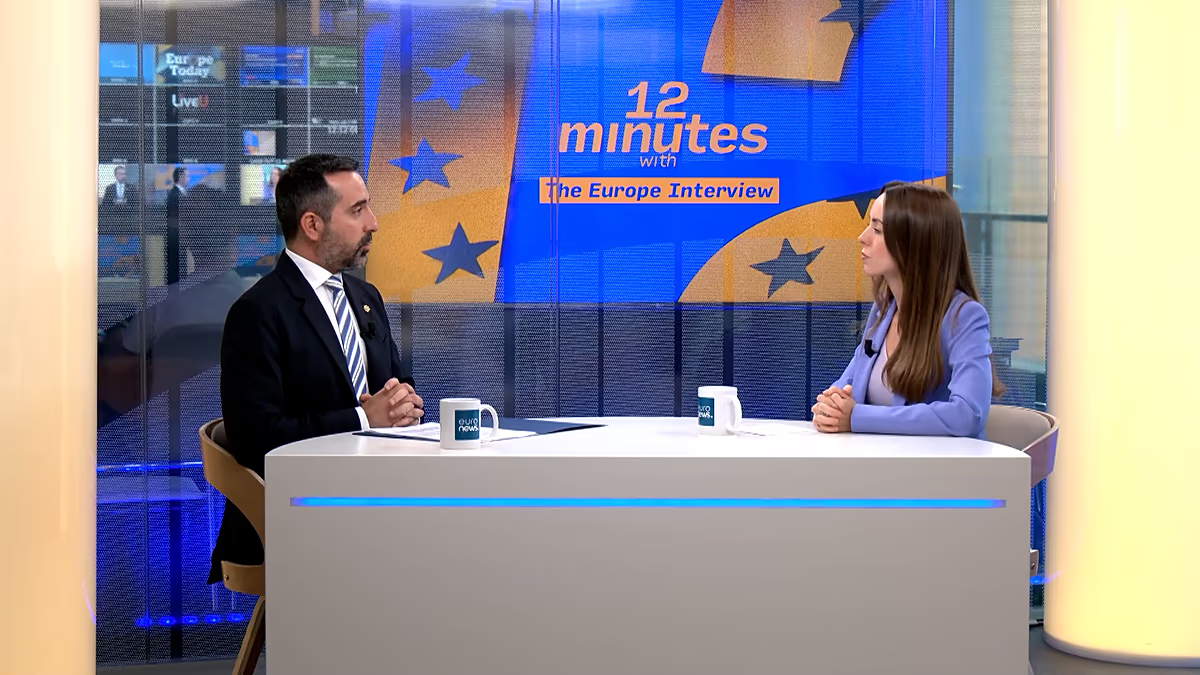
The potential for cross-investment was a particularly bright point of discussion. In comments to Euronews, Cypriot Deputy Minister to the President Irene Piki revealed that Cypriot investments in Kazakhstan are already estimated at a substantial $4 billion. She identified digitalisation, financial services, logistics, and shipping as key sectors for continued growth, emphasizing that the investment flow is a two-way street with much to offer both nations. This was given a public platform at the Cyprus-Kazakhstan Business Forum, where Christodoulides addressed gathered representatives from both business communities. He expanded the list of cooperative opportunities to include agriculture, healthcare, and transport, painting a picture of a multifaceted economic relationship that leverages Cyprus’s connectivity to the Eastern Mediterranean and Middle East with Kazakhstan’s central role in Eurasia.
In summary, the landmark visit successfully transformed longstanding diplomatic warmth into a structured, multi-faceted partnership. By simultaneously opening embassies, signing foundational agreements, and launching direct flights, Cyprus and Kazakhstan have built essential physical and institutional bridges. The high-level talks consistently highlighted a shared vision: combining Kazakhstan’s dynamic economic and geographic position in Central Asia with Cyprus’s unique status as an EU member state to foster mutual prosperity and strengthen the strategic connection between Europe and Central Asia. The ceremony inaugurating the Cypriot Embassy in Astana, as Foreign Minister Constantinos Kombos stated, was not merely an opening of doors but a profound symbol of both governments’ dedicated commitment to a shared future, setting a confident course for deepened political and economic collaboration in the years ahead.