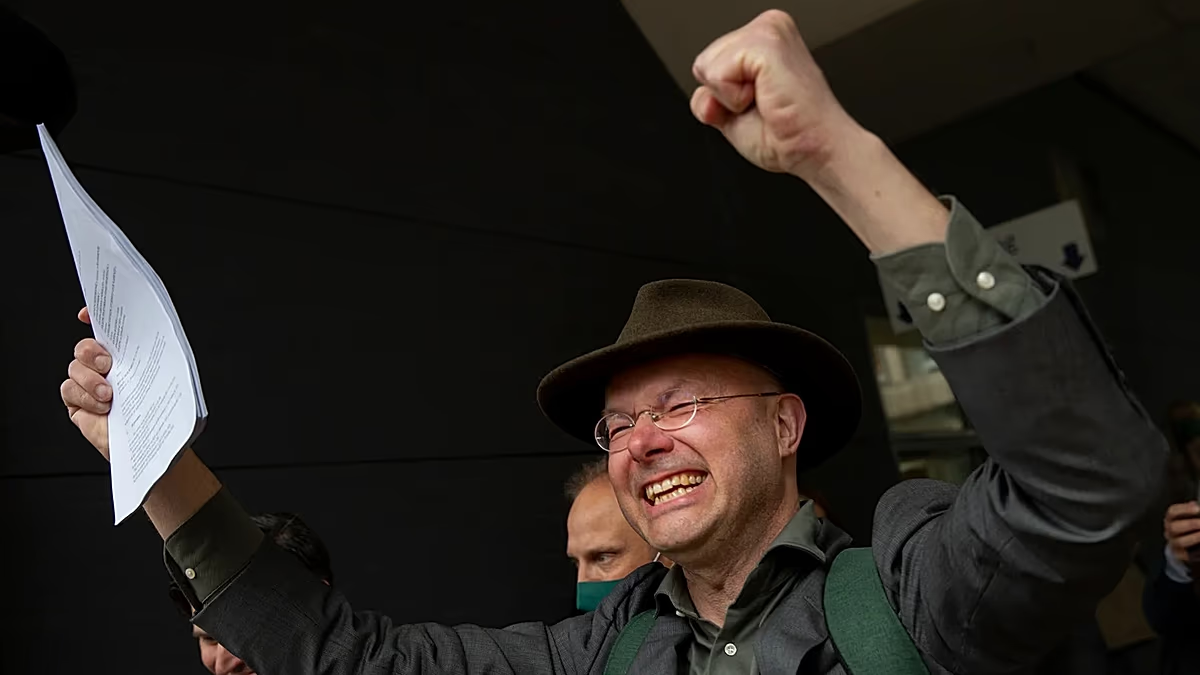



Donald Pols, the former director of Milieudefensie (Friends of the Earth Netherlands), recently experienced a dramatic and abrupt career shift that has ignited widespread debate about corporate accountability, personal redemption, and environmental ethics. For years, Pols was a prominent and respected figure in the European environmental movement, most notably leading a groundbreaking legal campaign against Shell that resulted in a historic 2021 court order for the oil giant to slash its emissions. His surprise decision last month to join Tata Steel Nederland—a company long criticized as one of the nation’s largest polluters—was therefore met with shock and condemnation by his former colleagues, who viewed the move as a profound betrayal of the organization’s core principles of independence and unwavering pressure on major industrial emitters.
The initial controversy deepened exponentially this week when Tata Steel announced it had terminated Pols’s contract after just one day in the role of Chief Sustainability Officer. The company cited “additional information about his background” that had not been previously disclosed. This information, later revealed by Dutch newspaper NRC, was a deeply troubling chapter from Pols’s youth: during his student years in South Africa, he had been an active member of the far-right, pro-apartheid Afrikaner Studente Front (ASF). In 1991, he participated in a protest during a visit by Nelson Mandela to the University of Pretoria, where ASF members burned flags of Mandela’s ANC and chanted slogans in support of the racist apartheid regime. Pols confessed to this past, calling his actions “reprehensible” and accepting full responsibility, while firmly asserting that he is no longer the person he was over three decades ago.
This revelation placed Pols’s earlier career move in an even more complex light. His departure from Milieudefensie had already been a severe blow to the NGO, whose chairman, Marty Smits, publicly expressed deep disappointment. The organization had built its reputation on holding corporations like Tata Steel legally and morally accountable, and Pols’s defection to the very type of polluter he once sued was seen as undermining that critical, independent stance. His argument—that driving sustainable change from within a major industrial player was a “logical next step”—rang hollow to activists fighting the health and environmental damages linked to Tata’s operations. The personal scandal of his past now irrevocably intertwined with the professional scandal of his career choice, destroying his credibility in both corporate and activist circles almost overnight.
The backdrop to this saga is Tata Steel Nederland’s severe and ongoing environmental crisis. The company’s primary plant in IJmuiden has been a prolonged source of toxic emissions, including hydrogen fluoride and heavy metals, leading to a significant penalty from environmental authorities. Local residents, suffering from elevated rates of health problems and plummeting property values, have launched a massive €1.5 billion lawsuit against the company. In this context, the Dutch government’s recent decision to grant Tata a €2 billion subsidy—matched by a €4 billion commitment from its Indian parent company—for a green transition to hydrogen and gas has been highly contentious. Pols’s appointment was likely an attempt by Tata to bolster its sustainability credentials amid this public and legal pressure, a strategy that has now catastrophically backfired.
The broader implications of this episode touch on profound questions of personal history, forgiveness, and the pathways to genuine corporate reform. While people can and do evolve from misguided beliefs held in their youth, the juxtaposition of Pols’s past with his recent actions creates a crisis of trust. His apartheid-era activism, followed by his shift from a leading environmental litigator to a top executive at a notorious polluter, paints a picture of profound ideological inconsistency. It raises a difficult question: can someone who once fought against racial justice and later against environmental justice effectively champion systemic change from inside a corporation with a damaging record? The court of public opinion, and now his employer, has answered with a resounding no.
Ultimately, the story of Donald Pols serves as a cautionary tale about the fragile intersection of reputation, redemption, and responsibility. It highlights the intense scrutiny facing individuals who move between the spheres of activism and industry, especially when their personal histories contain such severe contradictions. For Tata Steel, the fiasco is a major setback in its efforts to rehabilitate its public image, proving that a hasty appointment can exacerbate rather than alleviate reputational damage. For the environmental movement, it is a sobering reminder of the importance of ideological consistency and the deep perils of perceived compromise. The marathon fight for a sustainable and just future, as Pols himself once described it, demands not only endurance but an unwavering clarity of purpose that this episode has fundamentally called into question.