

(Paragraph 1)
In the quiet, early evening hours of Tuesday, March 6th, 2026, the routine of downtown Bakersfield, California, was shattered by a crisis that would stretch through the night and into the next day. It began, as so many emergencies do, with a frantic call to authorities: a bomb threat at a multi-use building housing a Chase Bank branch on the ground floor and a school district office above. What initially seemed like a potentially explosive situation swiftly escalated into something even more dire and human. Officers arriving on the scene discovered that a man, whose identity and motives remain undisclosed, had not only made threats but had barricaded himself inside the building, taking an unknown number of people hostage. Thus began a tense, twelve-hour standoff that would grip the city, mobilize a massive law enforcement response, and leave the community holding its breath for a peaceful resolution.
(Paragraph 2)
The immediate priority was containment and the protection of innocent lives. The Bakersfield Police Department, demonstrating a textbook response to a critical incident, swiftly evacuated nearby buildings, including the symbolic hearts of the city—City Hall and the police headquarters itself. Roads were closed, and a secure perimeter was established, a visible barrier of official vehicles and yellow tape holding back a growing atmosphere of anxiety. Officers urgently warned the public to stay clear of the area. Amidst this visible show of force, a quieter, more delicate operation was underway. The department’s specialized Crisis Negotiation Team established contact with the suspect by telephone, opening a fragile line of dialogue intended to de-escalate the situation, understand his demands, and secure the safe release of those trapped inside with him.
(Paragraph 3)
The human drama inside the building, though mostly hidden from public view, was glimpsed in fleeting, heart-wrenching moments. Jacob Davidson, a local livestreamer known as “Dad’s Gone Live,” found himself a block away at his family’s tattoo shop. As word of the situation spread, he positioned himself to document the unprecedented police presence, remarking it was the largest he’d ever seen in Bakersfield. Through his lens, the abstract term “hostage situation” gained a harrowing face. He captured, through a window of the building, the image of a woman visibly distressed, rocking back and forth before crouching down, seeking cover from an unseen threat. Later, the simple, desperate gesture of two hands waving from a window served as a silent plea to the outside world, a stark reminder of the individuals whose lives hung in the balance as negotiations continued into the night.
(Paragraph 4)
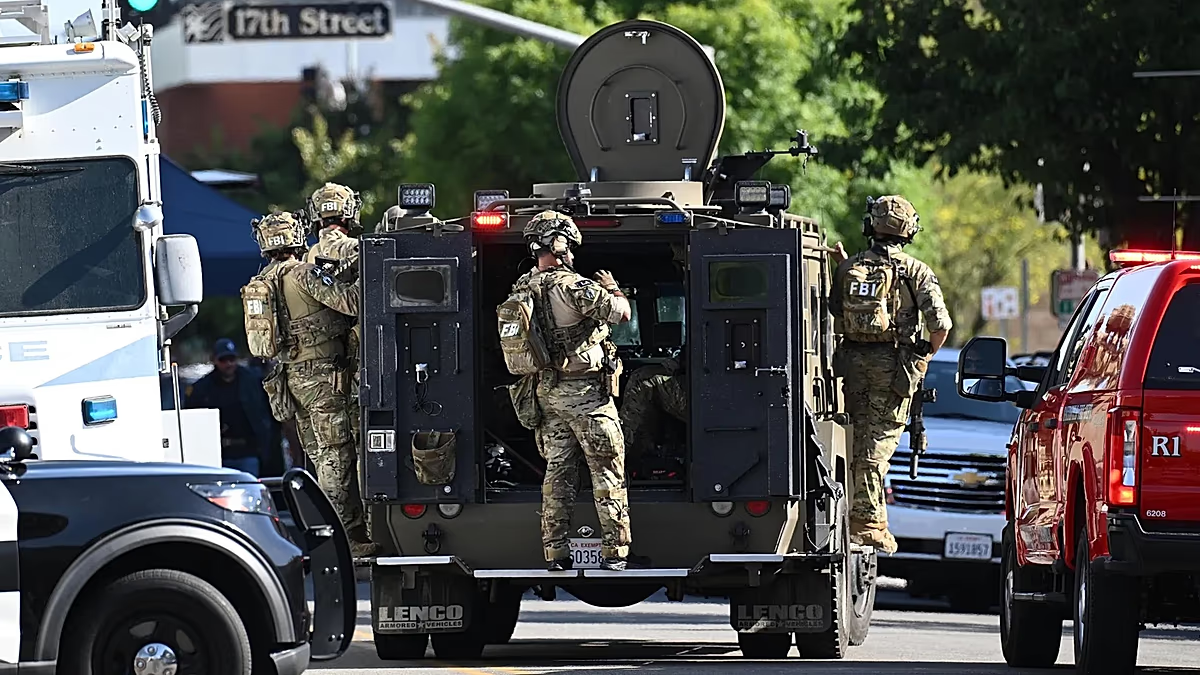
As Tuesday turned to Wednesday, a fragile sign of progress emerged. Through the persistent efforts of negotiators, the suspect released two hostages. This small victory affirmed that communication was possible and fueled hopes for a non-violent end. The FBI’s Hostage Rescue Team was on scene, supplementing local resources. Bakersfield Police Sergeant Eric Celedon, speaking to the media during the ordeal, emphasized the collective goal, stating, “We have every single resource at our disposal out here to bring this to the safest resolution possible.” The building, now a darkened shell under the glare of spotlights, held its terrible secret. The bank branch, as confirmed by a JPMorgan Chase spokesperson, was empty; the drama was unfolding elsewhere within the structure, with school district employees and possibly others caught in a nightmare.
(Paragraph 5)
Tragically, after nearly half a day of negotiations and surveillance, the standoff reached its violent, inevitable climax. In the early hours of Wednesday, the FBI, which had been working in tandem with local police, executed a tactical resolution. According to statements from the Bakersfield Police Department, the suspect was shot and killed by FBI personnel in what is formally termed an “officer-involved shooting.” The precise circumstances that led to the decision to use lethal force have not been detailed, but such actions are only taken when there is an imminent threat to life. The immediate and most crucial result of this intervention was announced soon after: all remaining hostages were freed and, remarkably, not a single one was physically harmed. The primary objective of preserving innocent life had been achieved, even as the operation ended the life of the hostage-taker.
(Paragraph 6)
As the sun rose on a somber Wednesday in Bakersfield, the immediate crisis was over. Roads reopened, evacuees returned to their offices, and the staggering police presence gradually receded. Yet, the conclusion leaves behind a complex aftermath of relief, trauma, and unanswered questions. A community is left to process the events that unfolded in its core, grateful for the safety of the hostages but forever marked by the violence. The law enforcement officers and negotiators who worked through the night now face the difficult process of debriefing and investigation. Most profoundly, the individuals who endured hours of terror as hostages now begin the long journey of recovery from a profound psychological ordeal. The standoff in Bakersfield, resolved with a stark and final act, underscores the devastating human cost of such crises and the immense burden carried by those who work to end them.