


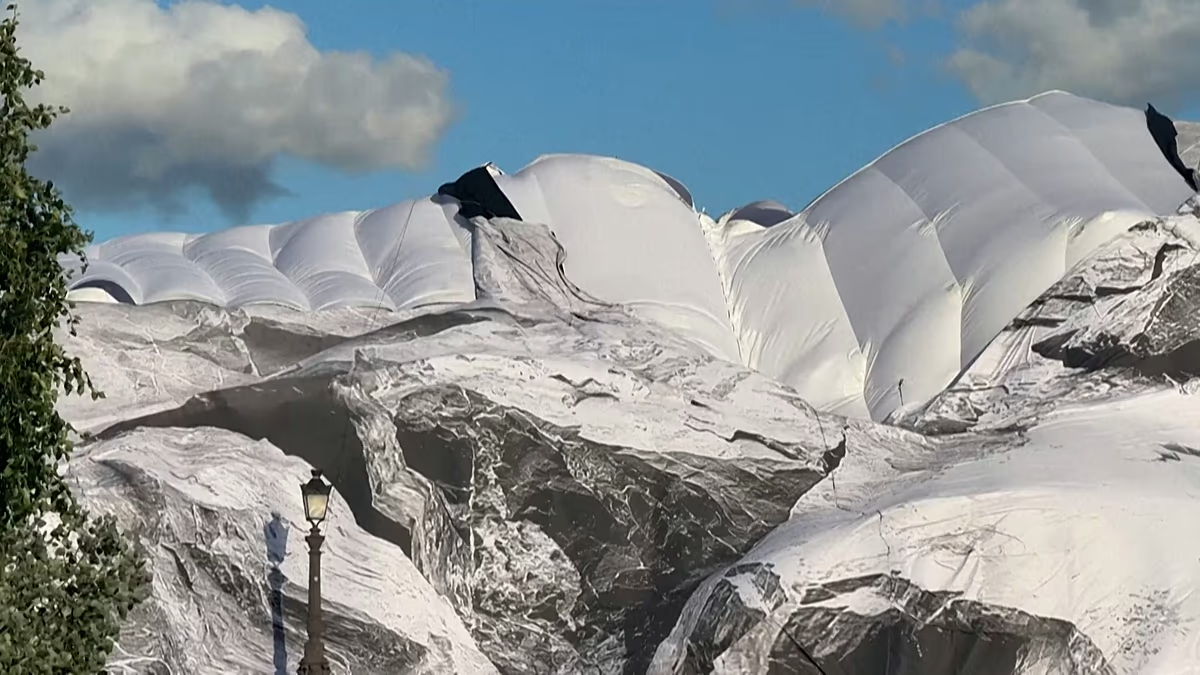
The ambitious and dreamlike public artwork La Caverne du Pont Neuf by the celebrated French artist JR has suffered a significant setback, its public debut delayed not by curatorial decision, but by the forces of nature. In the heart of Paris, where the historic Pont Neuf bridge had been entirely shrouded by this monumental inflatable installation, powerful winds and heavy rain conspired to tear the massive fabric structure. Video evidence circulating online revealed visible gashes in the artwork’s surface, a stark contrast to the seamless, cave-like illusion it was designed to create. This unforeseen damage has forced organizers to postpone the eagerly anticipated opening, originally scheduled for June 6, leaving the future of this ephemeral project momentarily suspended as technical teams rush to assess the situation.
The scale of this undertaking cannot be overstated, representing one of the most audacious public art interventions Paris has witnessed in recent decades. JR’s vision transformed the iconic 16th-century bridge into a 120-meter-long, 18-meter-high artificial grotto, comprised of 80 individual fabric arches kept aloft solely by air. The concept aimed to play with perception and history, invoking the bridge’s ancient foundations and the hidden, cavernous spaces of the city’s underbelly while creating a wholly new, walk-through monument. Its sudden impairment is a poignant reminder of the vulnerabilities inherent in such grand, temporary installations, especially those that dare to reimagine cherished landmarks and exist at the mercy of the elements.
Behind the scenes, a flurry of activity now replaces the final preparations for welcoming the public. JR’s team, alongside technical experts, is meticulously examining the extent of the damage to the intricate inflatable system. Their investigation seeks to understand the precise circumstances that led to the tears—whether a particular gust proved too powerful, a seam was vulnerable, or a combination of stressors overcame the structure’s design. This forensic process is crucial not only for planning repairs but also for ensuring the absolute safety of future visitors who would walk within the inflated cavern. The artistry must now yield, temporarily, to engineering and risk assessment.
For Parisians and art enthusiasts worldwide awaiting the chance to experience this immersive environment, the announcement is a disappointment. JR’s work thrives on creating shared, accessible cultural moments that blur the line between art, architecture, and social engagement. La Caverne du Pont Neuf was poised to be the latest in this series of profound civic gestures, inviting people to physically enter and interact with a piece of art that had become, literally, part of the city’s fabric. The delay interrupts that planned dialogue between the artwork and the community, suspending a moment of collective wonder and conversation.
Nevertheless, there is a resilient determination surrounding the project. Organizers have communicated that a new opening date will be announced as soon as the assessment is complete and any necessary repairs are effected. This indicates a commitment to seeing the vision realized, suggesting the damage, while significant, is not necessarily a terminal blow. The incident itself, though unfortunate, adds a layer of narrative to the artwork—a testament to the challenging and impermanent nature of such monumental ephemeral creations. The repaired structure, when it finally opens, will carry with it the story of its confrontation with a Parisian storm.
Ultimately, this episode underscores the very essence of JR’s artistic practice: it is bold, it is public, and it embraces real-world variables, including risk. The temporary shrouding of the Pont Neuf was always intended as a fleeting miracle, a brief reimagining of a familiar vista. While the weather has written an unplanned chapter in its story, the goal remains to complete and share this extraordinary cave of fabric and air. When visitors finally step inside, they will be walking into more than an artwork; they will be entering a space that has already endured and responded to the dynamic, living environment of the city it seeks to celebrate.