


A Tension-Filled Exchange: President Trump Confronts Prime Minister Netanyahu
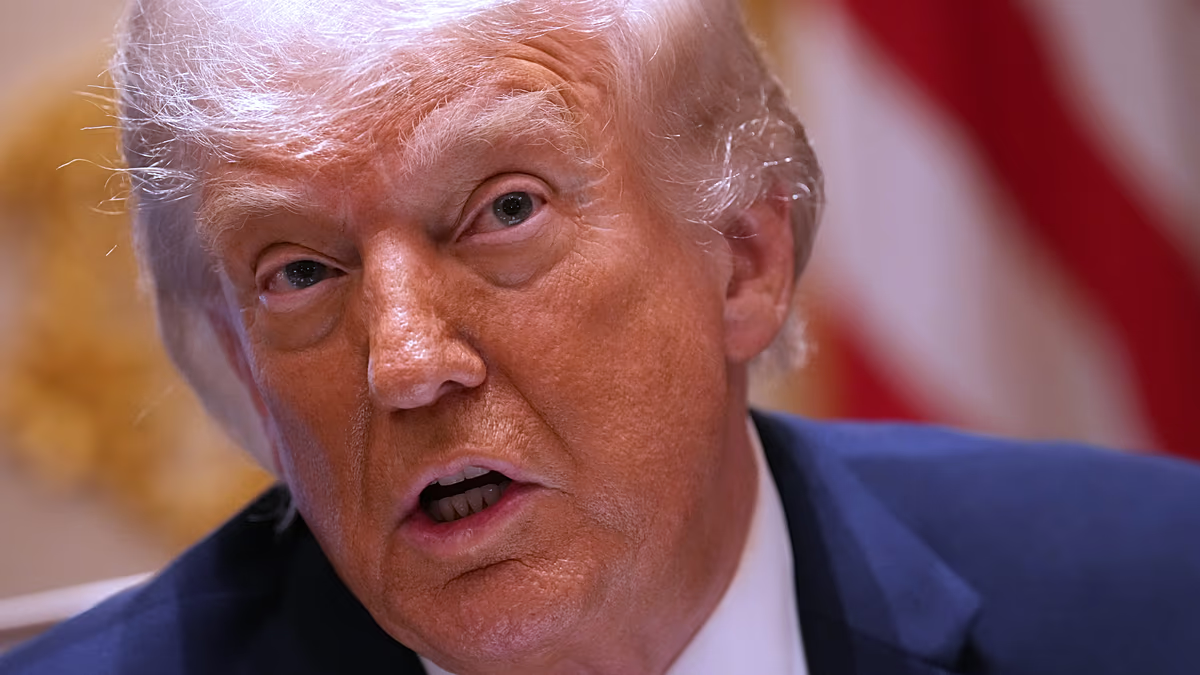
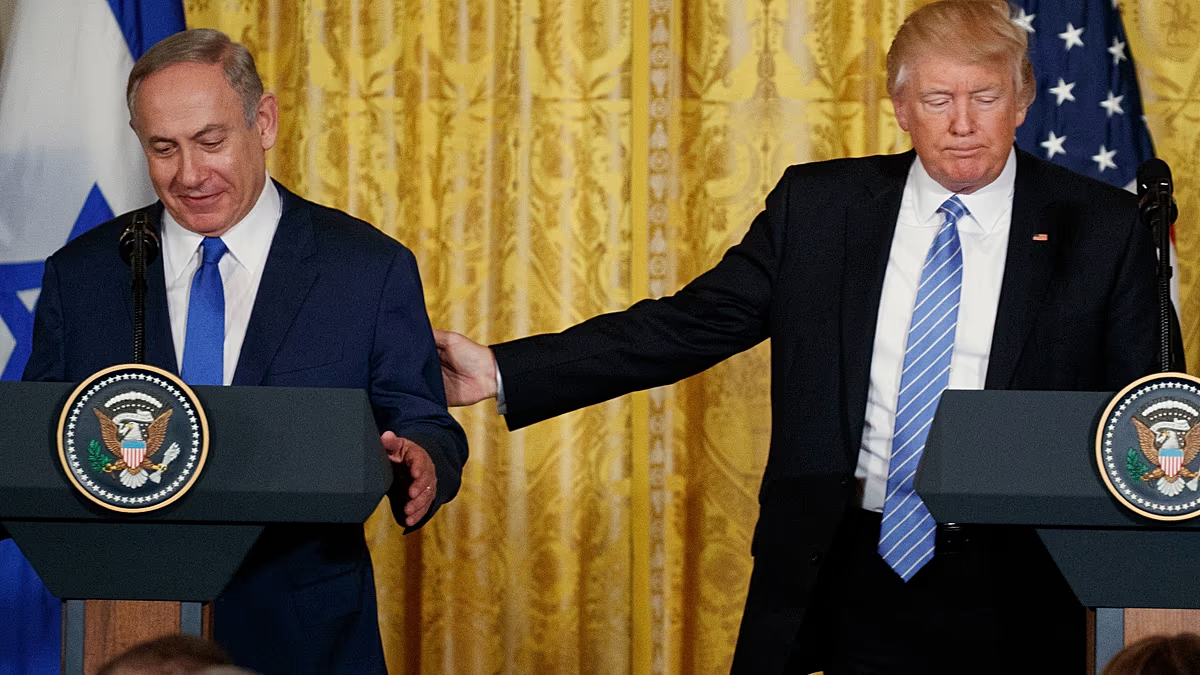
In a reported phone call that laid bare the profound tensions at the highest level of the U.S.-Israel alliance, President Donald Trump is said to have launched a blistering, expletive-laden critique of Israeli Prime Minister Benjamin Netanyahu. According to sources cited by Axios, the conversation on Monday was far from diplomatic routine, instead unfolding as a raw and confrontational exchange. The core of Trump’s fury, as relayed by three individuals familiar with the discussion, was a direct accusation that Netanyahu’s military decisions were not only reckless but were also isolating Israel on the world stage. The President’s language, stripped of formalities, was described as shockingly blunt, capturing a moment of severe strain between two leaders whose relationship has long been a complex blend of personal rapport and political pragmatism.
This pivotal call did not occur in a vacuum. It came at a moment of extreme international peril, as Israel had significantly expanded its military operations in southern Lebanon, raising the specter of a full-scale war with the powerful Iranian-backed militia, Hezbollah. U.S. officials were deeply concerned that this escalation could unravel delicate, ongoing negotiations with Iran over its nuclear program, a cornerstone of Trump’s foreign policy agenda. The President’s anger, therefore, was fueled by a sense that Netanyahu’s actions were undermining broader American strategic interests, risking a regional conflagration that could draw in the United States and shatter the possibility of a diplomatic breakthrough with Tehran.
The substance of Trump’s remarks, as reported, was a mixture of personal grievance and strategic warning. One source quoted the President as exclaiming, “You’re f** crazy,” and following it with a starkly personal rebuke: “You’d be in prison if it weren’t for me. I’m saving your a**.” This allusion to past political and legal support underscored the transactional nature Trump often brought to alliances. More critically, he framed Netanyahu’s military campaign as a catastrophic failure in global public relations, stating, “Everybody hates you now. Everybody hates Israel because of this.” Another source simply quoted Trump demanding, “What the f*** are you doing?” painting a picture of a president who was, in their words, profoundly “pissed” by his ally’s conduct.
It is important to contextualize the President’s position, as explained by U.S. officials. They clarified that Trump explicitly acknowledged Israel’s legitimate right to self-defense against Hezbollah attacks. His rage was not directed at the principle of the response, but at its perceived nature and scale. The administration’s concern centered on proportionality—the belief that Netanyahu’s government was employing a level of force that was excessive relative to the threats faced. Officials pointed specifically to the troubling scale of civilian casualties and the tactic of striking entire buildings to eliminate individual militant commanders, operations that often resulted in devastating collateral damage. For Trump, these methods were seen as politically counterproductive, generating the very global condemnation he cited.
As of this reporting, the White House has maintained official silence, refusing to publicly confirm or comment on the private diplomatic exchange. This silence is itself telling, suggesting the administration’s desire to manage the fallout without further inflaming the situation or publicly humiliating a key ally. The decision not to issue a denial, however, allowed the detailed account from Axios’s sources to dominate the news cycle, highlighting the deep divisions within the U.S. government and between the two nations. The leak revealed a significant faction of officials who were aligned with the President’s frustration, willing to disclose a conversation that exposed the raw nerve of disagreement over wartime conduct and strategic priorities.
In summary, this reported phone call represents a critical juncture in U.S.-Israeli relations under the Trump administration. It transcends a mere diplomatic disagreement, revealing a president who felt personally betrayed and strategically undermined by an ally’s actions. Trump’s combative rhetoric—mixing personal salvation with warnings of global isolation—and his administration’s focus on disproportionate force, illustrate a fundamental clash. On one side is an Israeli government pursuing what it sees as a necessary and justified campaign for security, and on the other, an American presidency fiercely protective of its own foreign policy goals and increasingly alarmed by the humanitarian and reputational costs of its ally’s war. The aftermath of this confrontation will inevitably shape the scope, duration, and international support for Israel’s military operations in the period ahead.