
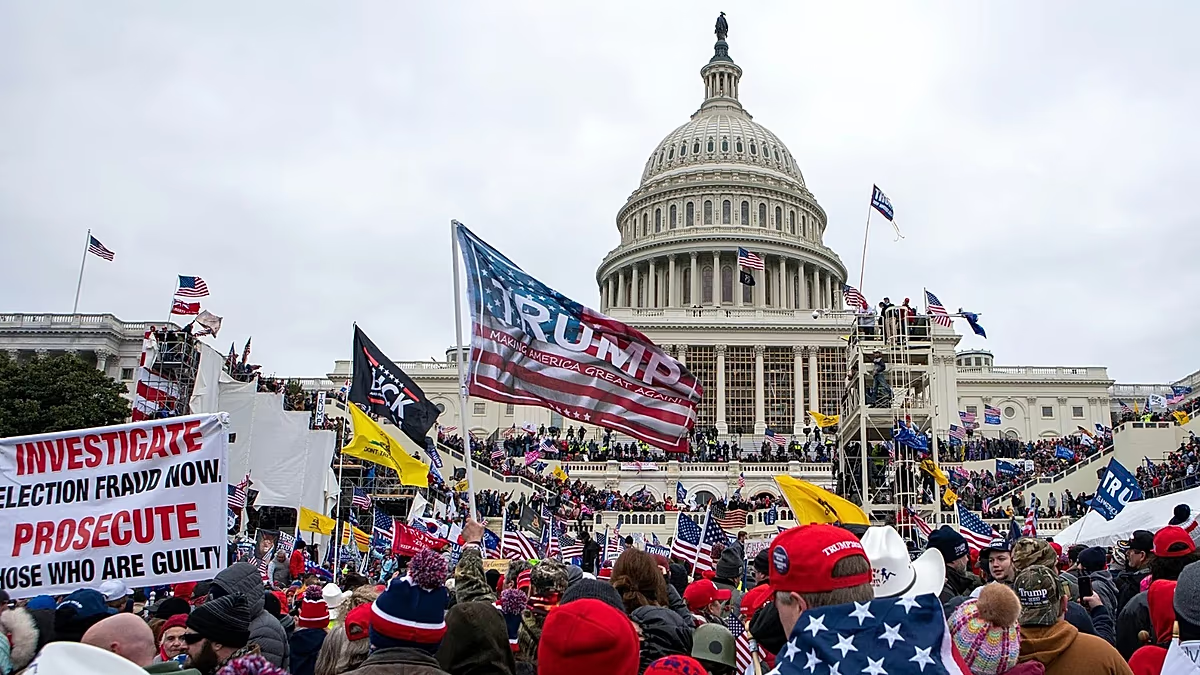


A significant political conflict has erupted within the Republican Party, centering on a controversial settlement fund established by former President Donald Trump. The dispute has not only caused internal division but has also ensnared critical legislation on immigration enforcement, bringing the normal functions of government to a standstill. At the heart of the issue is the “Anti-Weaponisation Fund,” a $1.776 billion pool of money created as part of a legal settlement between Trump and the Internal Revenue Service over the leak of his tax returns. According to the Justice Department, the fund’s purpose is to compensate individuals who believe they were targeted by politically motivated investigations or prosecutions. However, many Republican senators view it with deep suspicion, arguing it could be used to financially reward Trump’s political allies, including some involved in the January 6th Capitol attack. This perception has transformed the fund from a legal mechanism into a potent symbol of perceived partisan retribution, triggering a fierce backlash from within the president’s own ranks.
The immediate casualty of this internal Republican war has been a crucial piece of legislation to provide three years of funding for key immigration enforcement agencies, including Immigration and Customs Enforcement (ICE) and the Border Patrol. Republicans left Washington for the Memorial Day recess without passing the bill after Democrats threatened to introduce amendments targeting the settlement fund. With lawmakers now returned, the fate of the immigration funding remains deeply uncertain. Senate Majority Leader John Thune captured the mood of confusion, telling reporters simply, “To be determined,” when asked if the bill would advance. The stalemate highlights how a single, contentious issue can paralyze the entire legislative process, leaving vital government operations in limbo and exposing the fragile coalitions within political parties.
The controversy stems from Trump’s decision to announce the settlement fund unilaterally, without consulting Congress, while it was already debating the immigration funding package. Republican senators reacted with fury, interpreting the move as an end-run around their authority. In retaliation, they stripped proposed White House security funding from the immigration bill and issued a stark ultimatum: they would not support the essential legislation unless the administration reconsidered the fund. Senator John Thune suggested the optimal solution would be for the administration to voluntarily shut down the fund. The situation escalated when U.S. District Judge Leonie Brinkema issued a court order temporarily blocking the fund for two weeks and scheduled a hearing for June 12th to consider extending the suspension. While the Justice Department stated it would comply with the order—though it strongly disagreed with it—many Republican senators insisted that mere compliance was insufficient.
Leading voices within the party are demanding a complete and unambiguous termination of the fund. Senate Judiciary Committee Chairman Chuck Grassley asserted that Trump himself must clarify that the fund will not proceed. Oklahoma Senator Jim Lankford called for administration officials to explicitly state that the proposal was being abandoned. Alaska Senator Lisa Murkowski took the hardest line, stating she would only be satisfied if the settlement fund was withdrawn completely. Their unified front underscores a significant rift between congressional Republicans and the presidential administration, with lawmakers reasserting their institutional power. Louisiana Senator John Kennedy delivered a vivid warning about the broader consequences, declaring the immigration package “looks like a broken arm with the bones sticking out” and was unlikely to move forward without a resolution on the fund.
Faced with this intense pressure, Republican senators are reportedly exploring various compromise options. These include restricting eligibility for payments from the fund, altering its oversight arrangements to ensure greater transparency and accountability, or scrapping it entirely. According to reports from the Associated Press, a person familiar with the matter indicated that Trump is now reconsidering whether to proceed with the fund at all, though he has not made any public statement on his intentions. This behind-the-scenes reassessment suggests the president may be bowing to the pragmatic realities of governing, where he needs the support of his party in Congress to achieve other legislative priorities, such as the stalled immigration funding.
In summary, a $1.776 billion settlement fund has become an unexpected fault line in American politics, fracturing the Republican Party and halting essential government business. The fund, intended to compensate individuals alleging political targeting, is seen by critics as a potential slush fund for political allies, creating a moral and ethical quandary for many lawmakers. This internal dispute has hijacked the legislative agenda, specifically holding hostage funding for immigration enforcement. The path forward now hinges on whether President Trump will acquiesce to the demands of his party’s senators and definitively end the fund, or whether he will continue to defend it, risking a prolonged legislative gridlock. The outcome will test the balance of power within the Republican coalition and determine the fate of critical national policy.